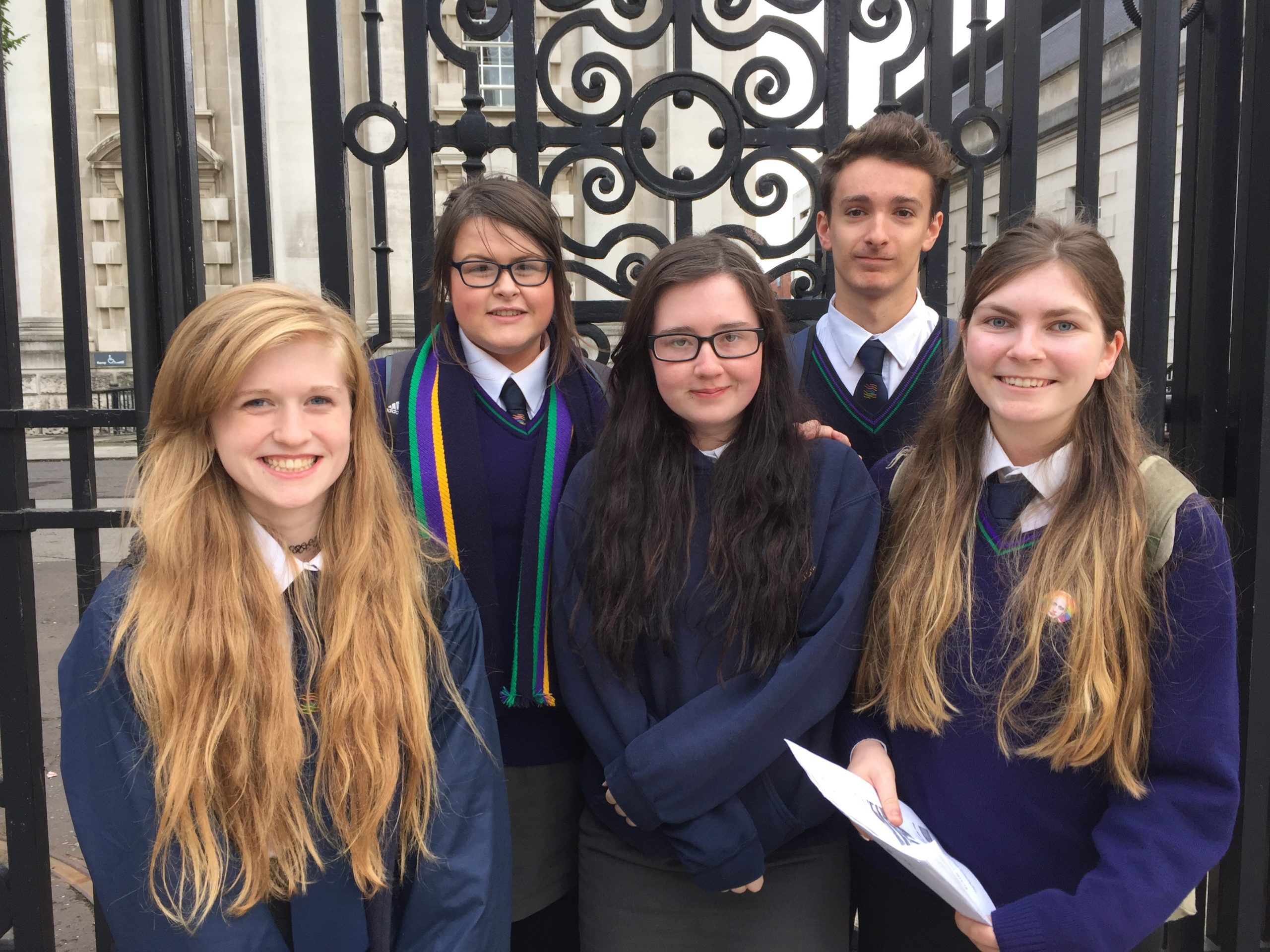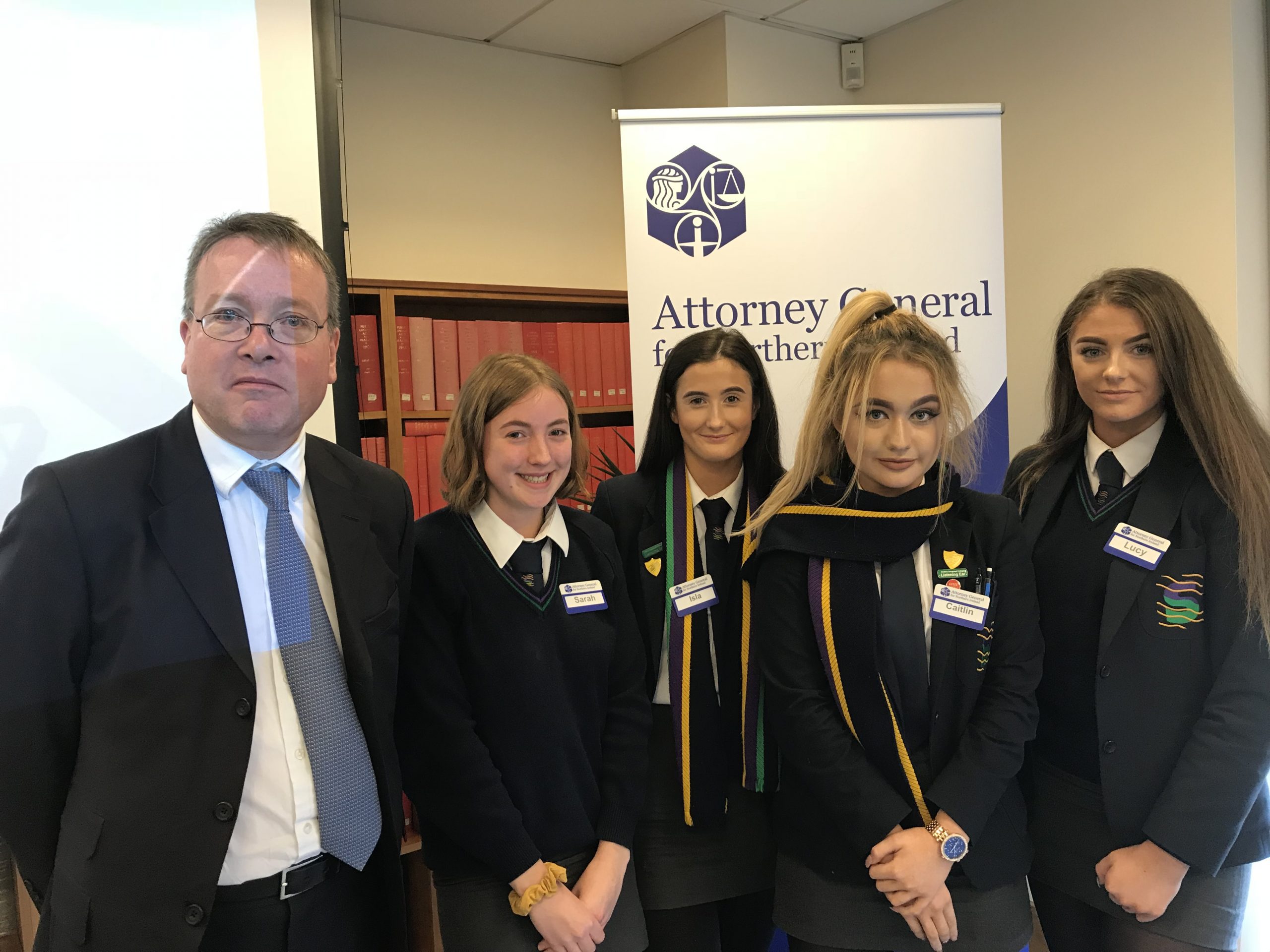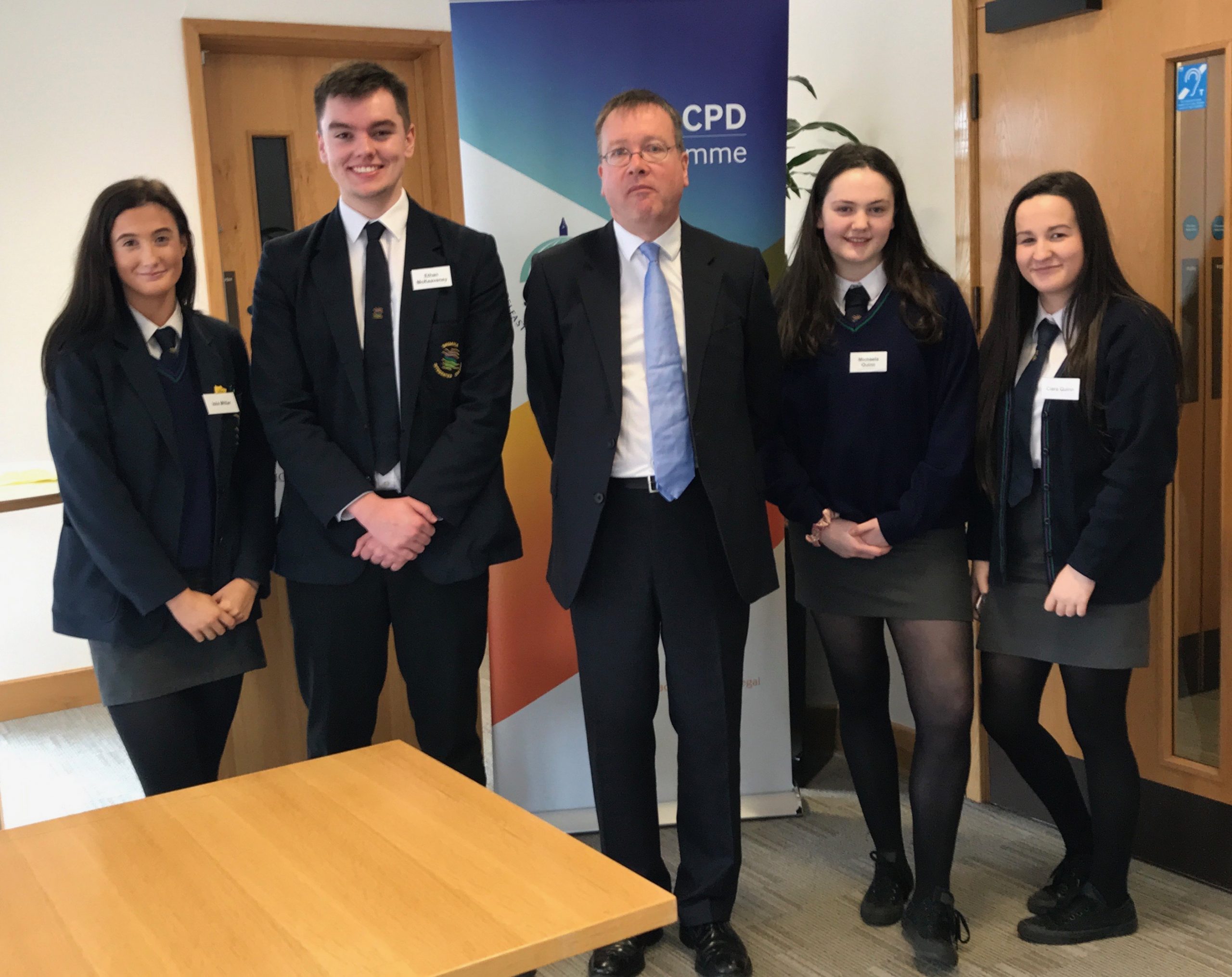
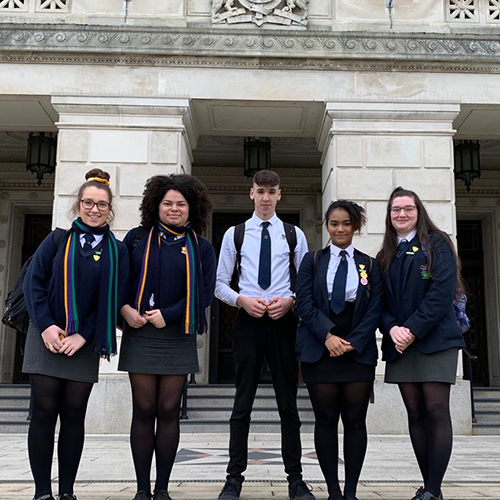
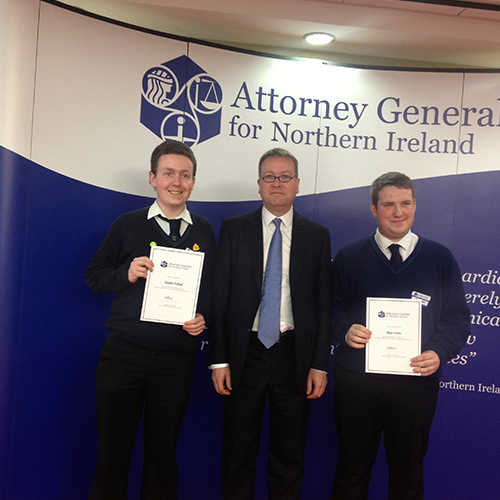
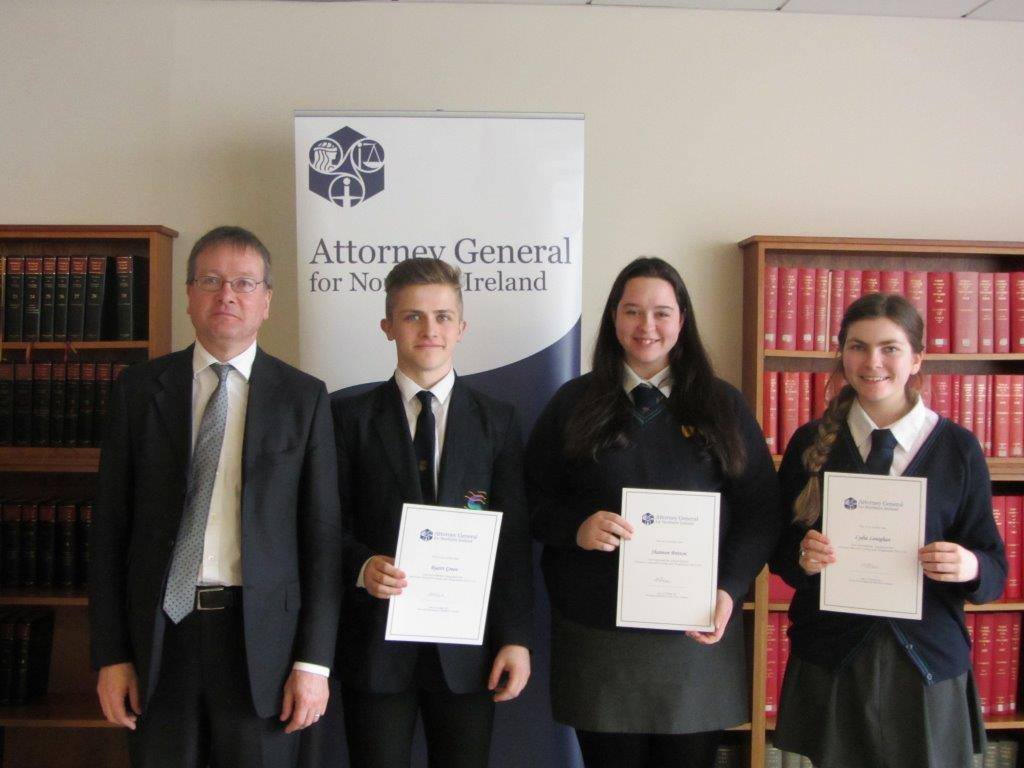
Generations of Shimna students benefited. The programme involved travelling to Belfast to sessions at the Attorney General’s offices and at the High Court on a number of occasions throughout the school year.
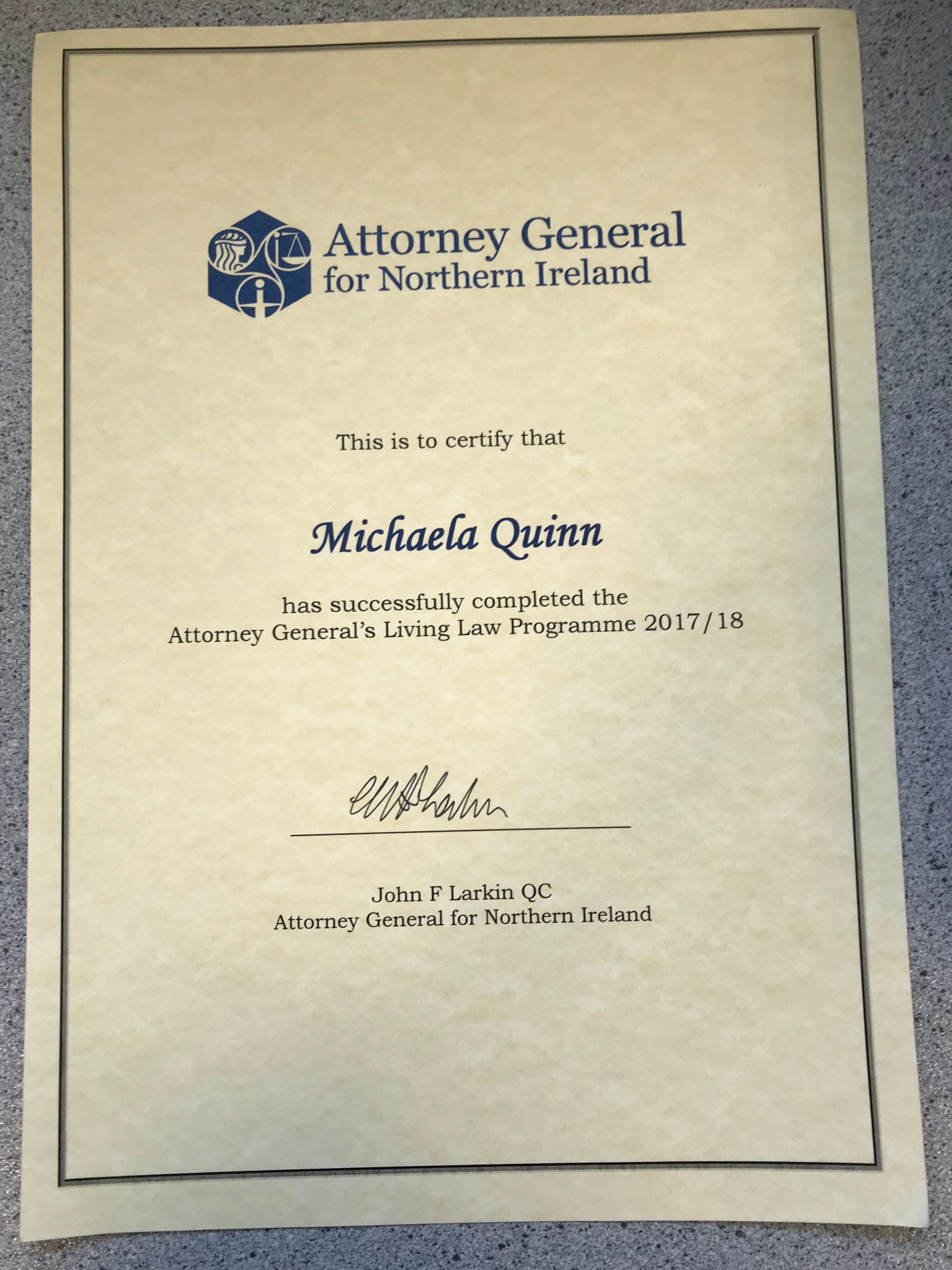
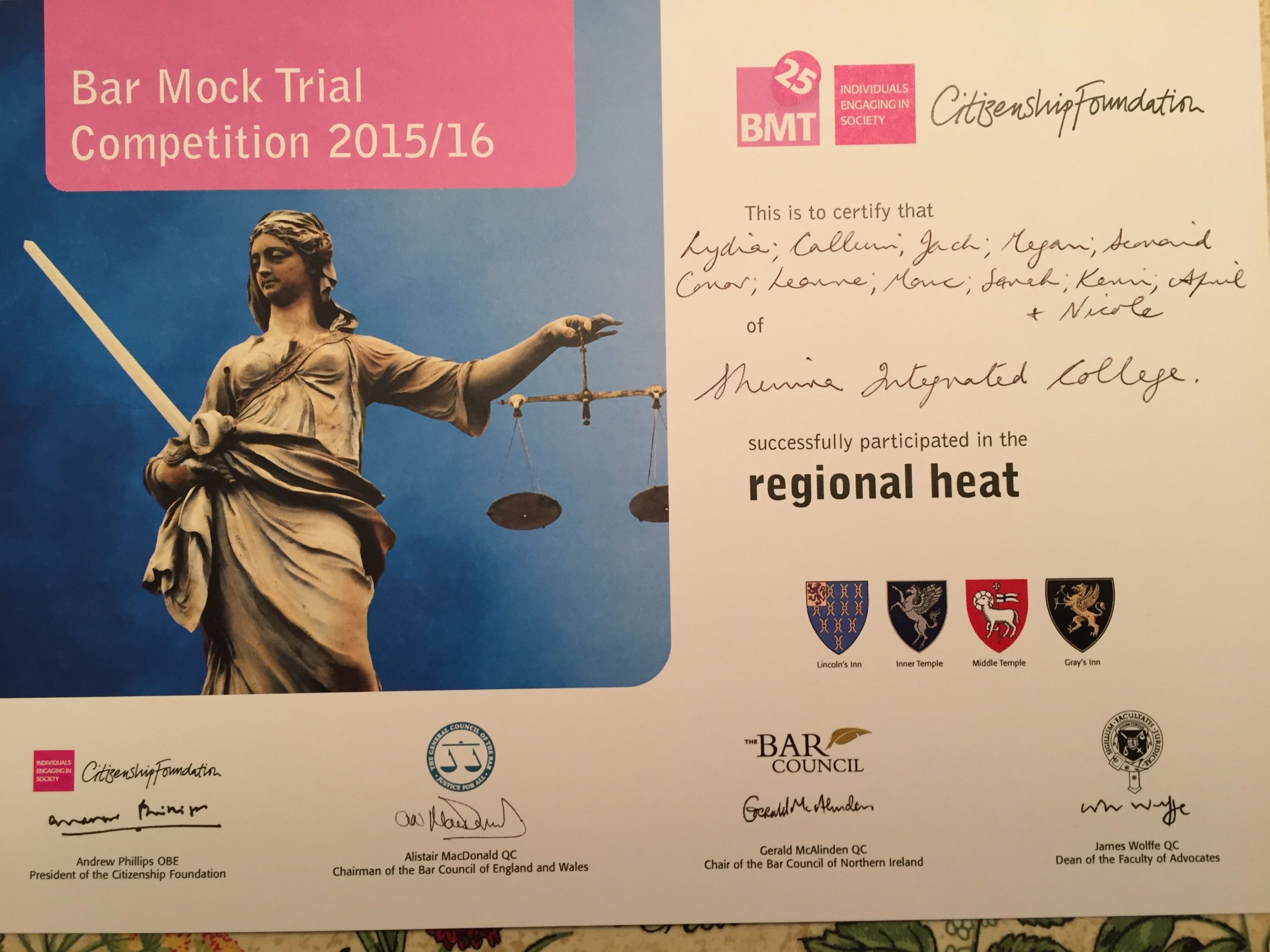
Building on interest in the law, both as a potential career and simply for active citizenship, Ellen explored entering a Shimna team for the UK Mock Bar Trial Competition. Another happy coincidence, the Northern Ireland organiser at the time, Dr Rice from Kilkeel, was particularly committed to supporting entries from non-selective schools. We also had the excellent example of Oakgrove Integrated College, which entered a team each year, and Hazelwood Integrated College, which had won a place in the UK final.
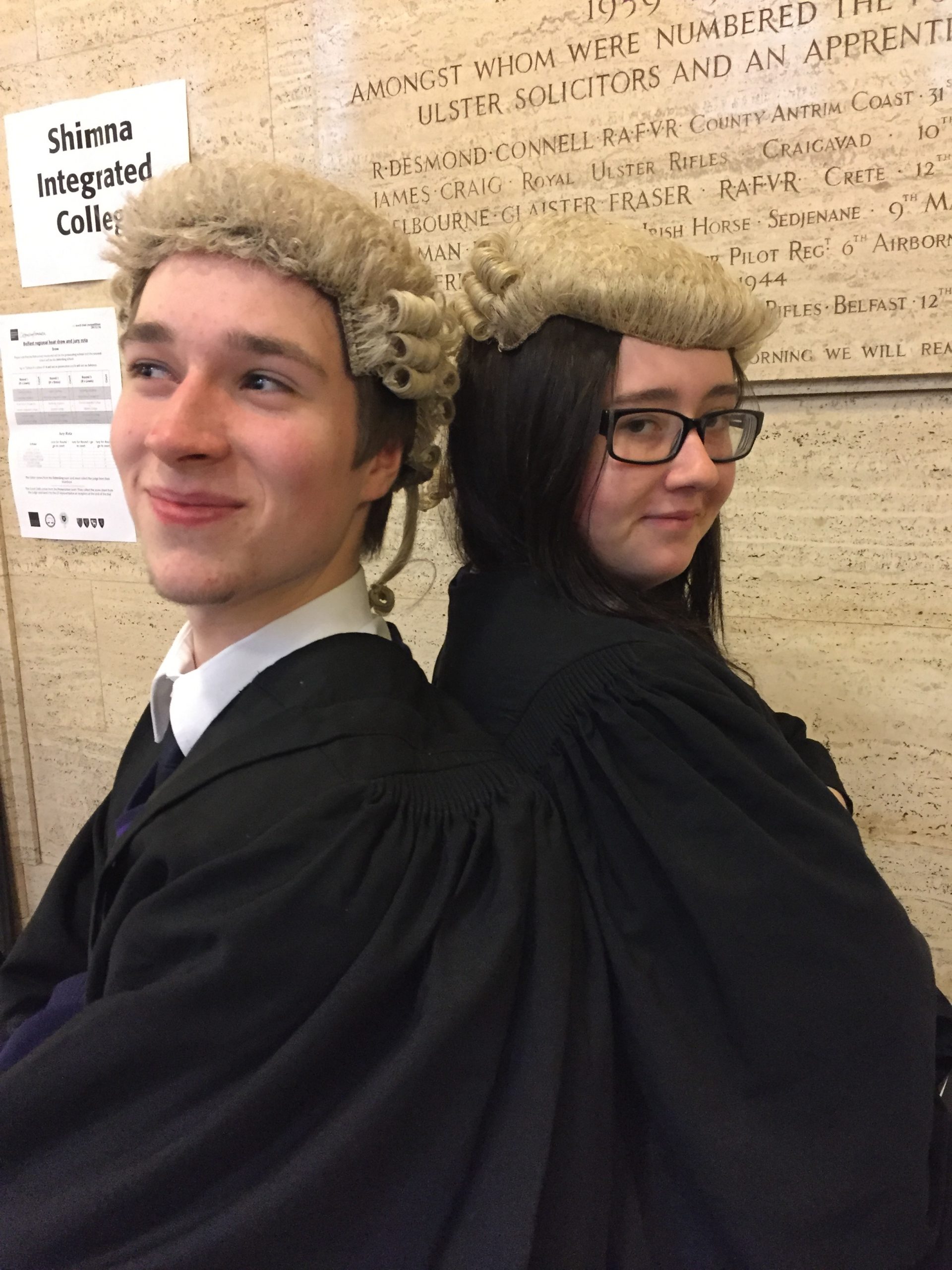
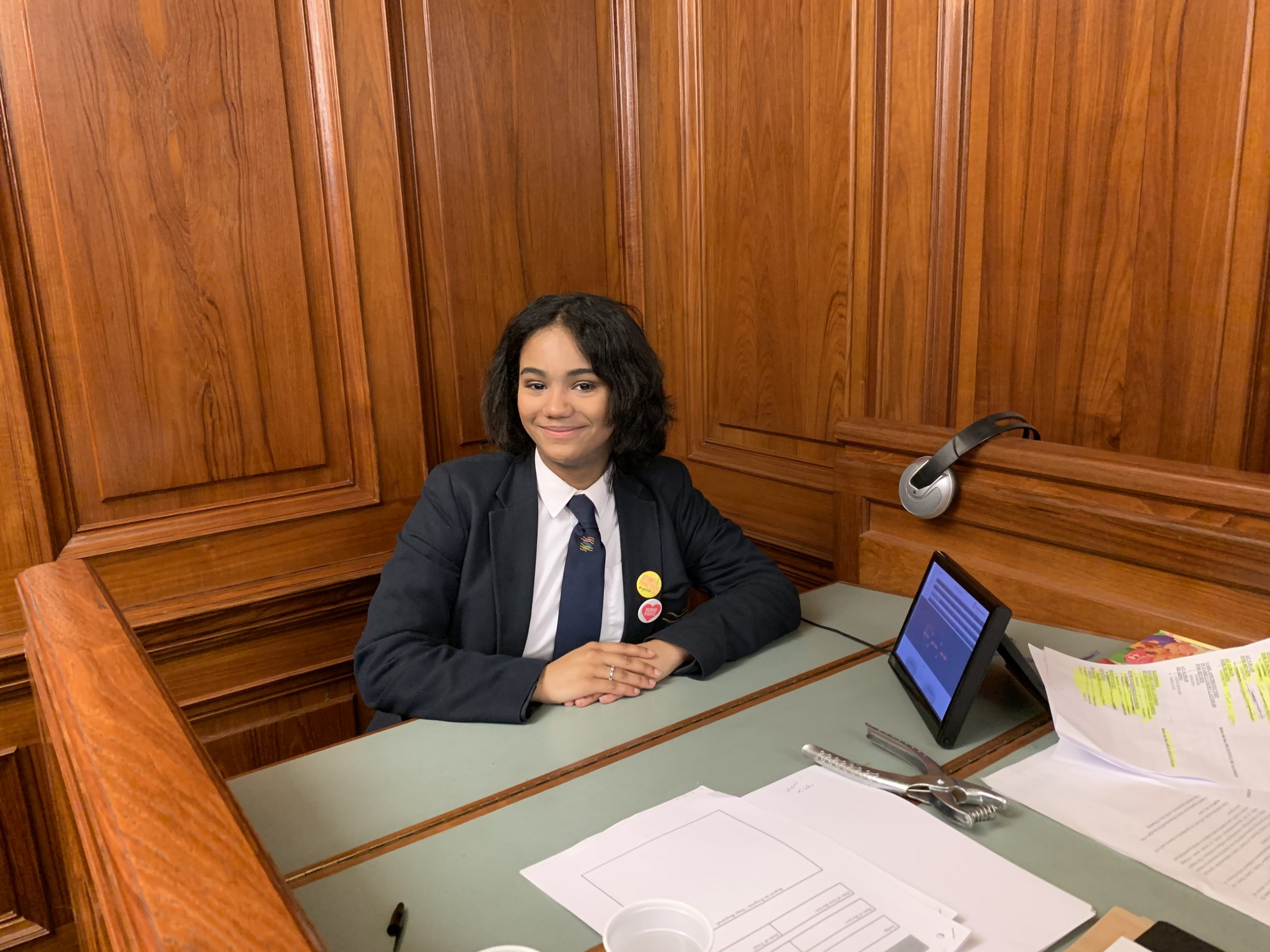
The competition offered opportunities to take part in a wide range of roles. We needed to recruit barristers, witnesses, defendants, a court clerk, a court usher and a jury. This allowed the more confident to step up in speaking roles, and provided an opportunity for others to experience the competition as jurors before committing to a speaking role in the following year.
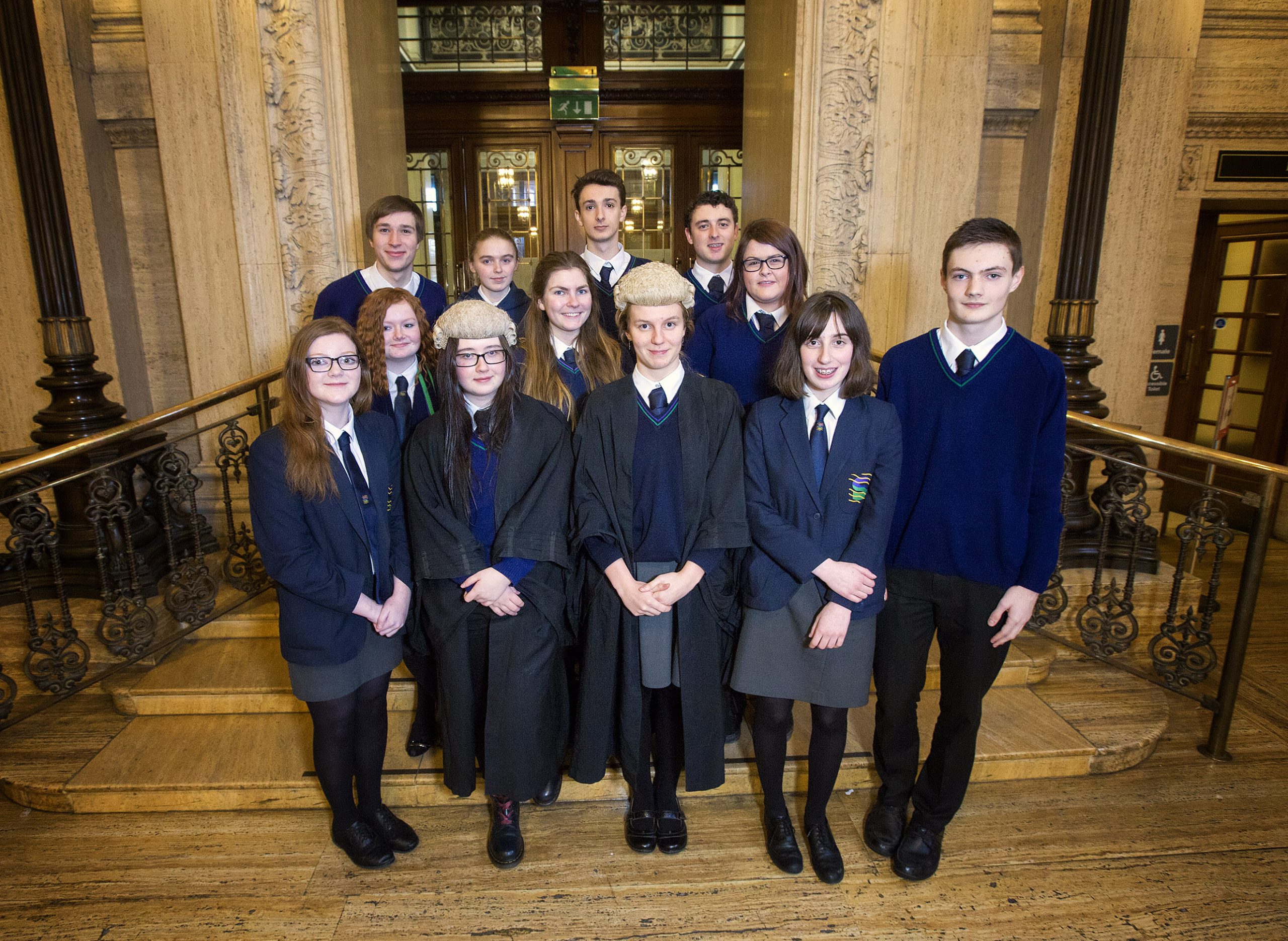
Details of the cases were released a couple of months in advance, and long after-school sessions were devoted to planning prosecution and defence strategies, allowing witnesses and defendants to grow into their role, training the clerk and the usher in their essential role, and providing jurors with an understanding of what to expect. Preparation sessions always fuelled with pizza, courtesy of Rosemarie!
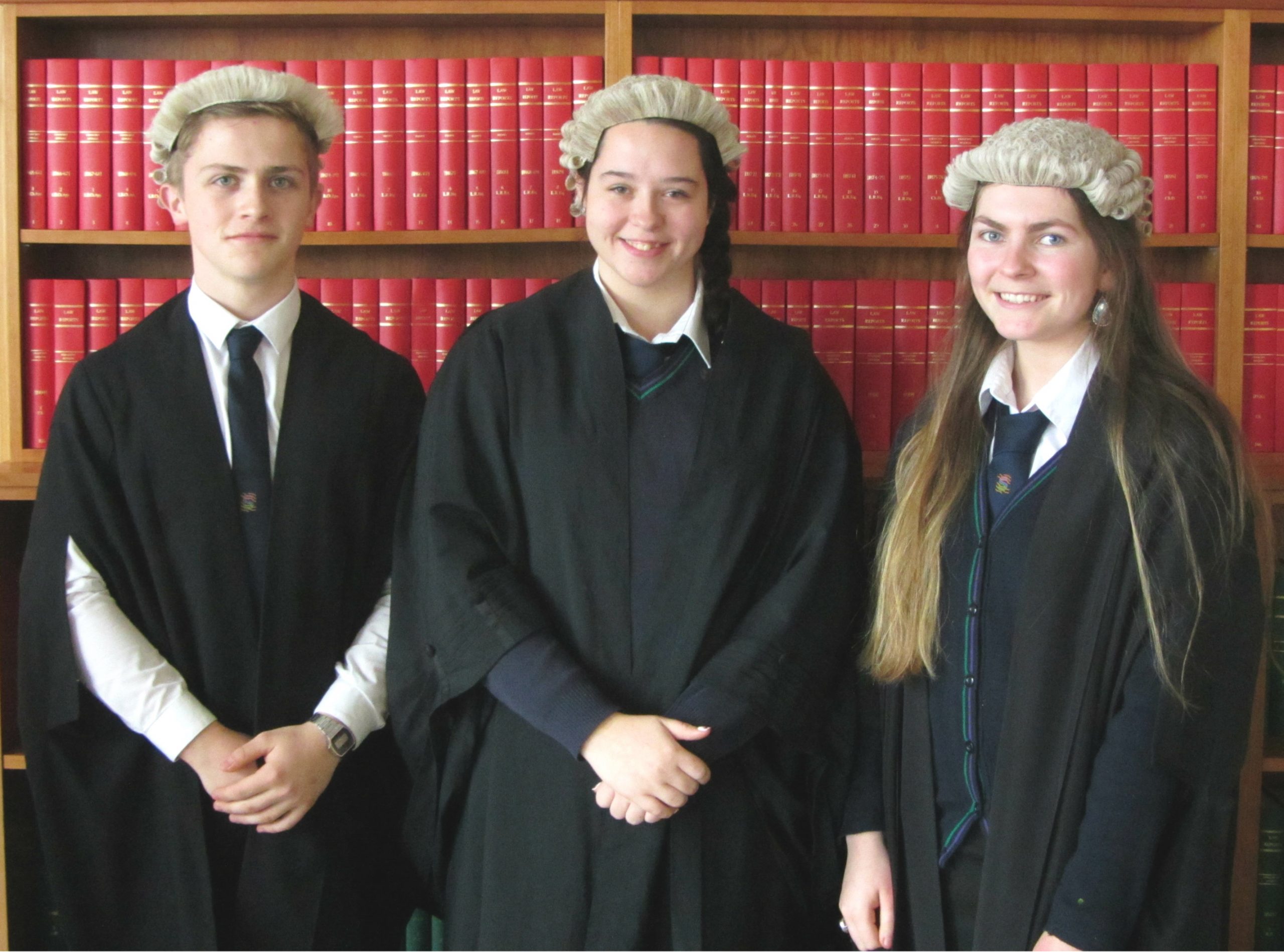
The Citizenship Foundation, which organises the competition, offers the support of a working barrister to advise the team. We were delighted to have the steadfast support of Shimna OldScholar barristers Connor Hamilton and James Dillon. They gave up their time, often after a challenging day in court, to rush down to Newcastle to support and challenge our team in all their roles.
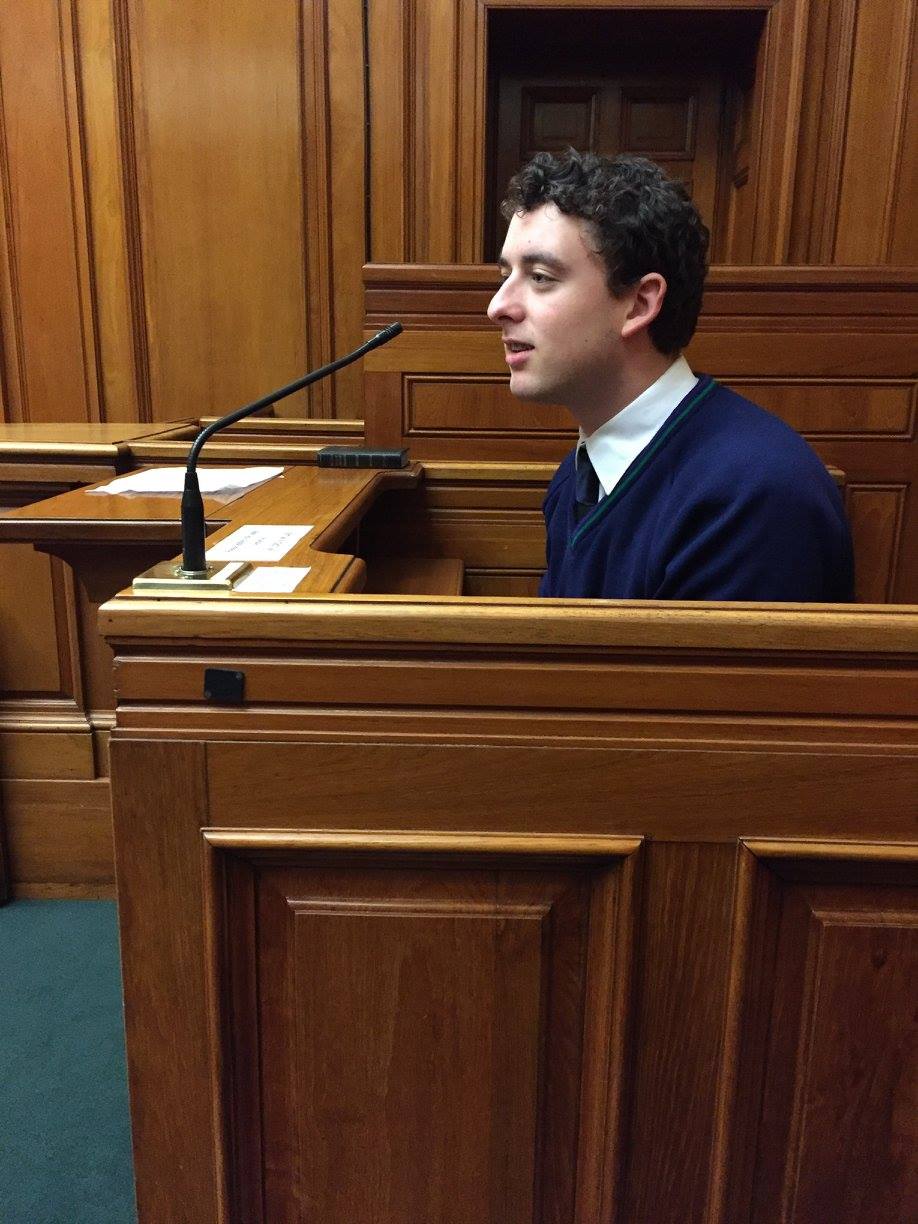
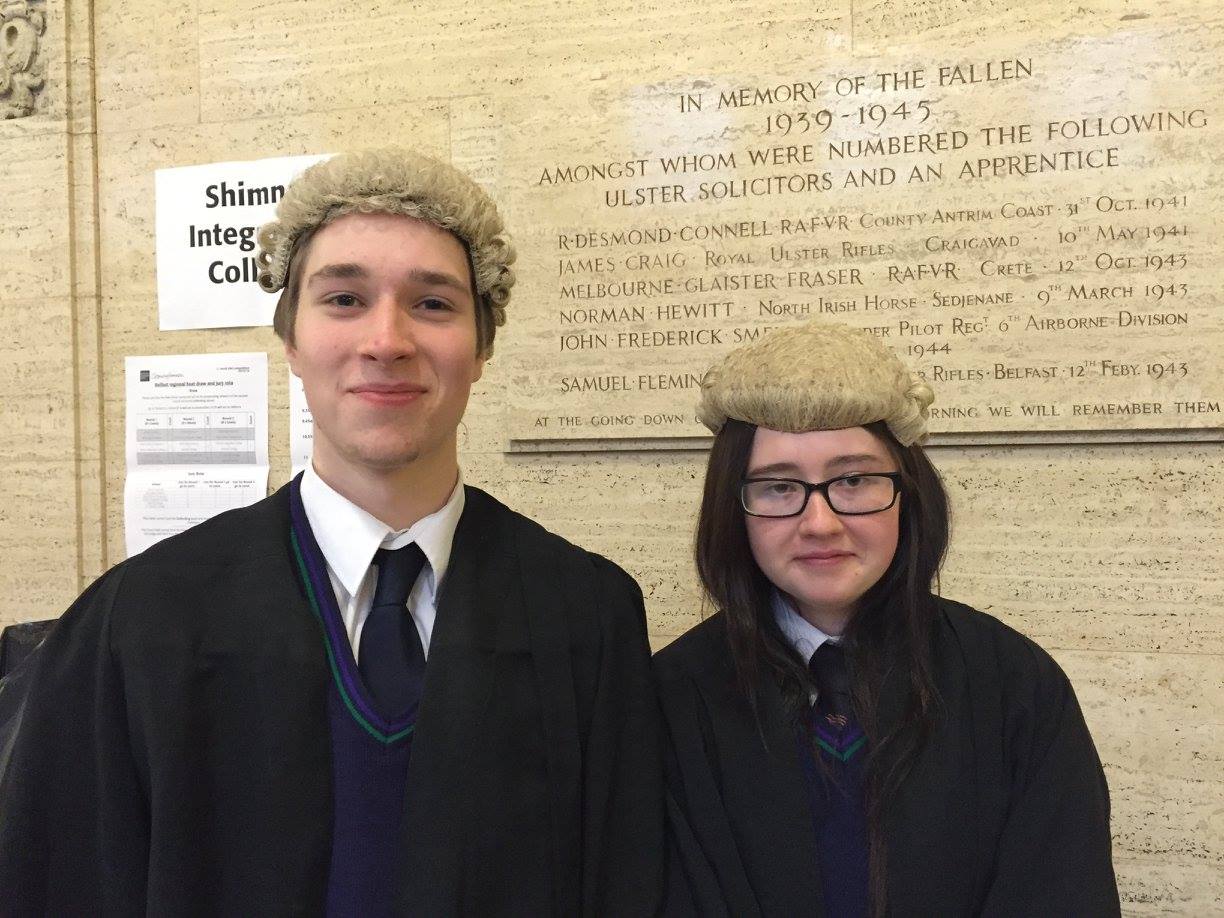
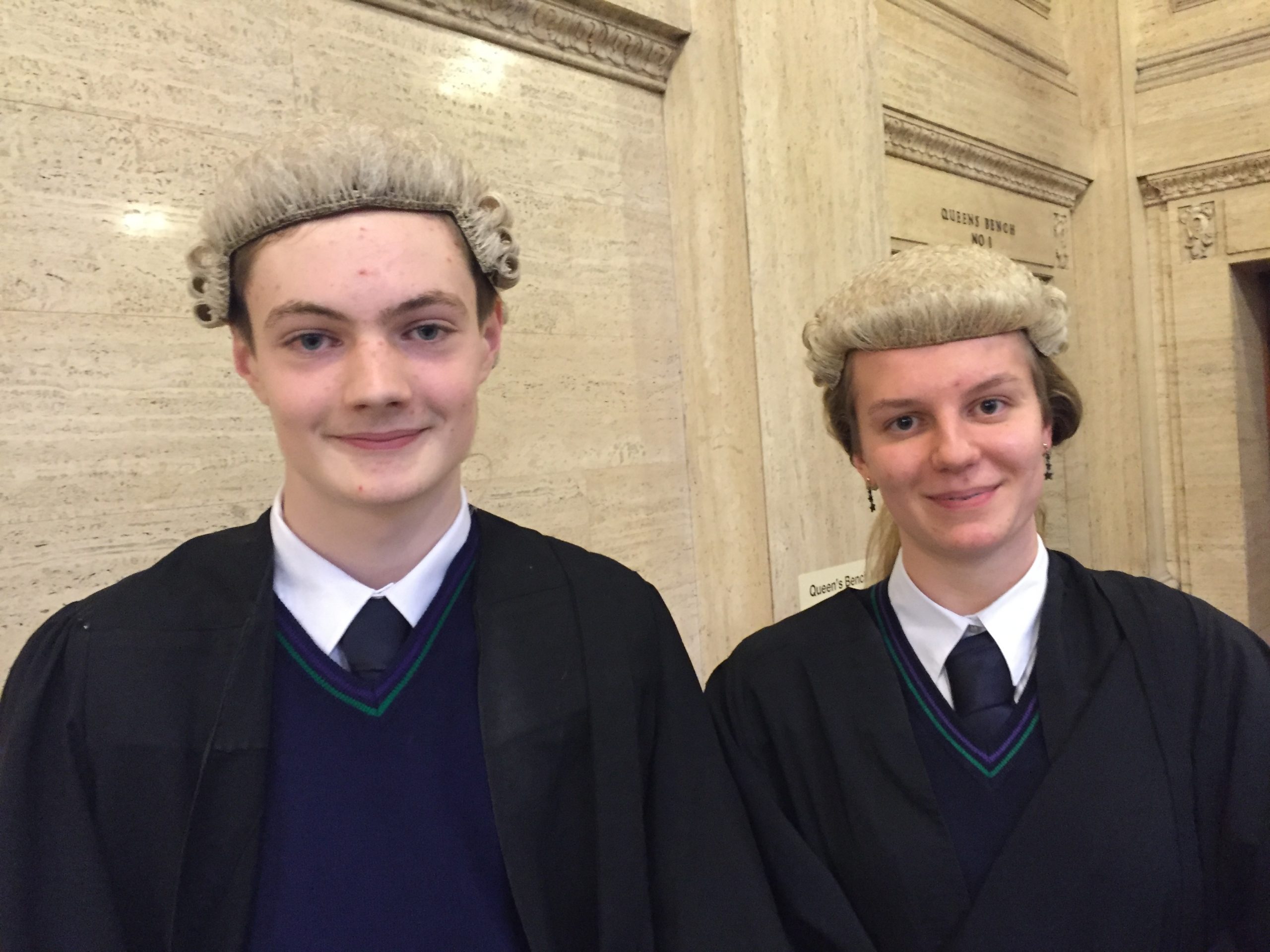
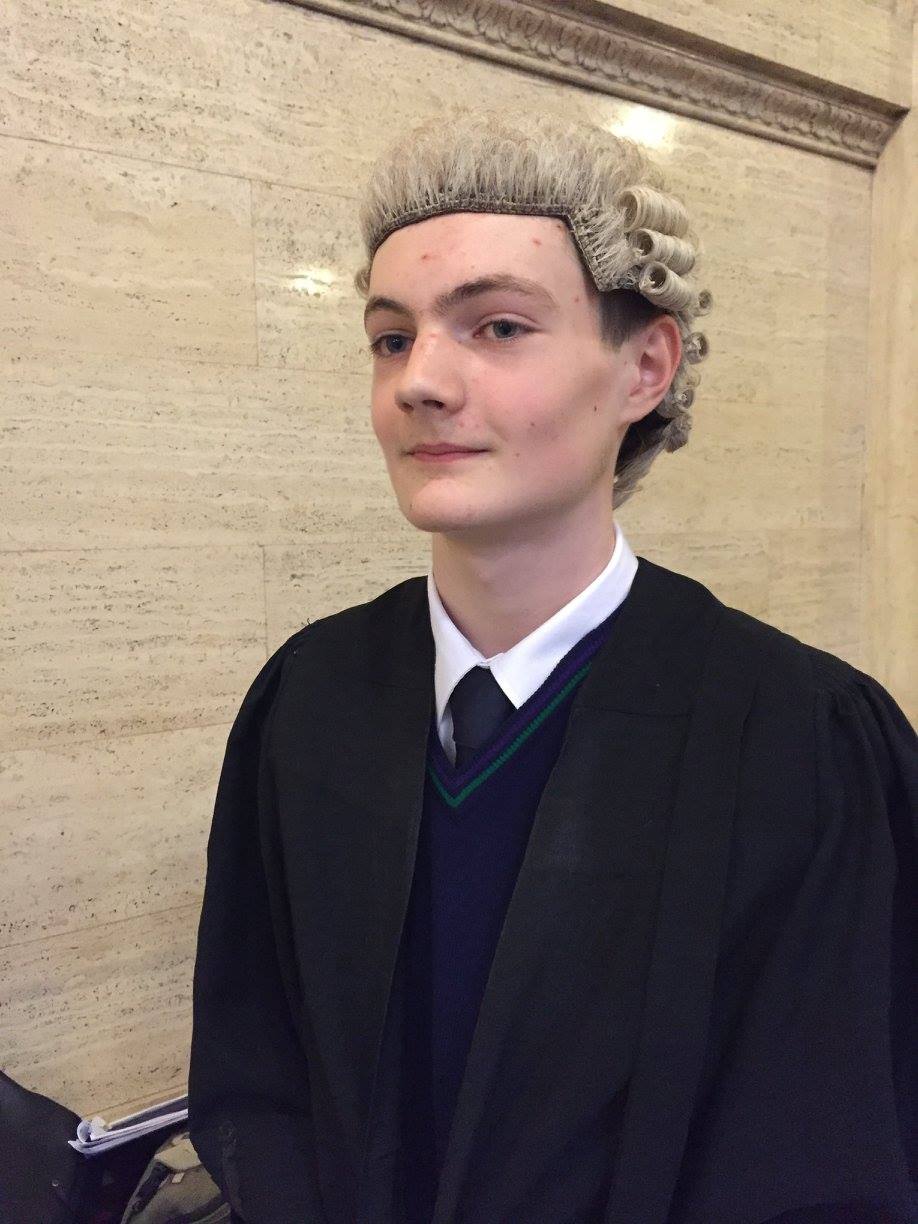
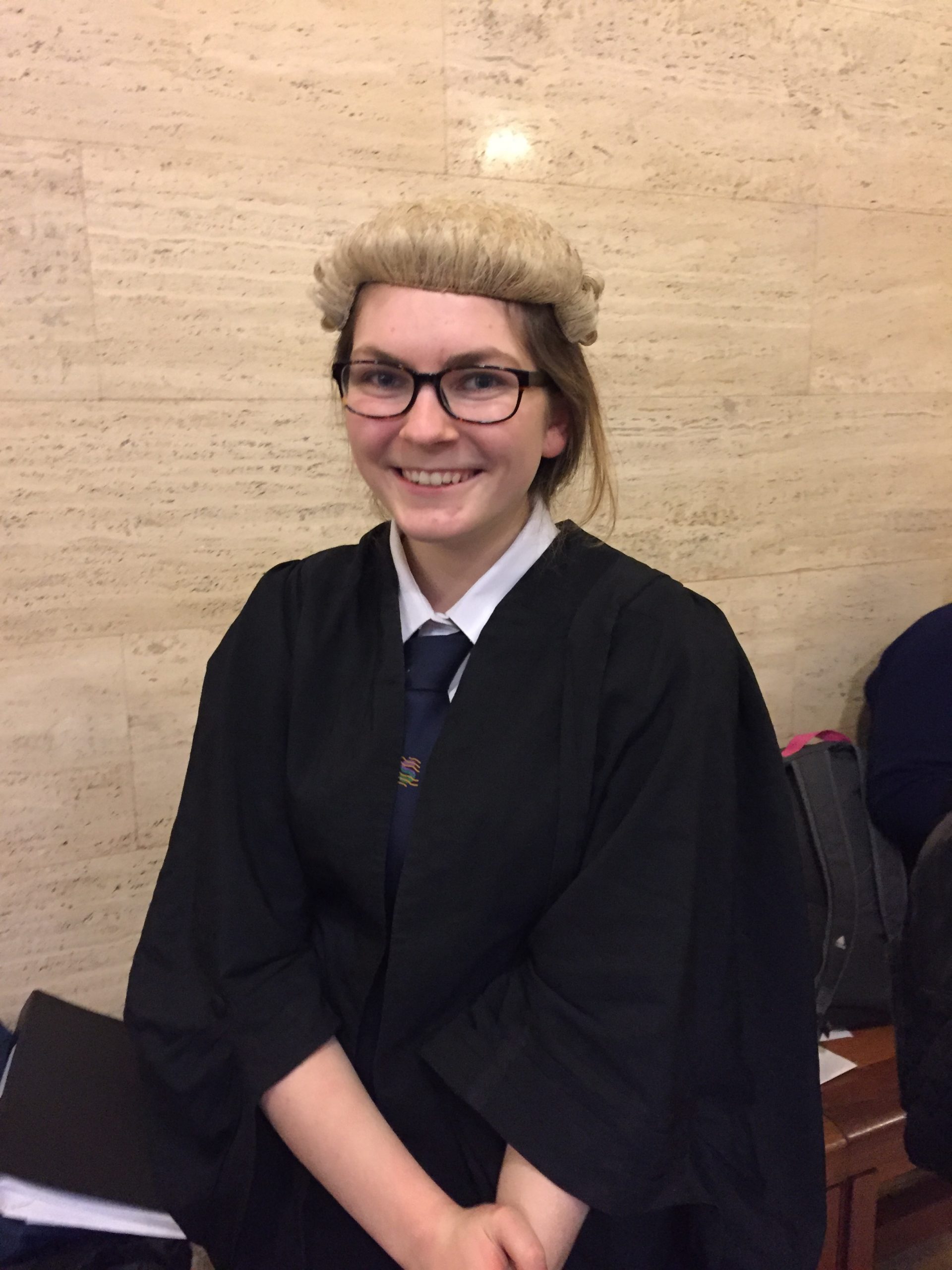
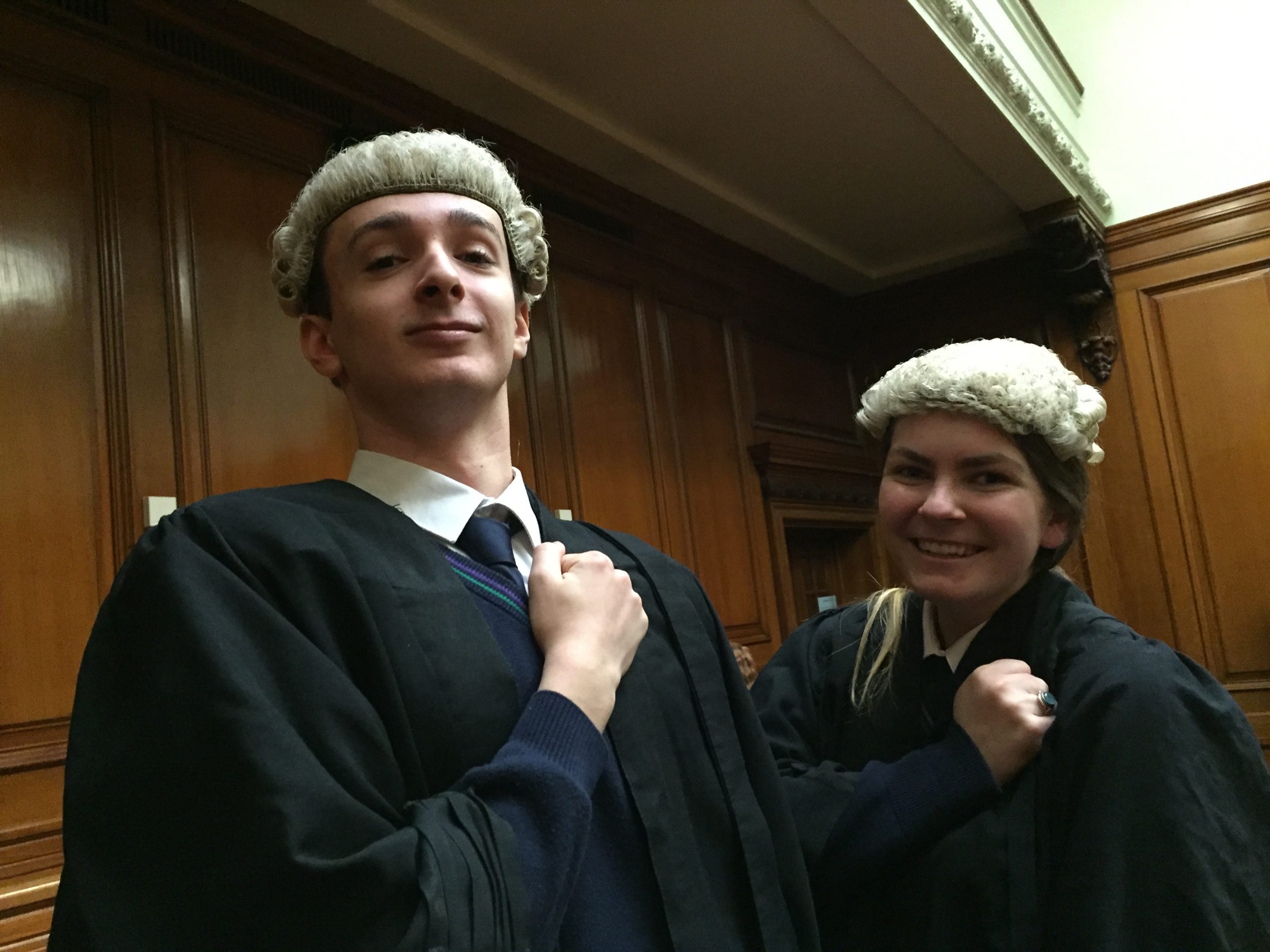
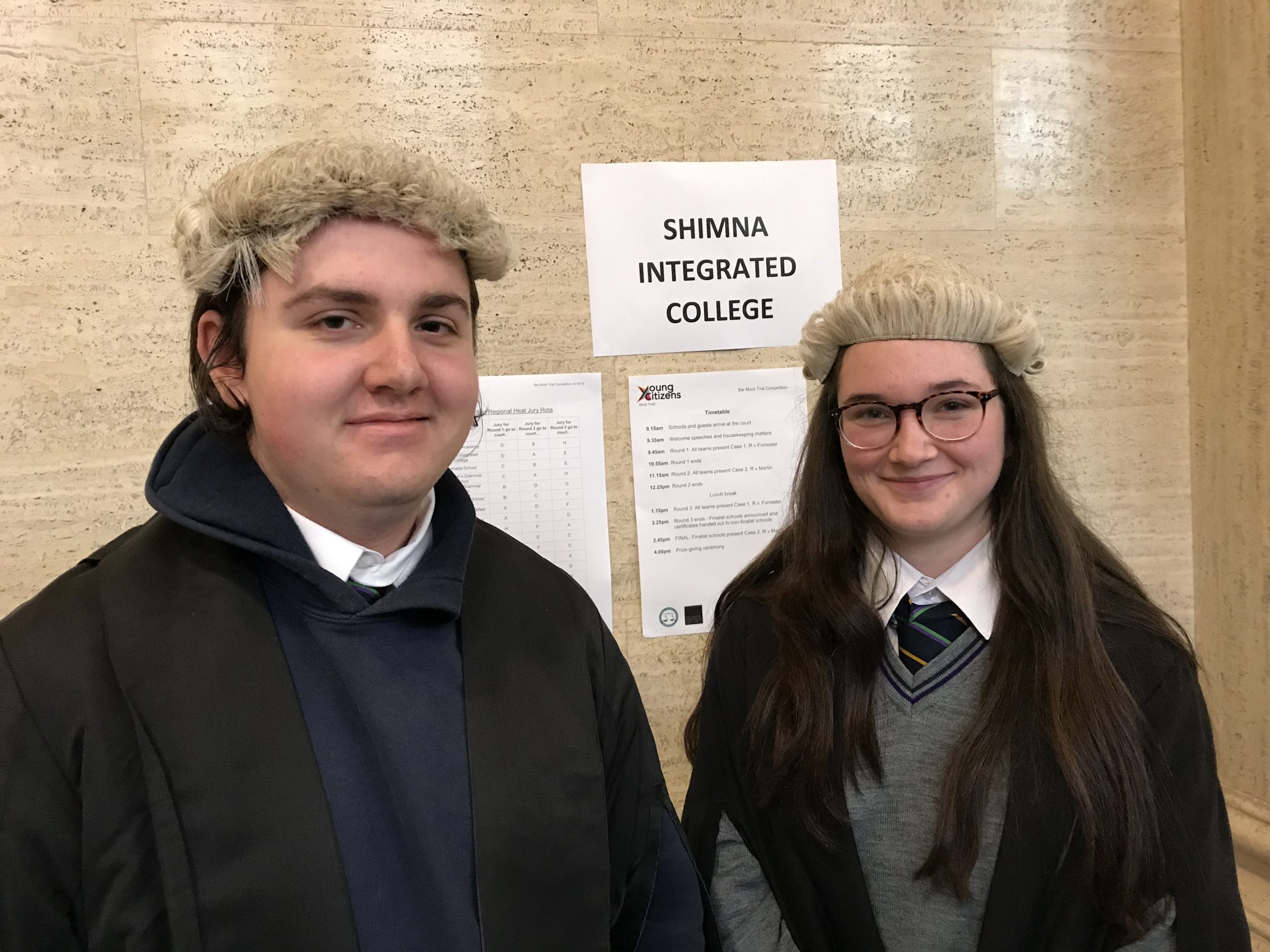
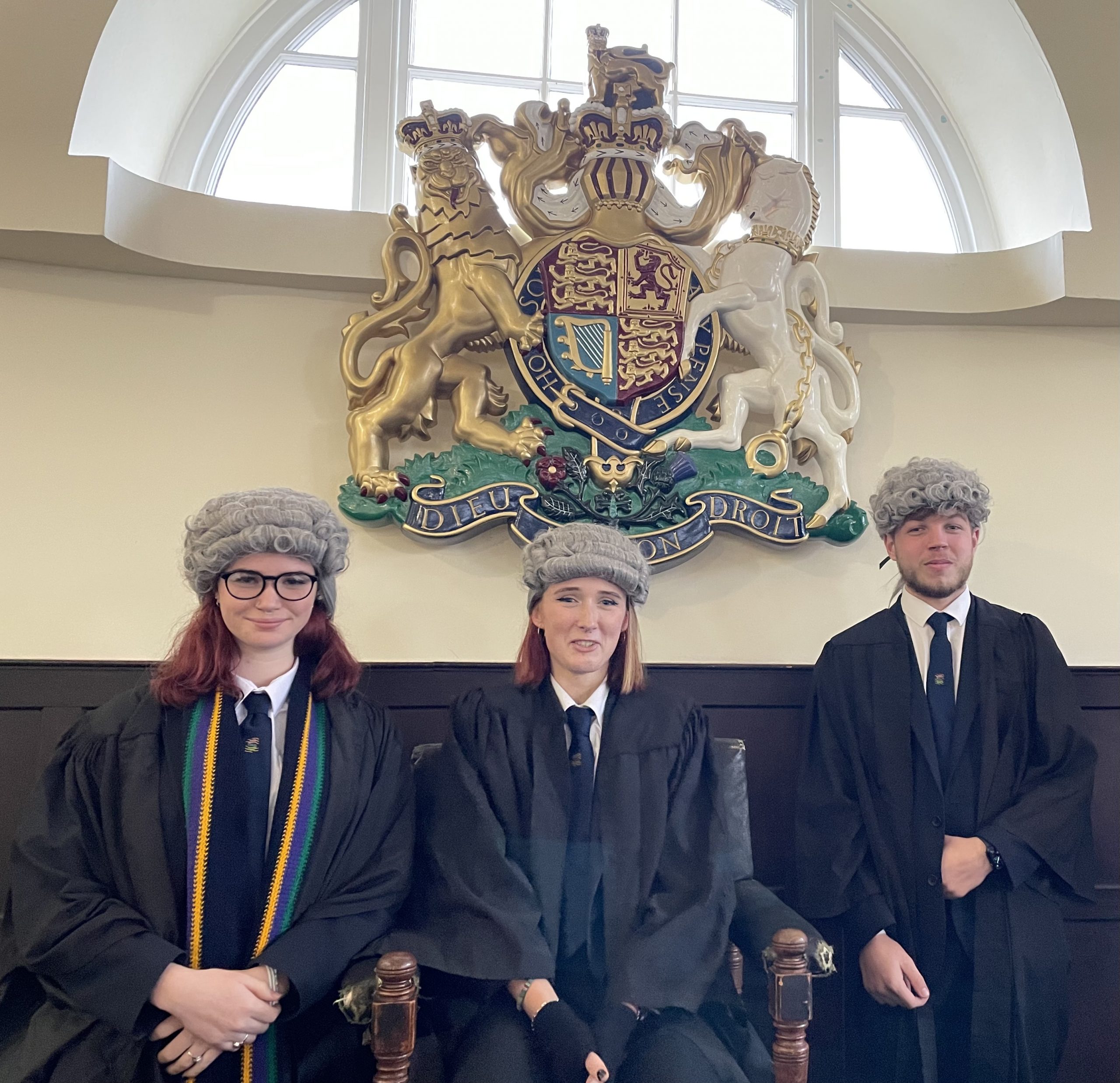
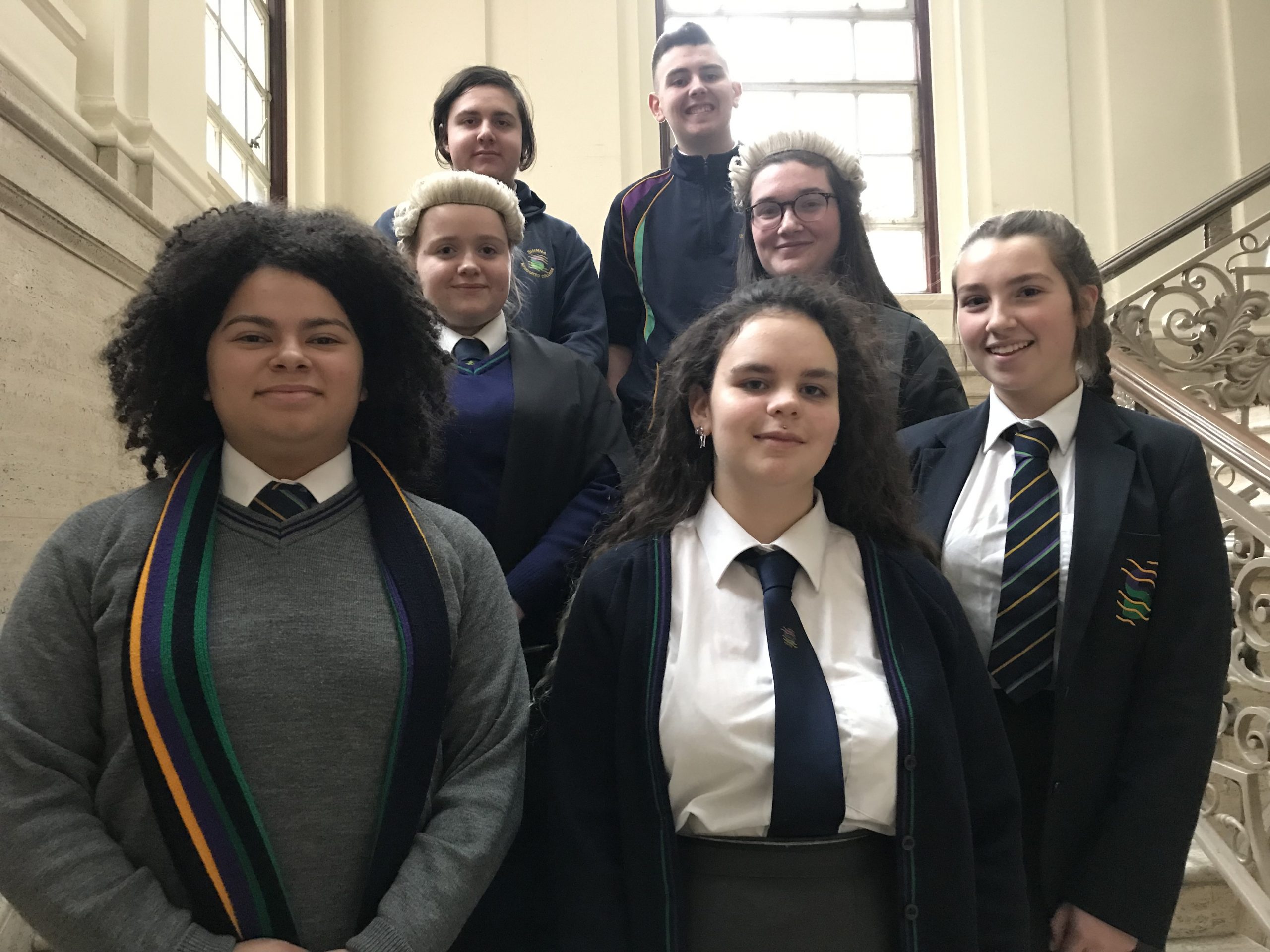
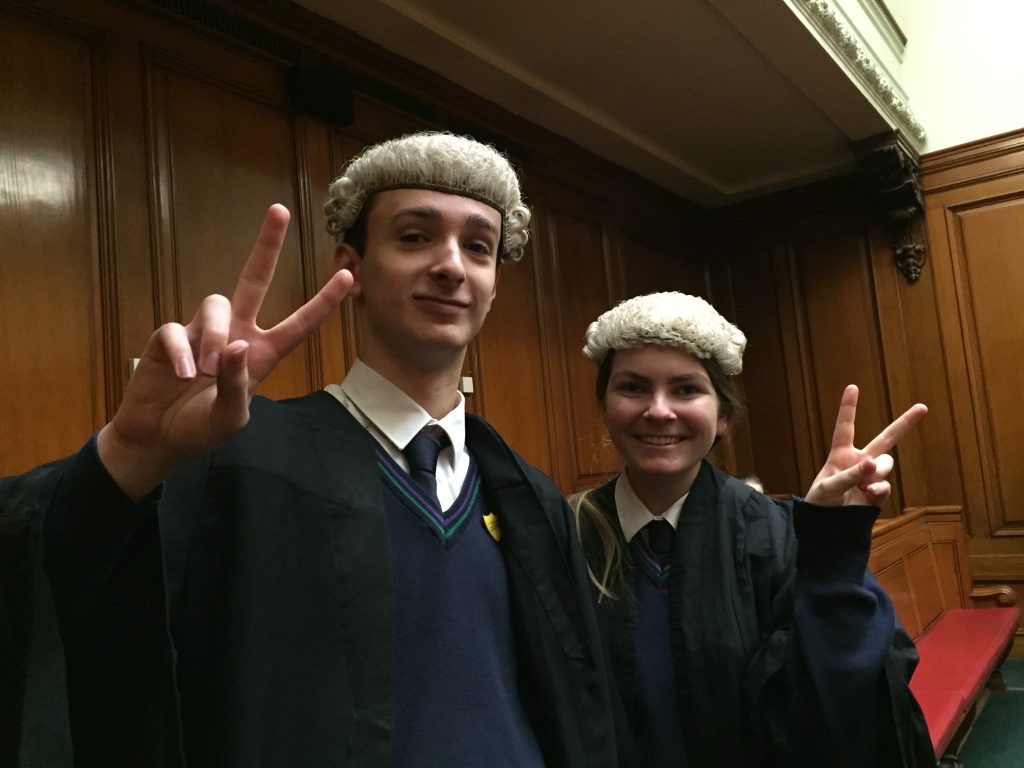
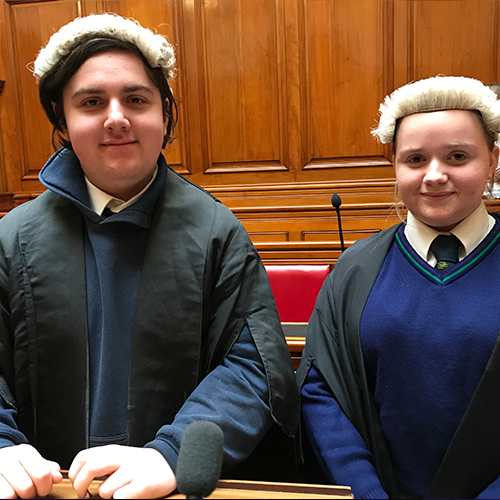
A feature of UK courts is that barristers wear wigs and gowns. Gowns were easily sourced, and we were grateful initially to Connor and James for the loan of their precious wigs. However, once we realised the immense responsibility involved in caring for a real barrister wig, we decided to opt for Google and ordered up some strange looking fancy dress wigs. With a bit of judicious hairdressing to the tails, the wigs looked reasonably convincing, and one of the judges commended us for our enterprise.
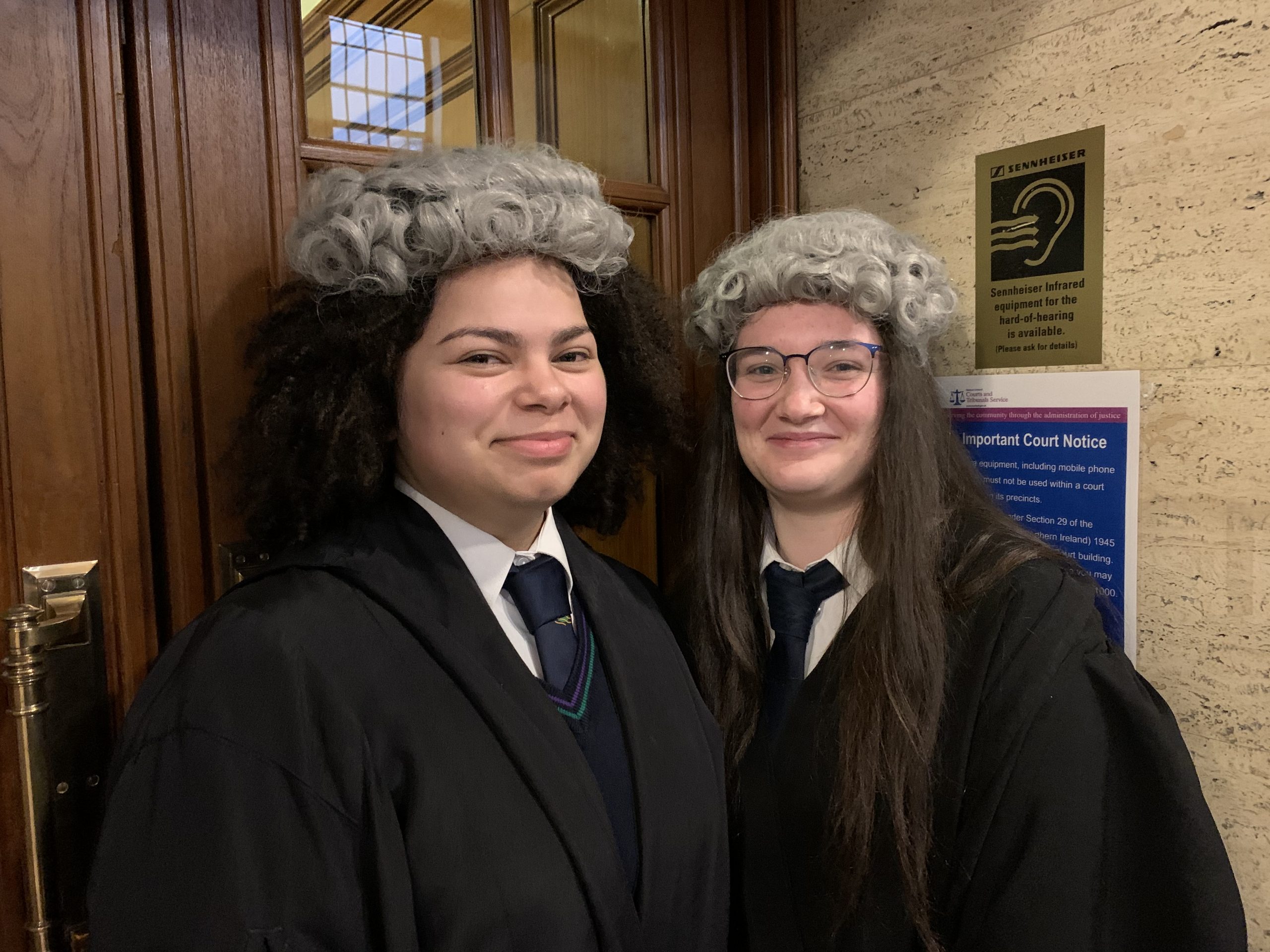
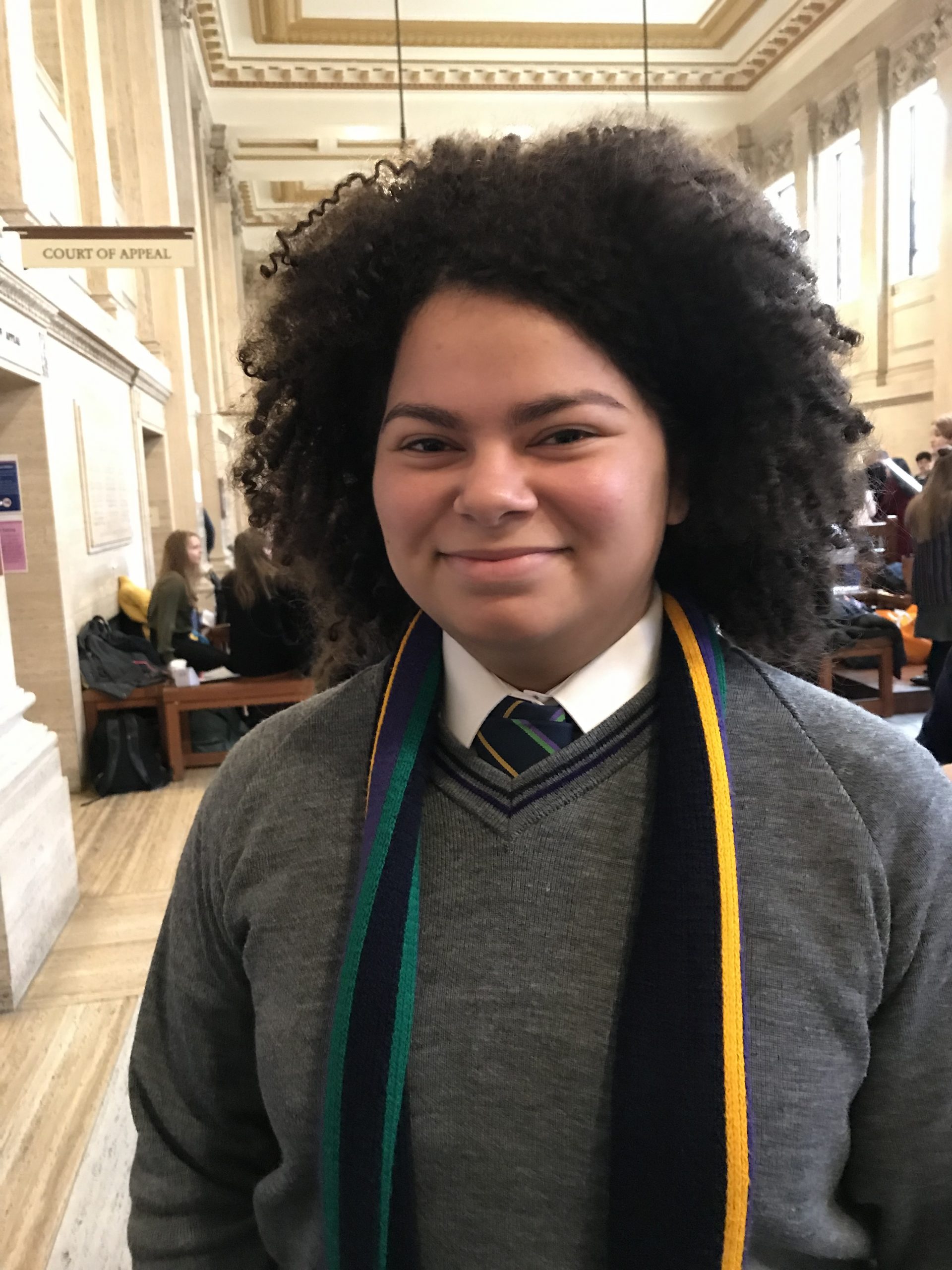
A particular wiggy issue which arose came in the year when we had two black, female barristers on our team. Wigs do not sit well with afro hair, and that is a barrier which could do with being removed!
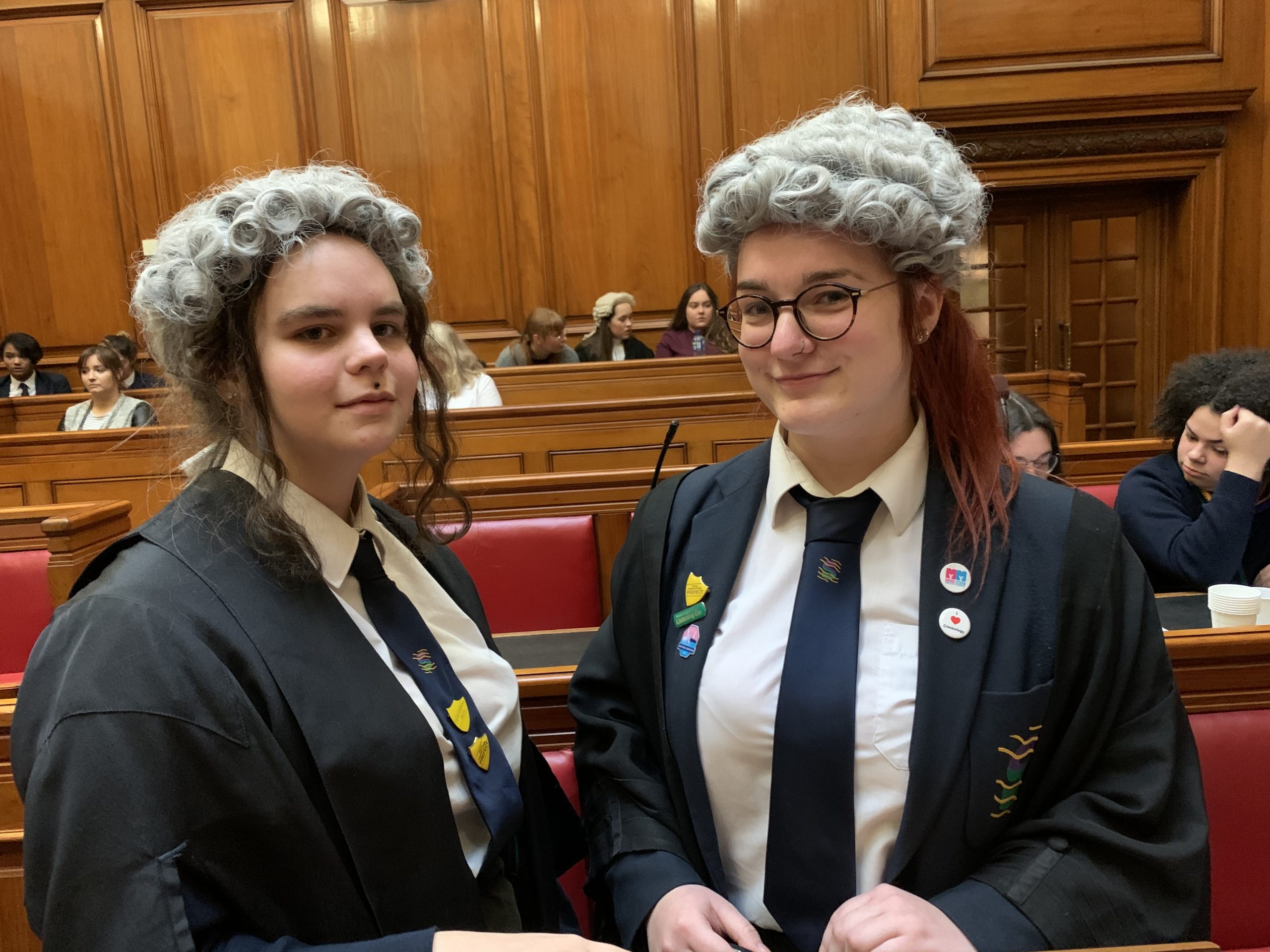
Year after year, our teams arrived at the High Court to be initially overawed, and feeling silly in wigs and gowns, but year after year, their excellent training and preparation kicked in, and they acquitted themselves immensely well. It was indeed very apparent that most participating schools were selective schools, with a critical mass of barrister parents to support the team. However, we were often complimented and offered additional encouragement and support by those very barristers.
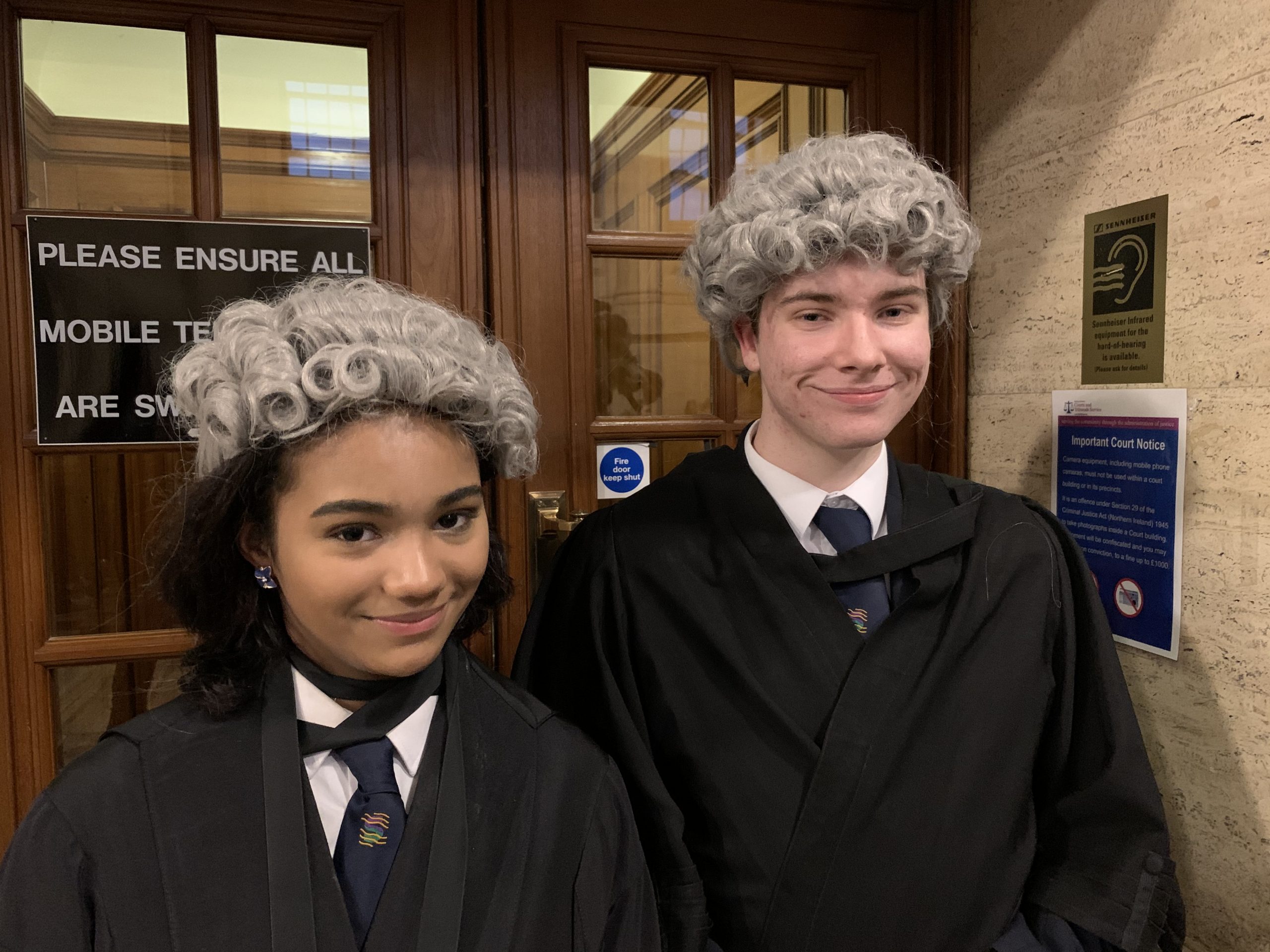
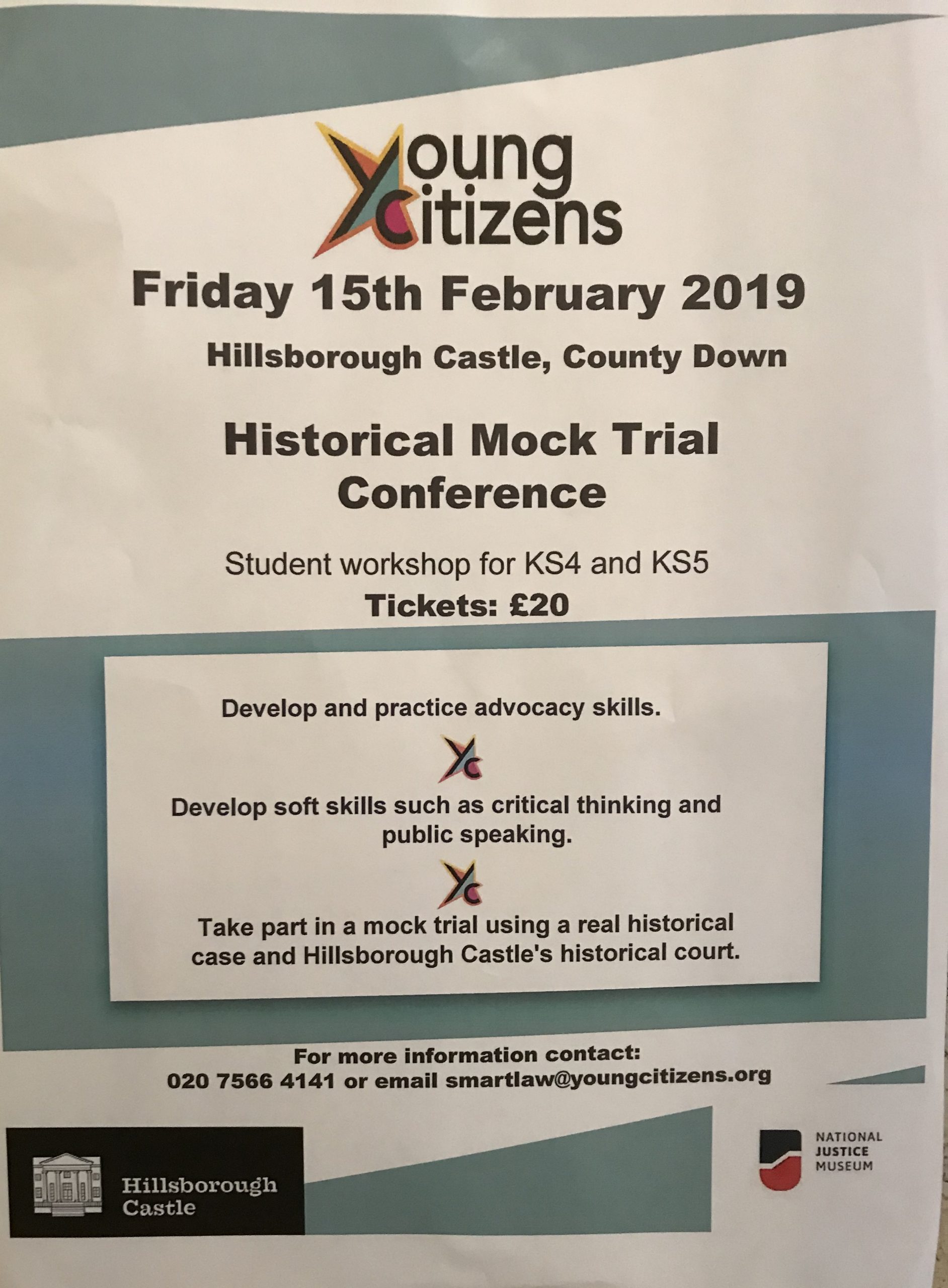
Each case was heard by a real judge, in the real High Court in Belfast. Irrespective of the outcome of the trial, every team received feedback from the judge on their performance, which was invaluable and very encouraging. Eventually, Dr Rice organised an additional training session for prospective team members at the wonderful venue of the historic courthouse in Hillsborough.
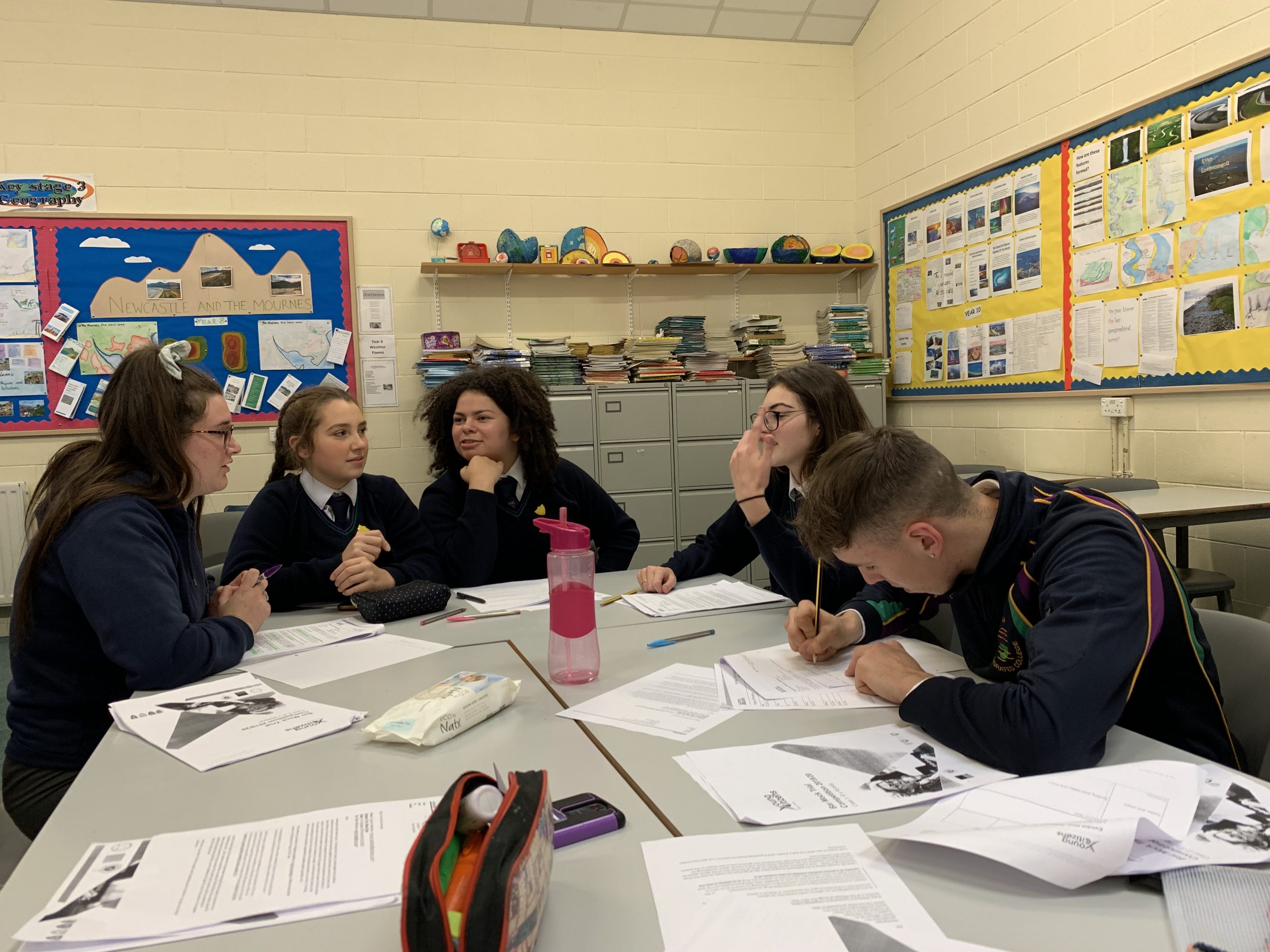
The advance training session gave our team an understanding of how a court room is laid out, and where each member of the court positions themselves.
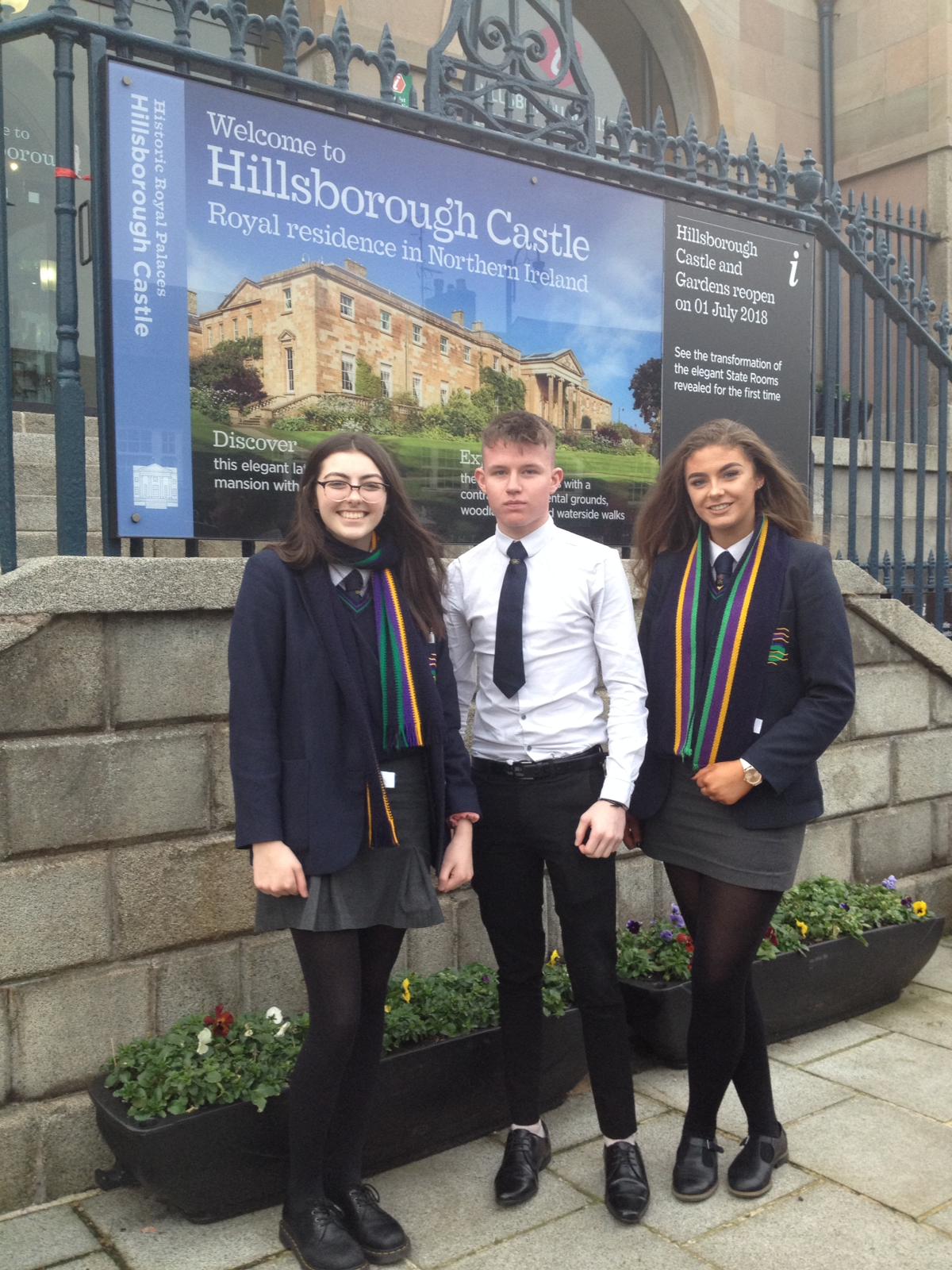
For once, geography was on our side, and we were delighted when we were able to rent the Hillsborough courthouse in subsequent years for a practice session. After Ellen retired, she continued to support the team when Chris Smith took over, and practice sessions in Hillsborough continued to be an invaluable element of the programme.
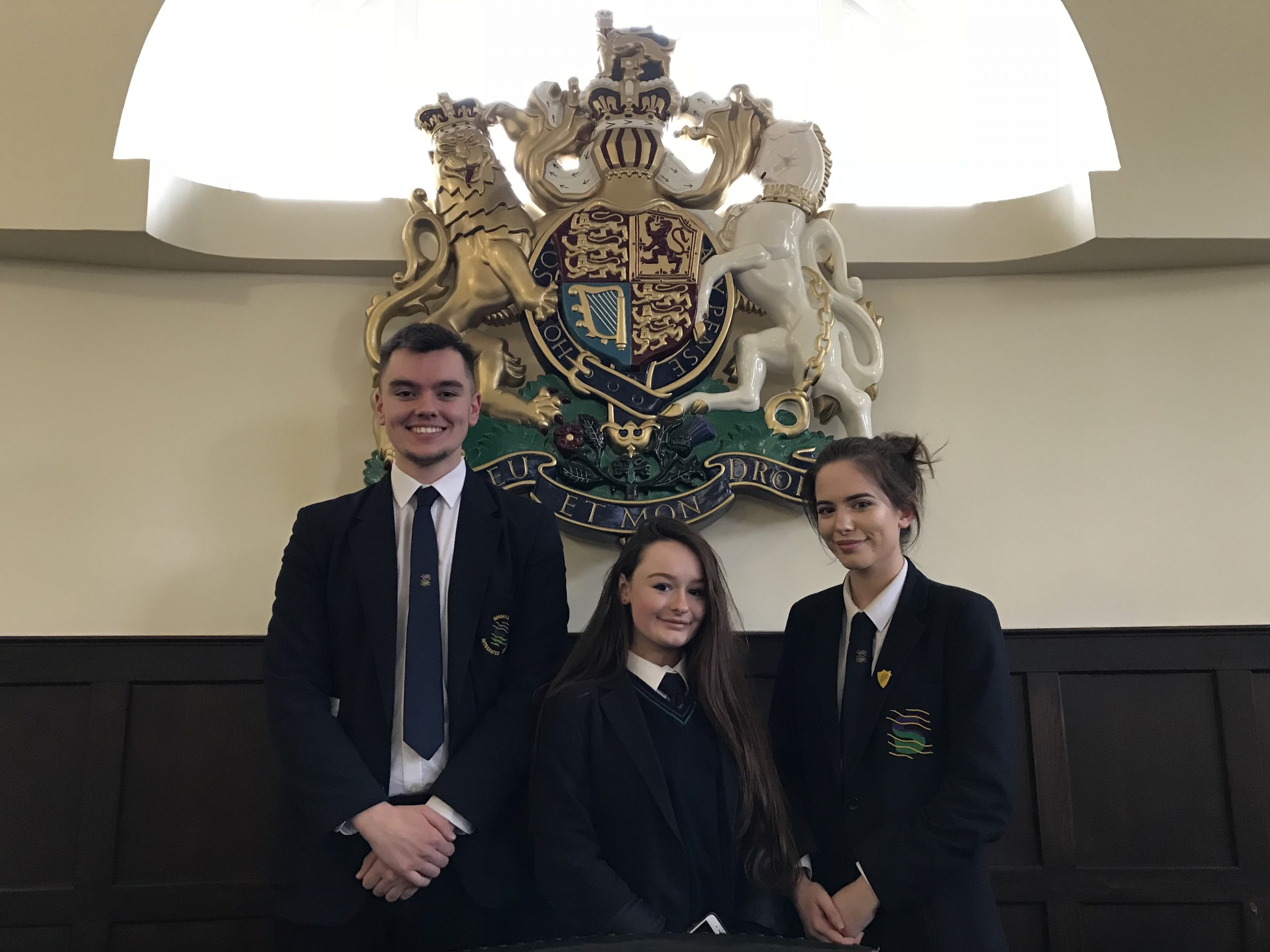
The year Chris took over coincided with the outbreak of COVID, and arrangements were quickly put in place for the competition to take place online. It certainly was a pity to miss out on the experience of the real High Court, but every other aspect of the competition continued. When Chris took a career break, Grace Susay took over, again leading the team into competition online, though the team was able to make an orientation visit to Downpatrick Courthouse.
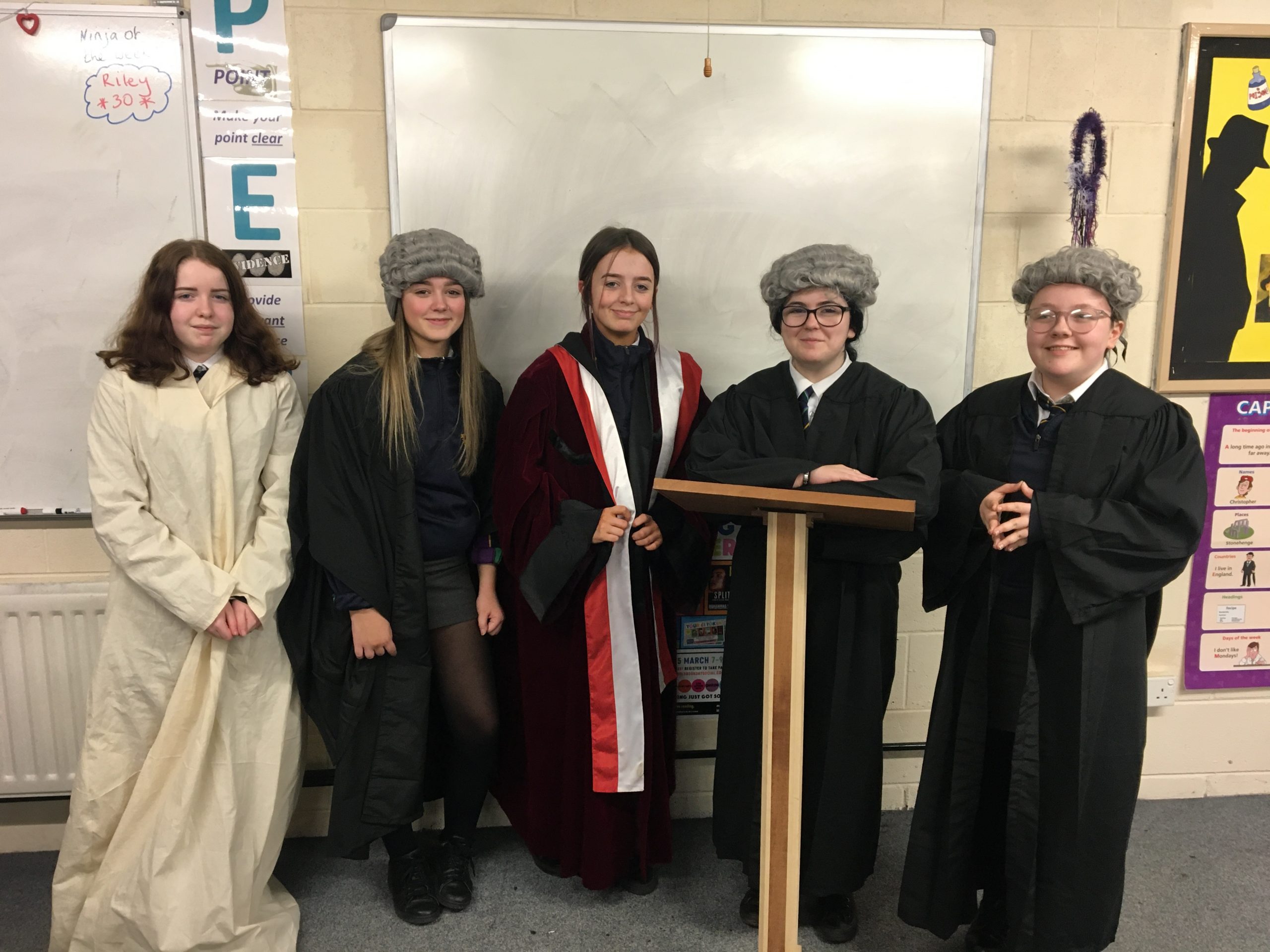
Enthusiasm for understanding the law was infectious, and the English department regularly borrowed the supply of wigs and gowns when building mock trials into the study of literature. One Oldscholar, Danielle Dobson, during her law degree at Ulster University, played an active role on organising Moots, in other words mock trial competitions for budding lawyers themselves.
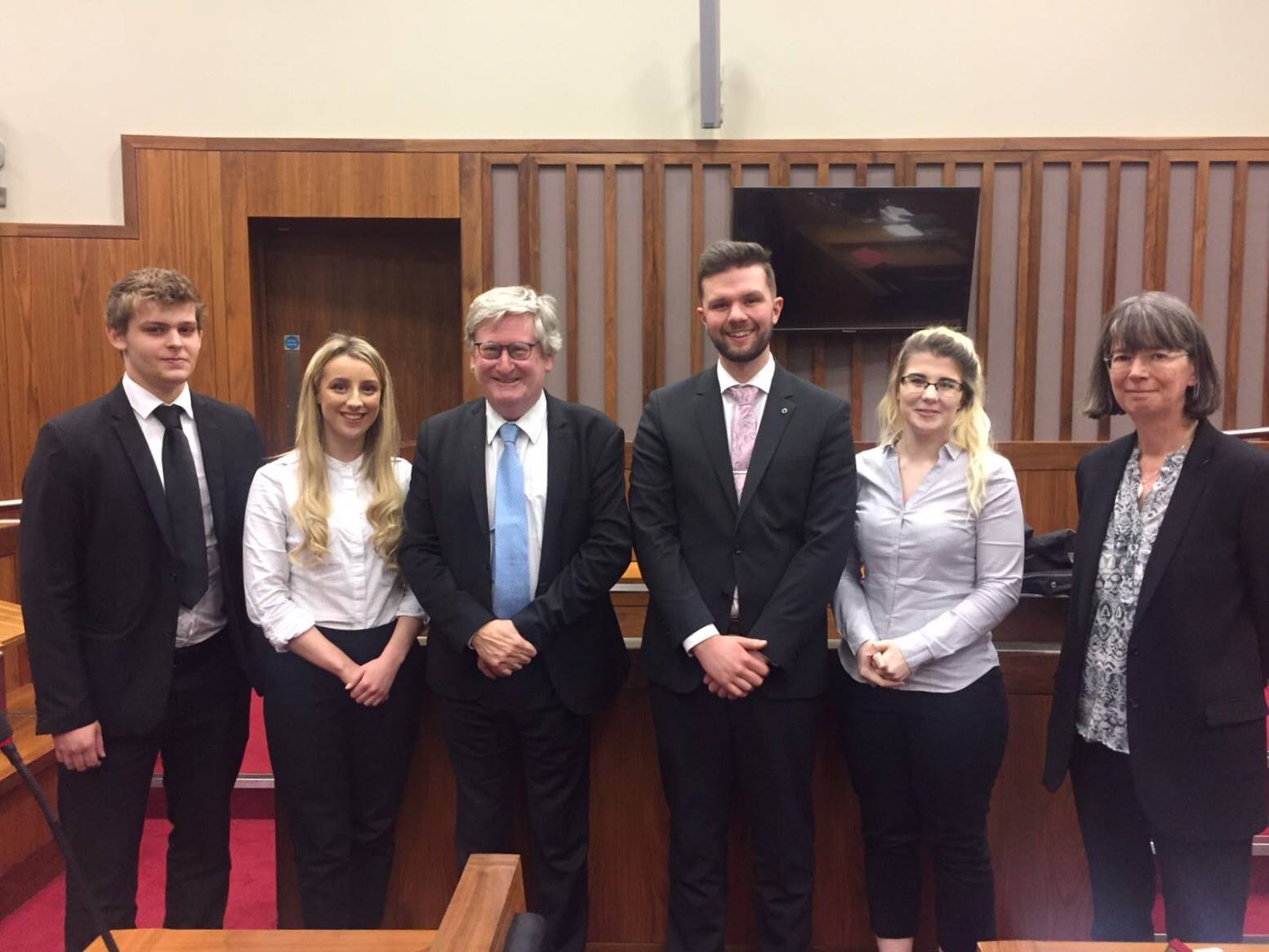
For many of the students who took part, the goal was an understanding of how the law and justice are administered in Northern Ireland. For some, an ambition for a career in law took shape. Several of our team members over the years are now lawyers, or have combined a degree in law with languages, politics, economics or human rights. Future teams can certainly look forward to experienced OldScholars ready and willing to support their preparation for competition.