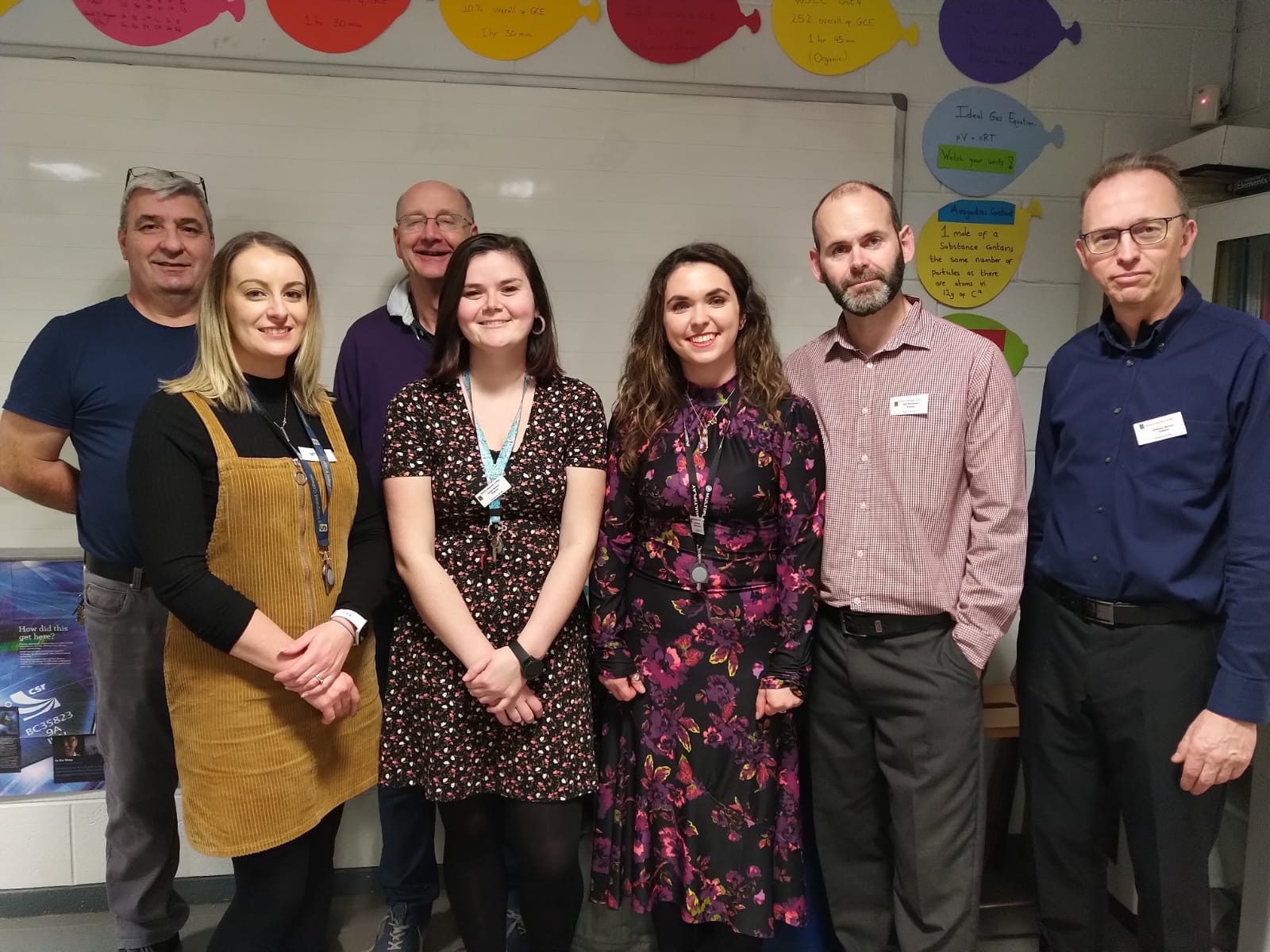
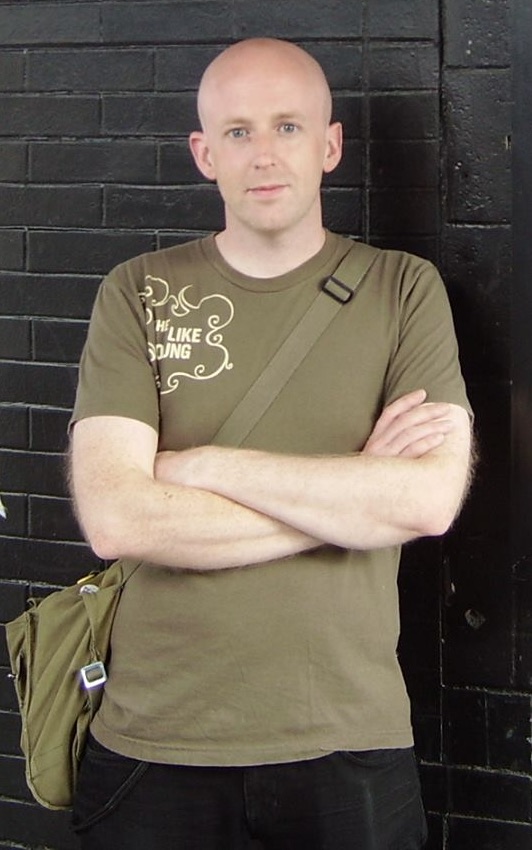
Founder science staff included Kevin Quinn, Joanne Poland and Sean Robinson. Phase one of the Lawnfield building included just one laboratory, but Kevin’s plans for opening attics as needed provided an additional temporary laboratory, which in time was re-converted into a business studies room.
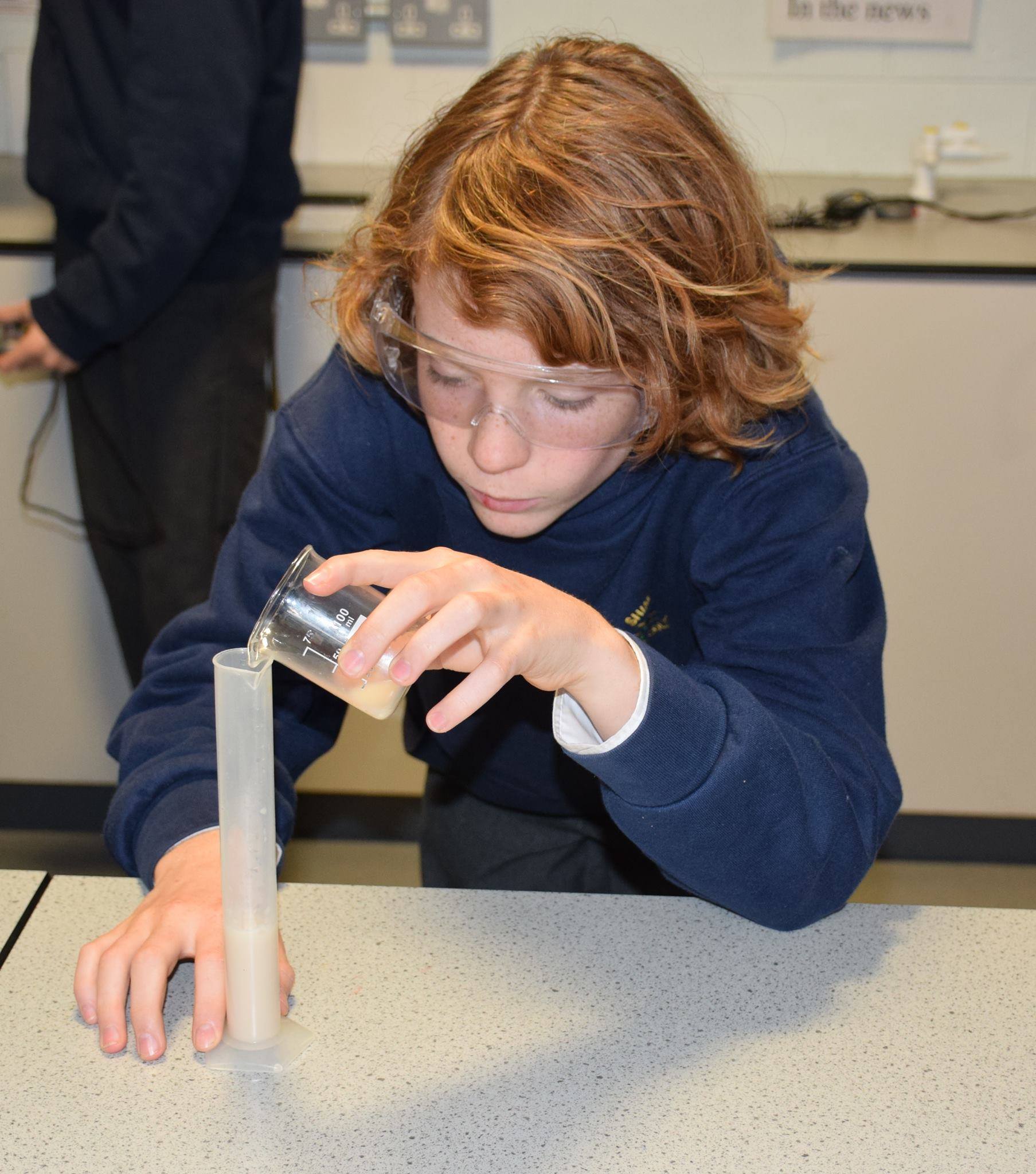
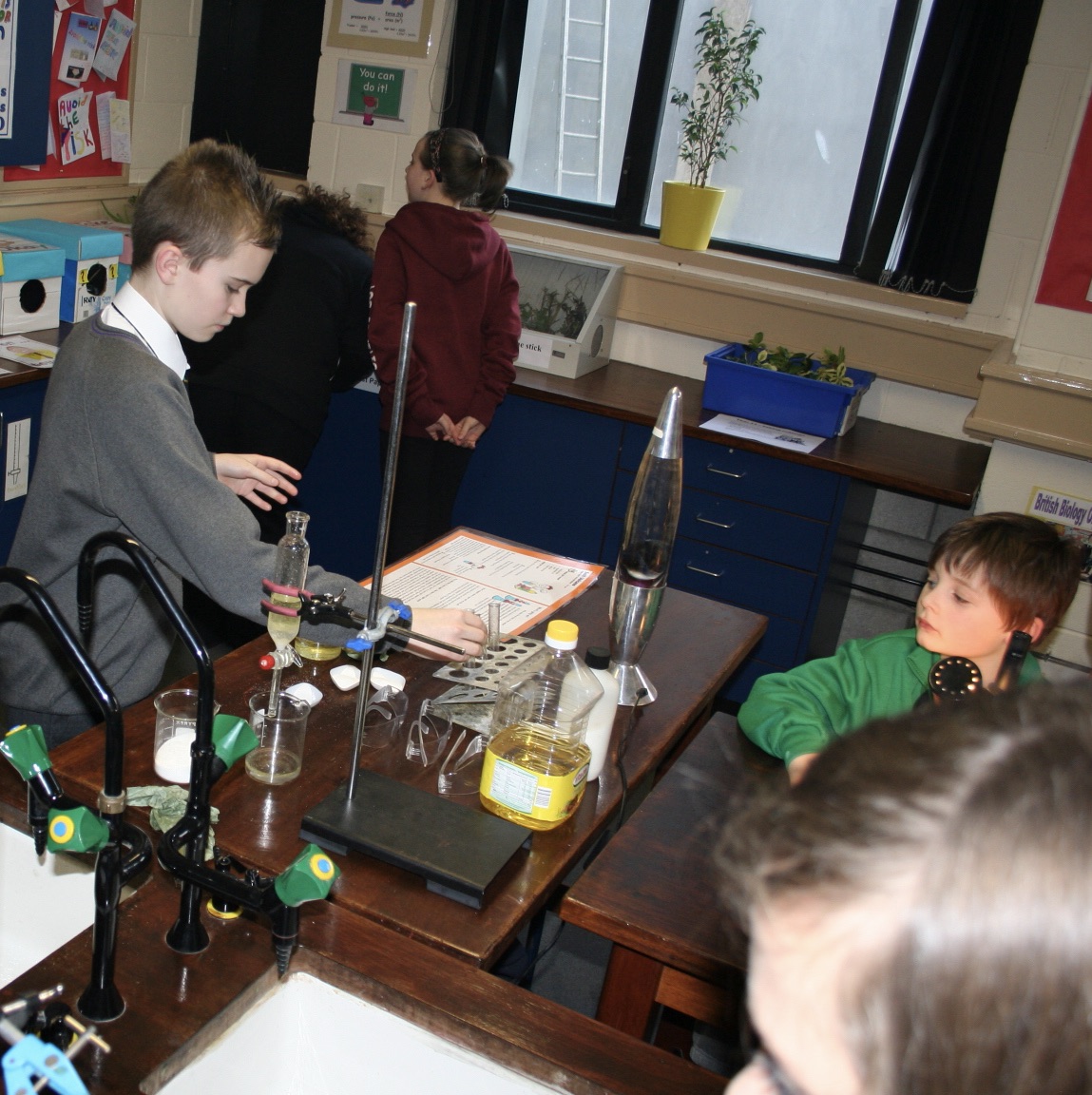
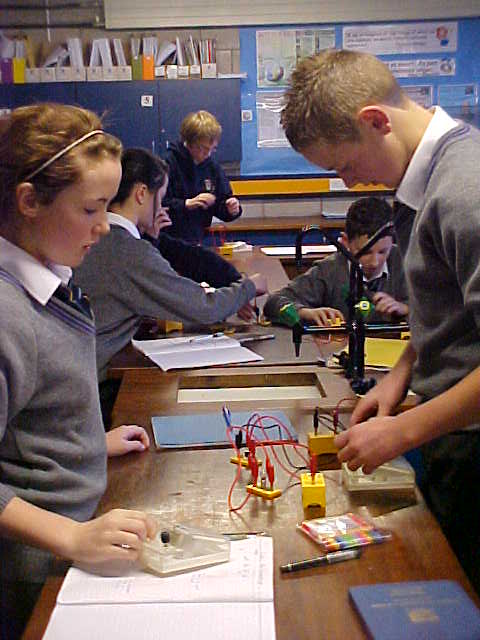
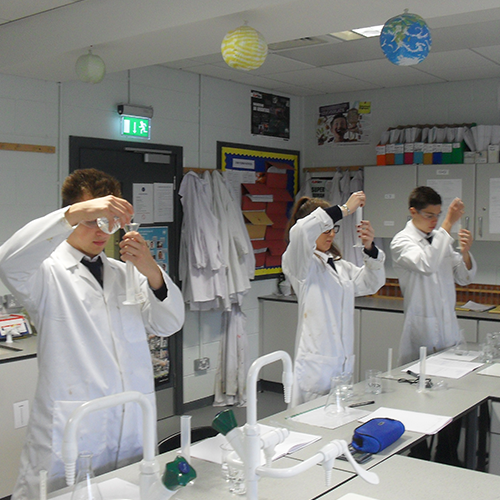
The race was on to provide Phase two of the building to include a full science department with three additional laboratories, prep rooms etc. Our science department has always advocated a very practical, hands on, laboratory based approach, which accounts for the enthusiasm there has always been for studying science. When the Department of Education provided us with the Forbes building, including two home economics rooms, one was re-allocated to provide yet another laboratory.
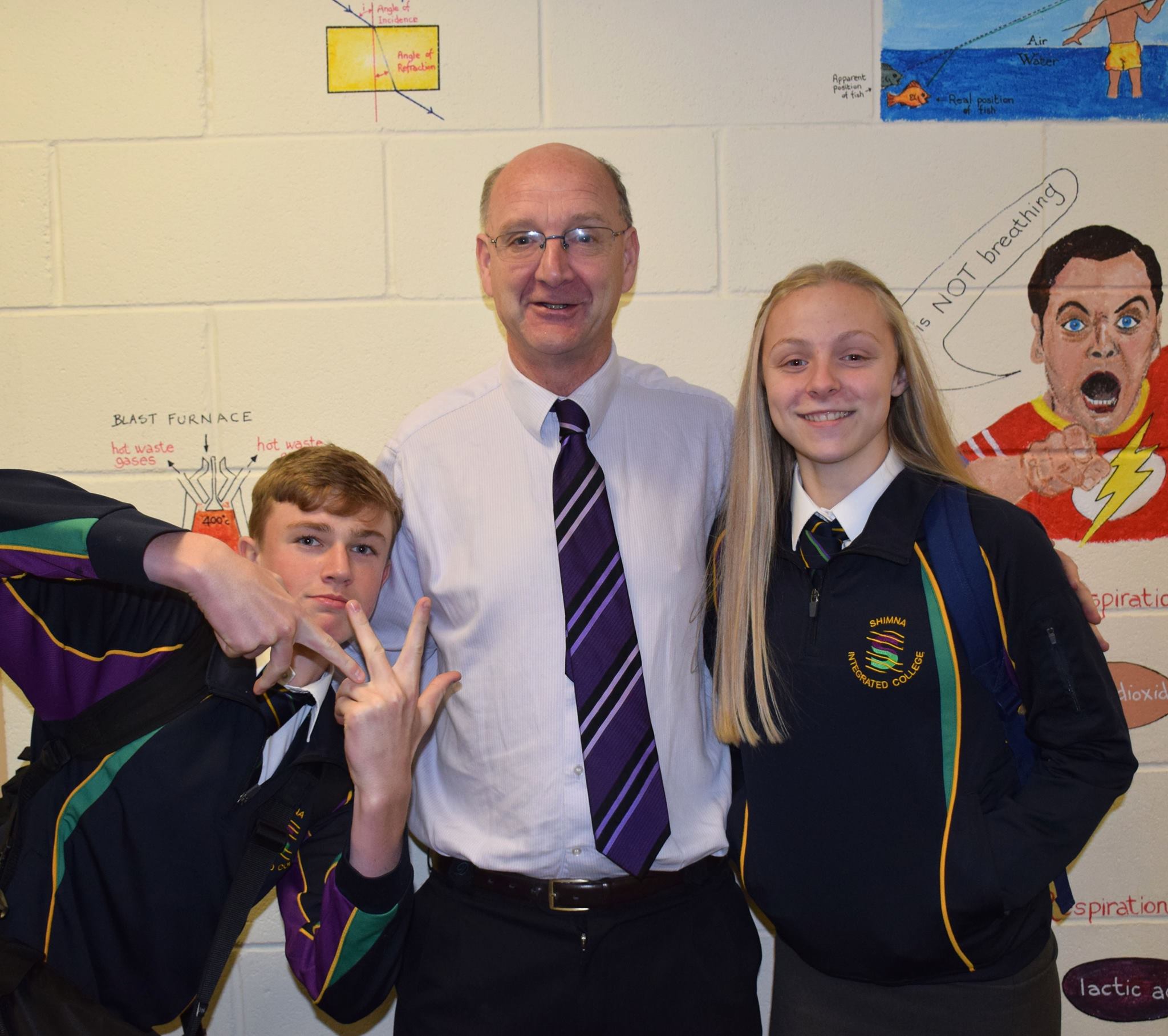
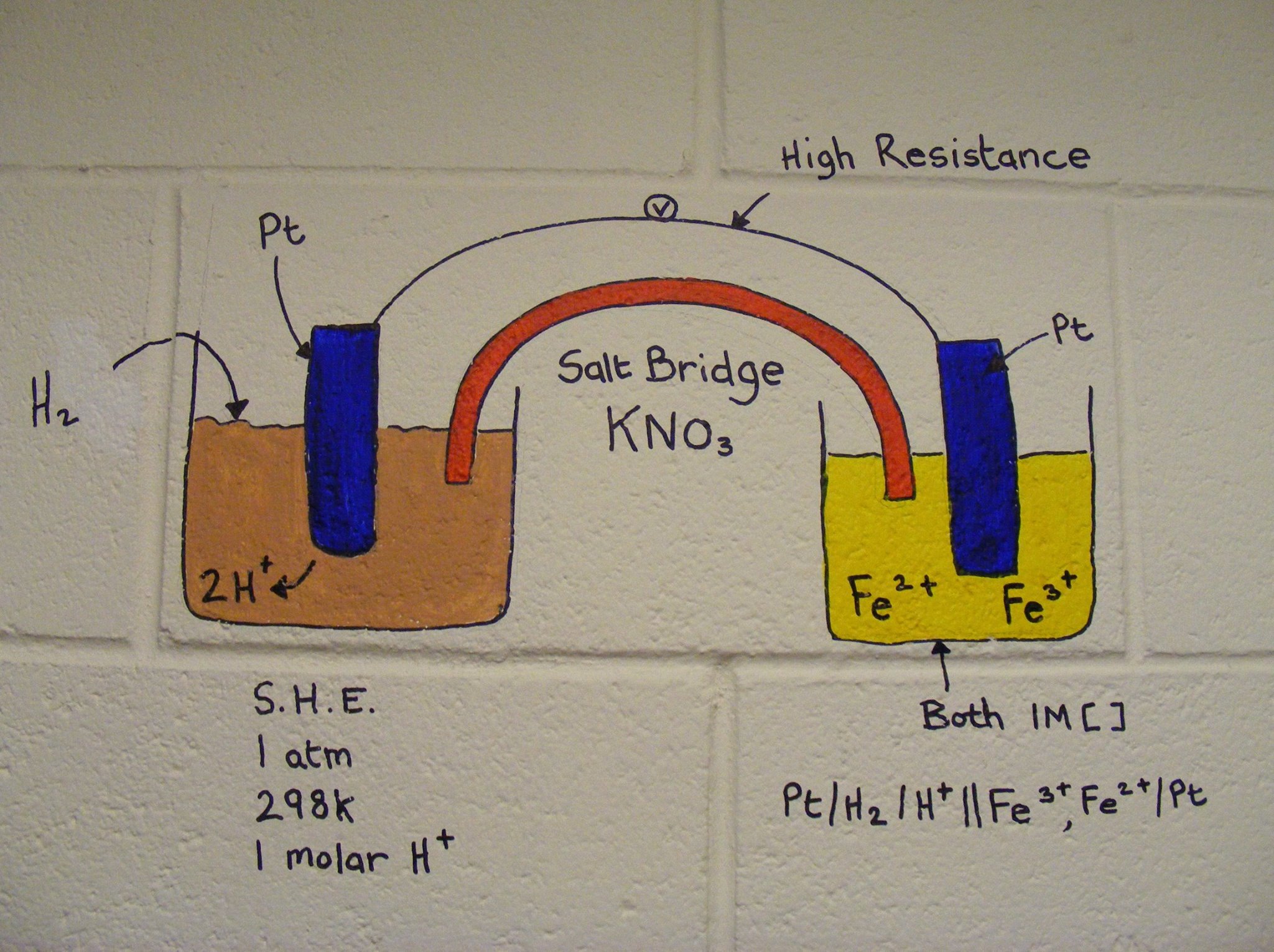
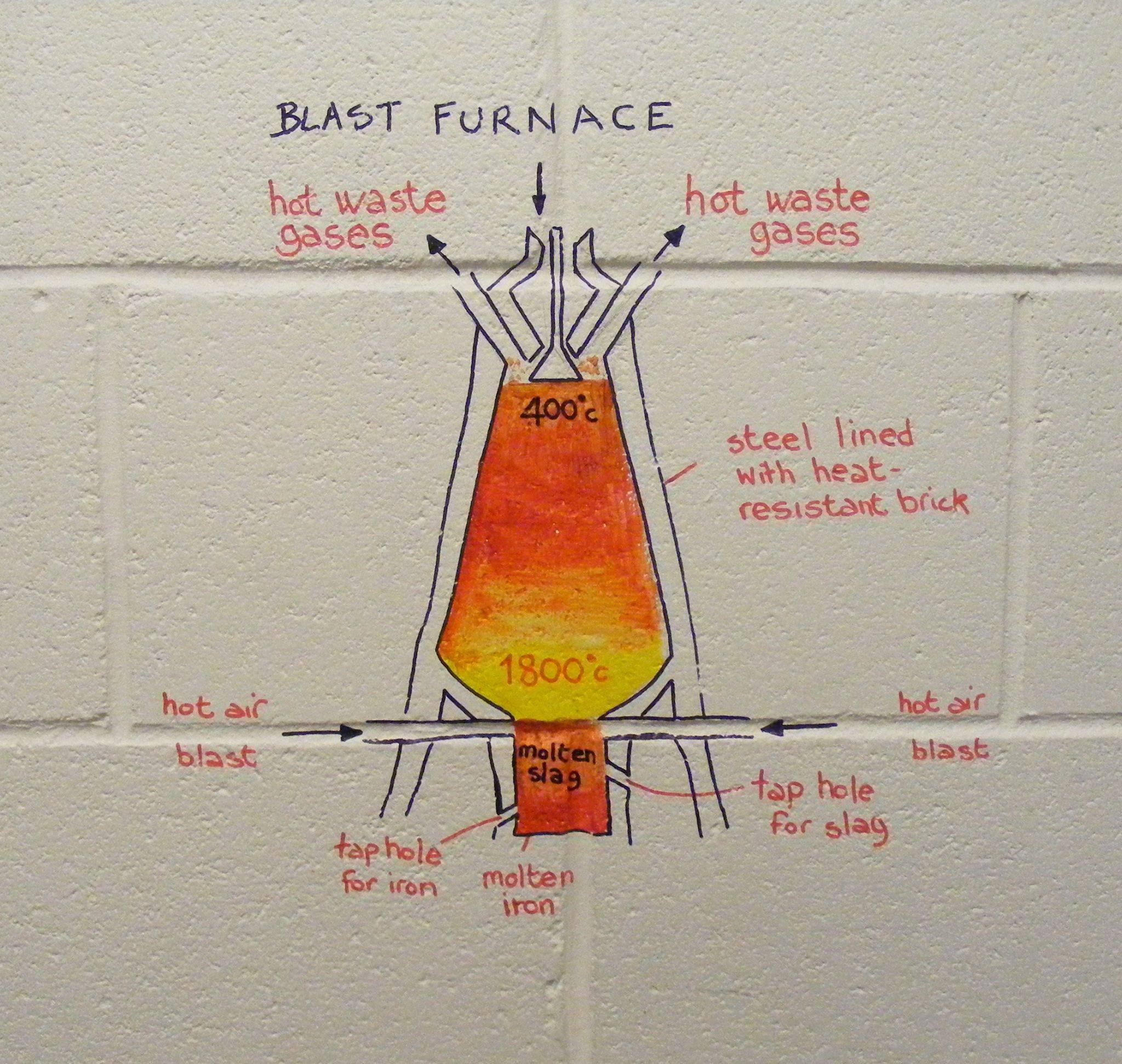
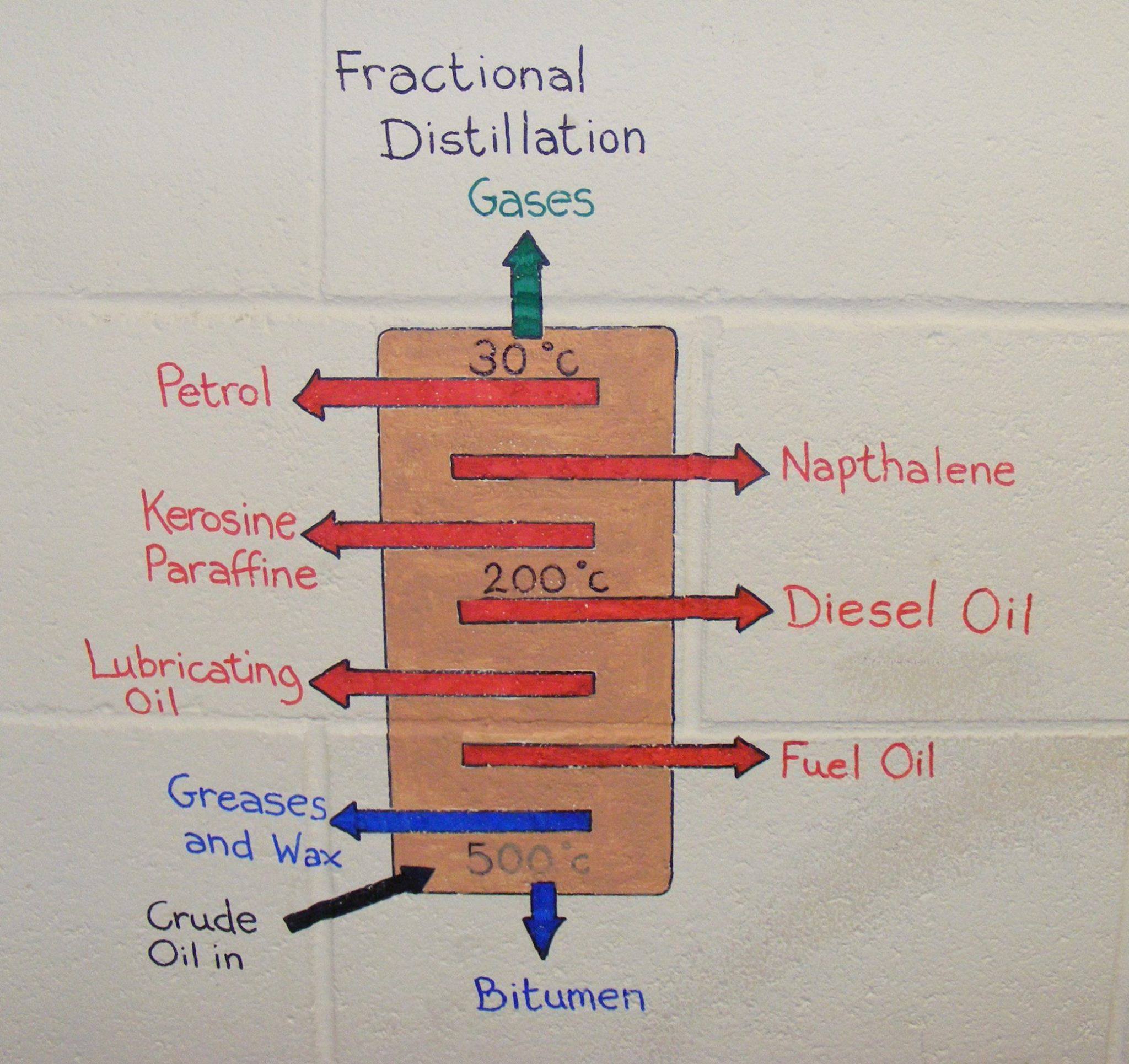
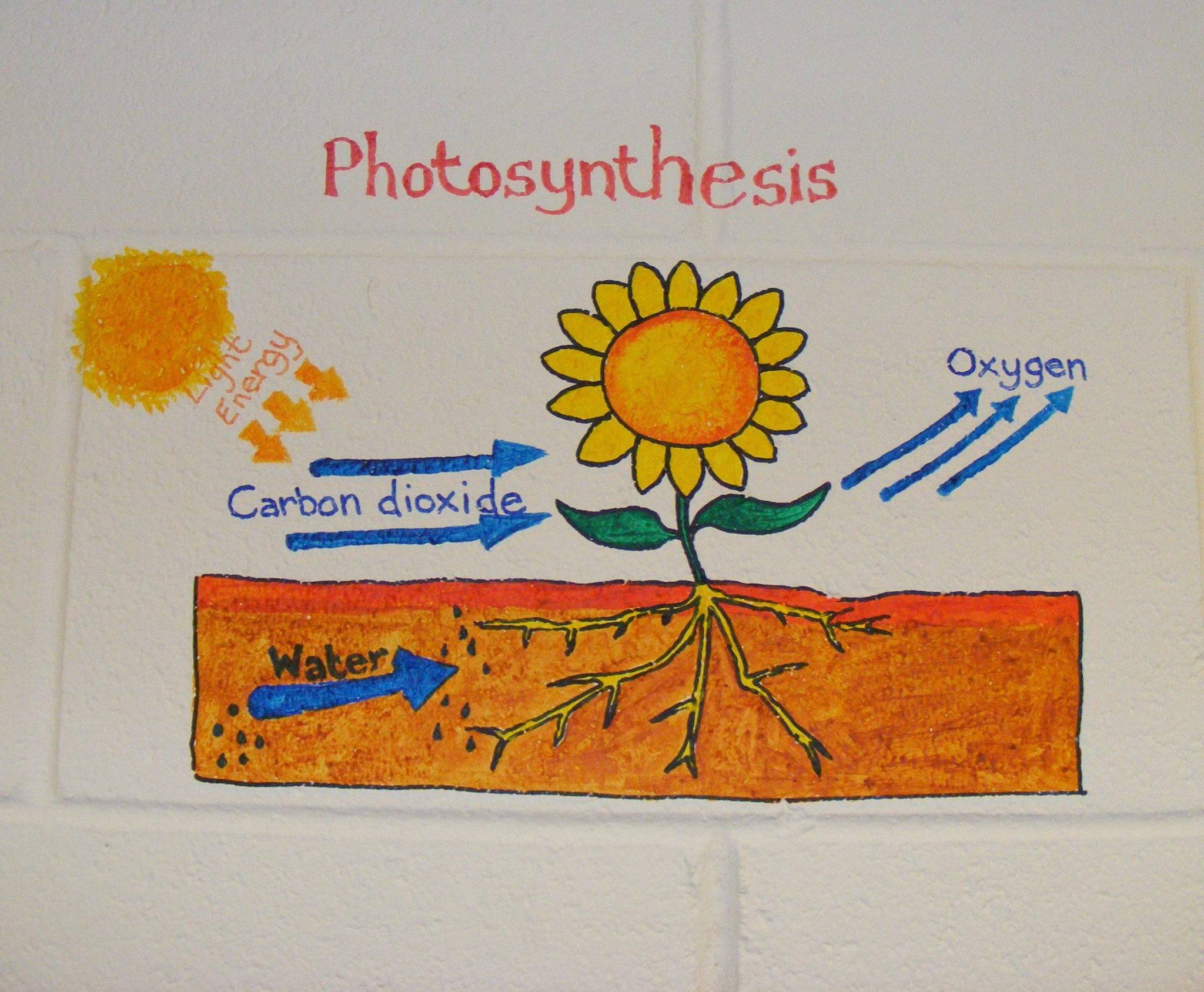
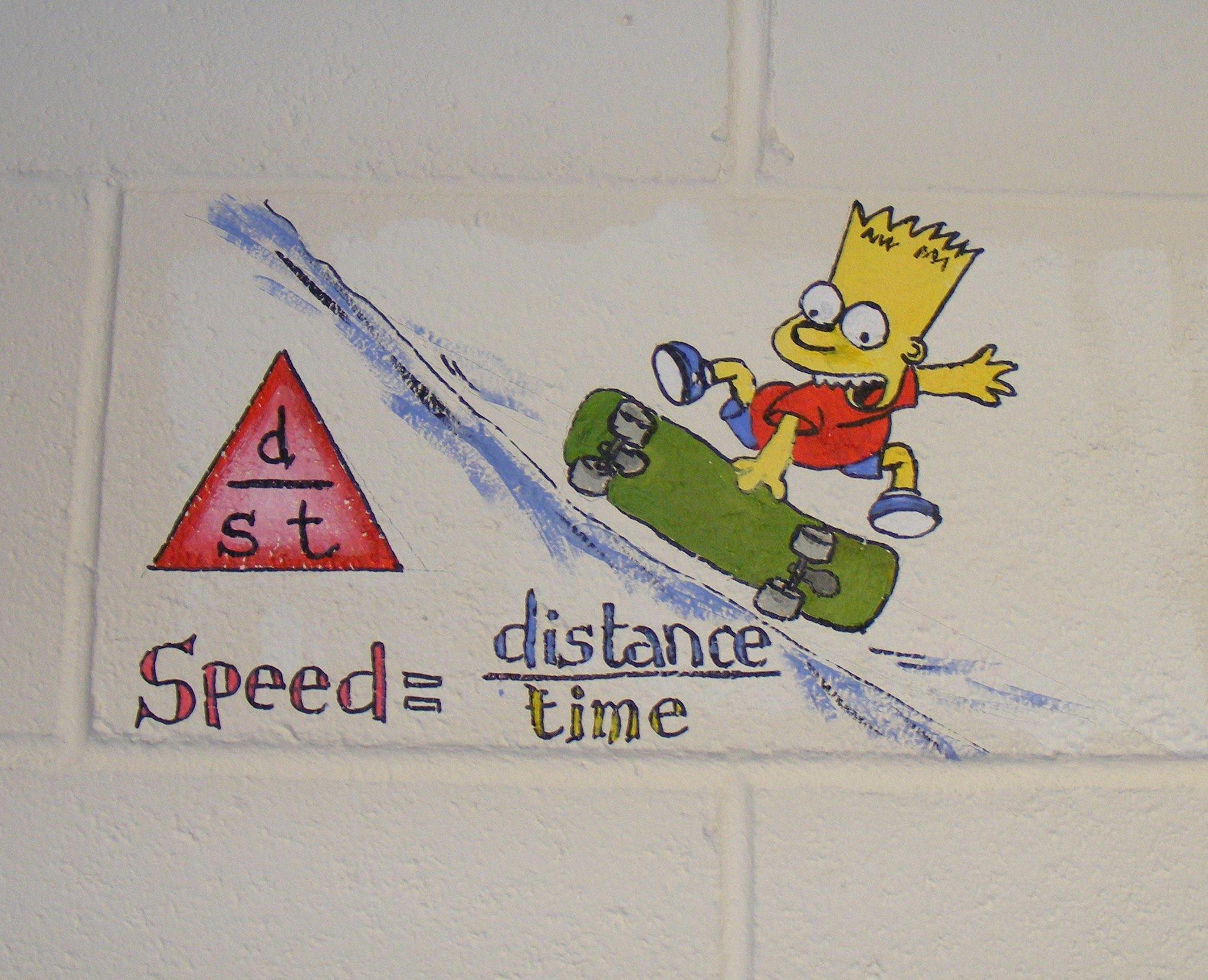
One of the striking features of the science corridor was the amazing scientific graffiti by support staff Davina Callen and Gillan McClelland. The many tiny scientific illustrations fascinated Shimna students and visitors alike. Joanne had a particular talent for display, and her laboratory was always a treasure trove of posters, poems, quotations, displays of student work and living plants and creatures.
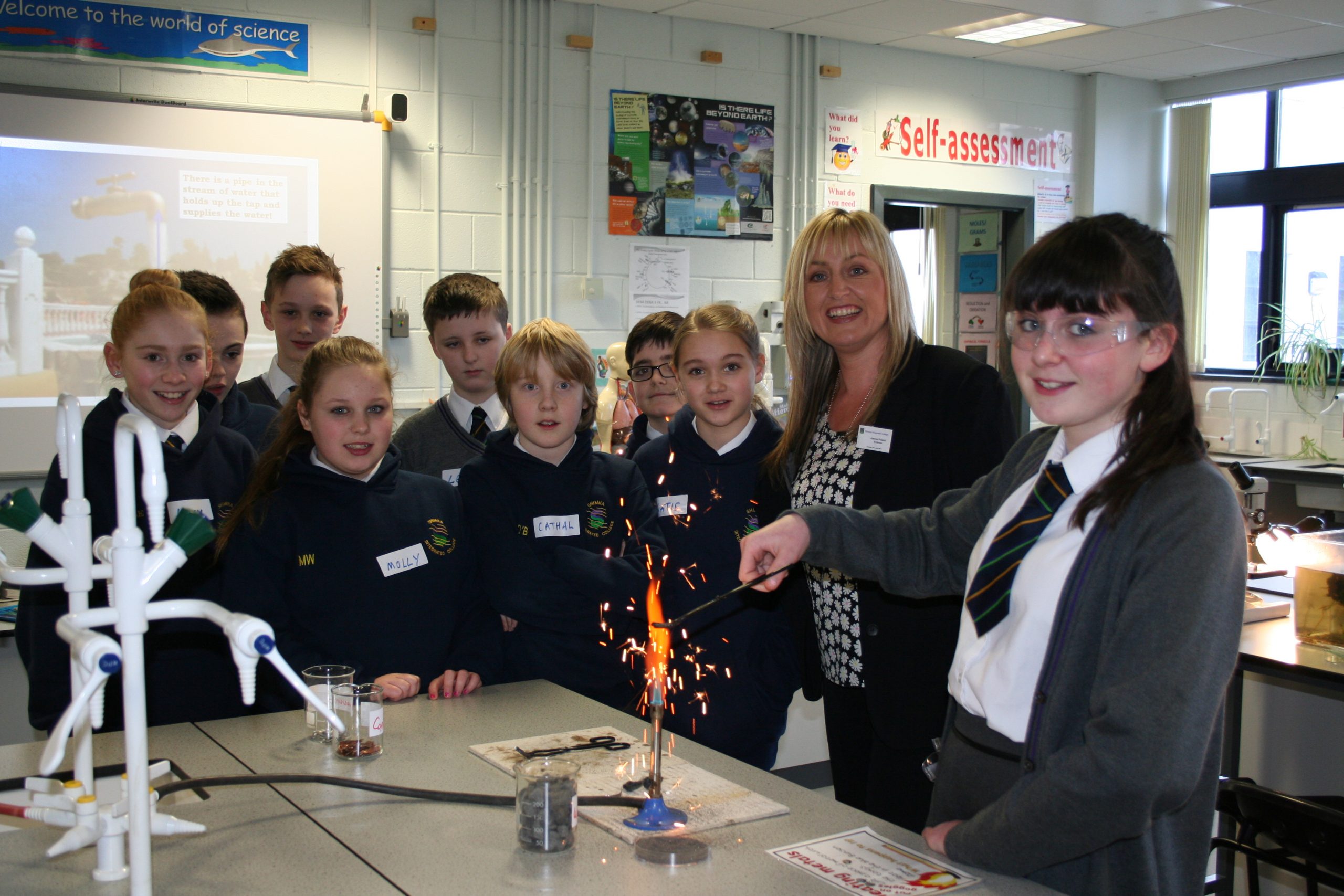
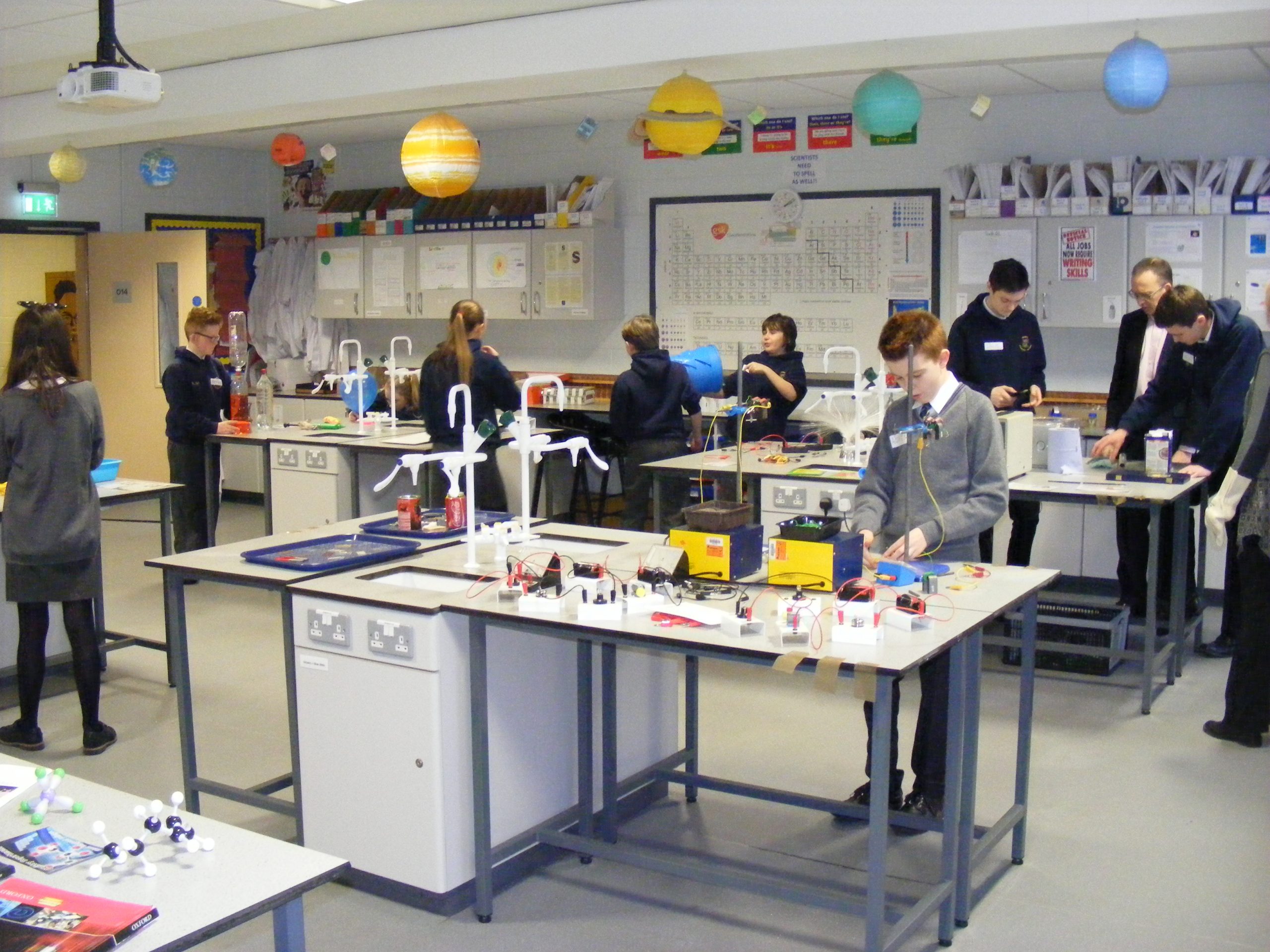
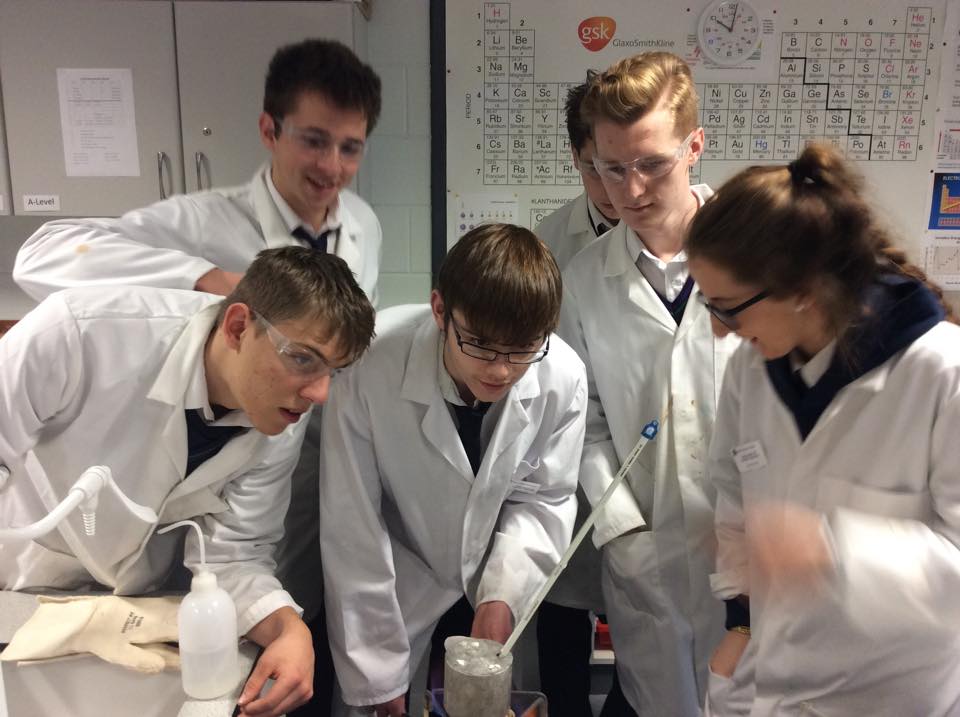
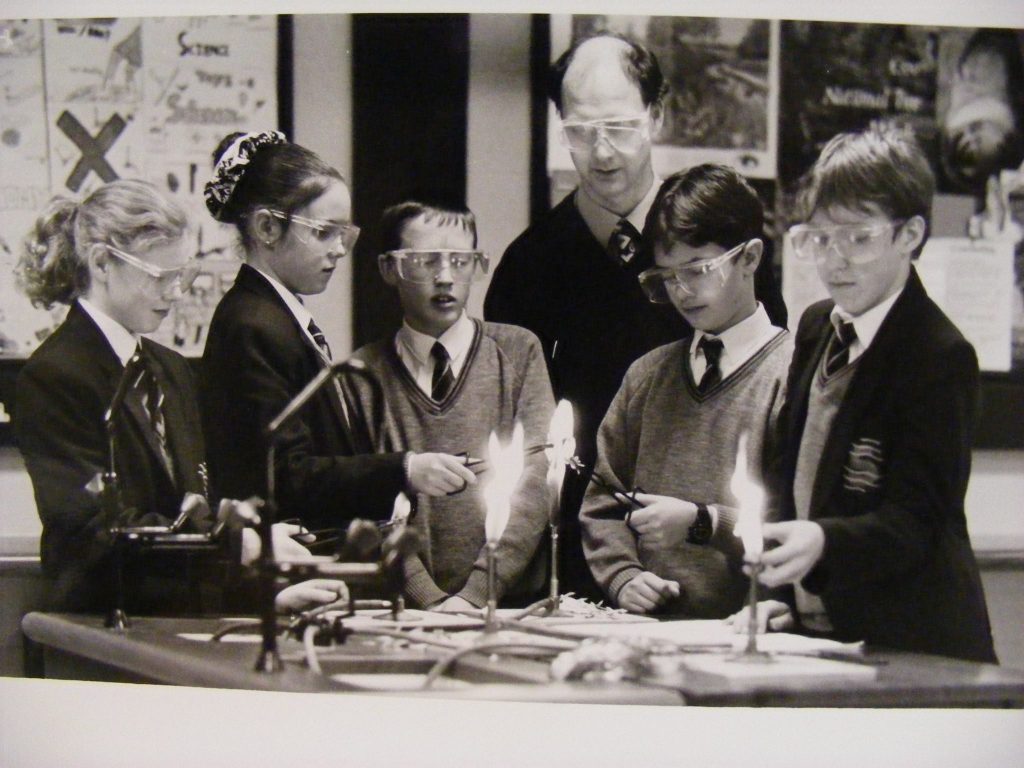
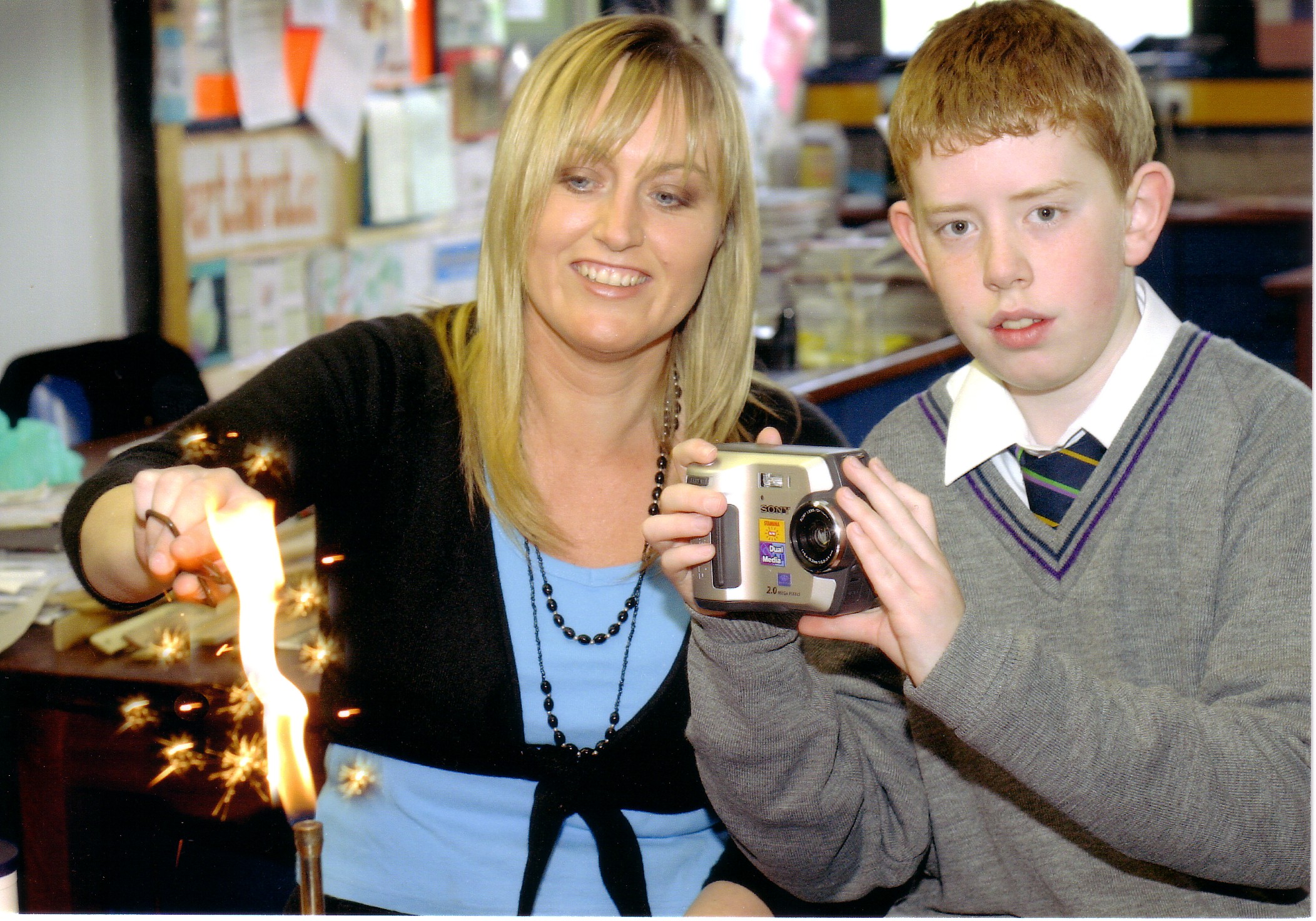
The science department was always the star of P6 and P7 Days, with all staff and volunteer student hands on deck to give prospective students a real flavour of practical science. The burning jelly babies was a particular set piece! Whenever possible, the science department invited All Children’s pupils in to take part in science practicals, and Joanne frequently took a summer roadshow to Kilbroney Integrated Primary. Three different projects ran with partner primary schools; one through Bombardier aeronautics, one focused on forces, and one on chemistry.
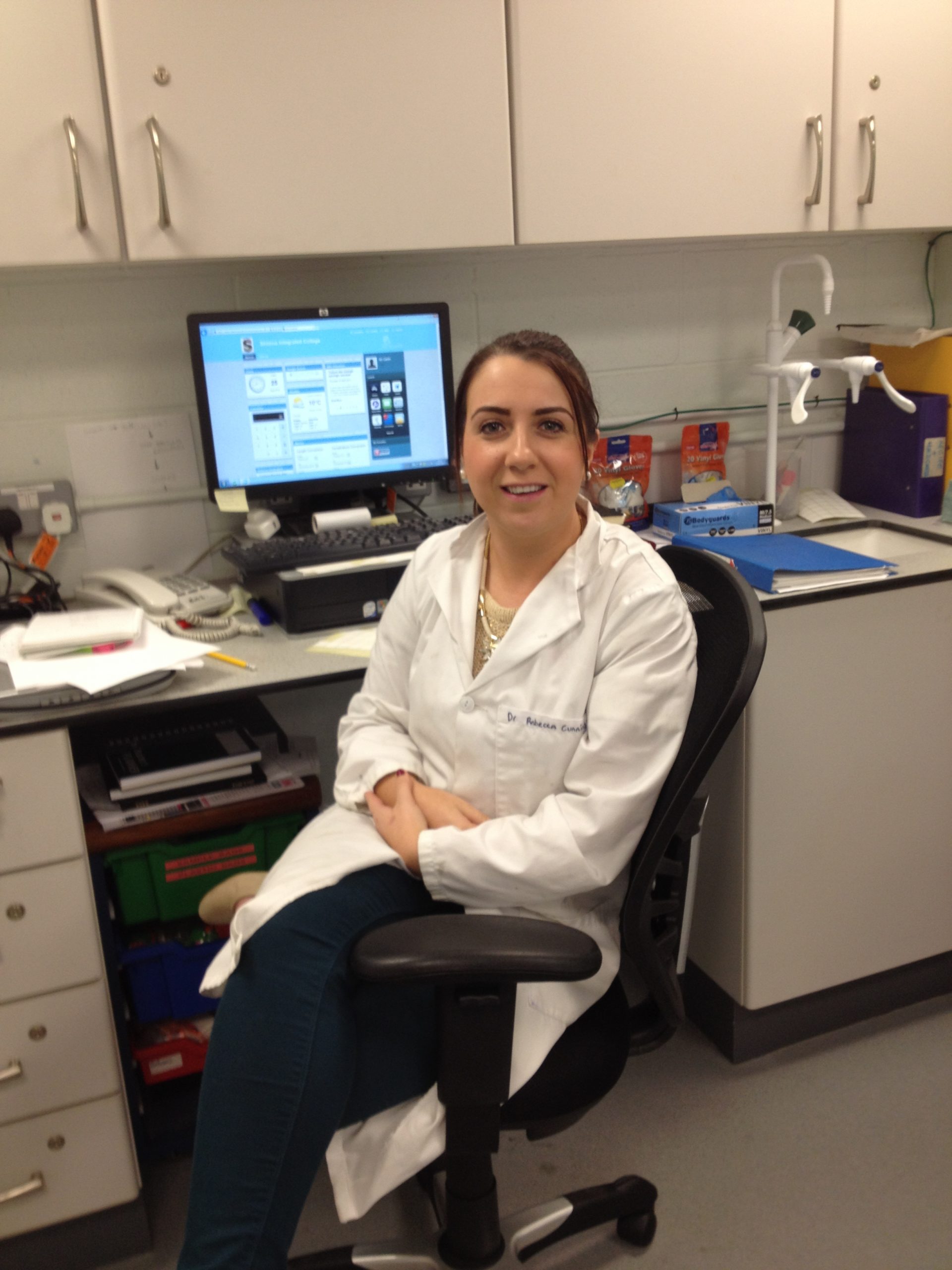
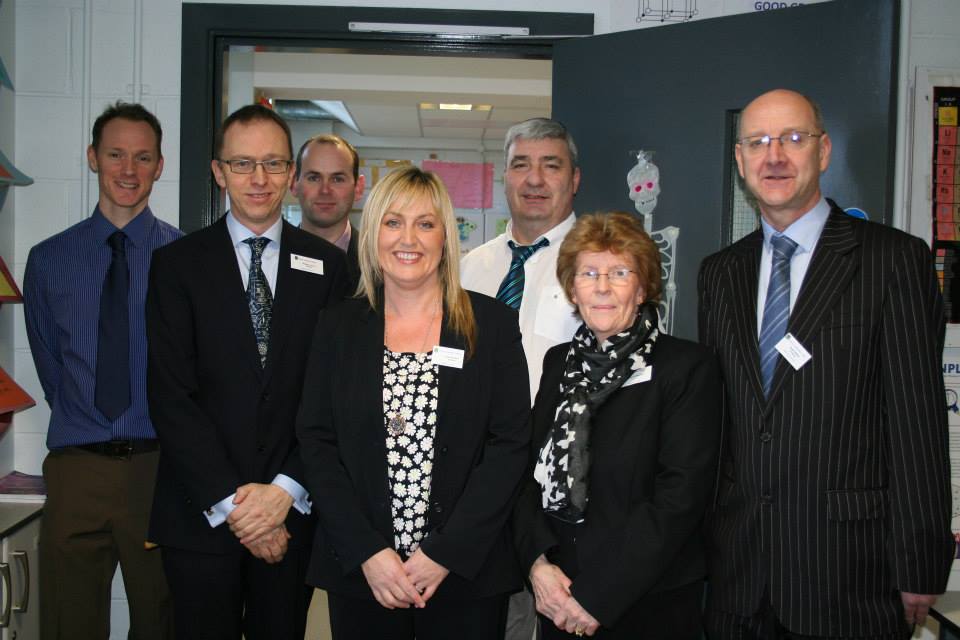
As well as a steady stream of excellent subject specialist teachers, the department has always been supported by skilled, professional laboratory technicians. Peter Yabsley initially doubled as ICT and science technician. Michael Trotman, a man of many talents, procuring equipment and materials at the right price among them, was a confirmed science department man, joining Derek and Alasdair every year to climb Slieve Donard at its snowiest. Michael’s untimely death was a very sad loss to the department. Bevin O’Hare not only served as an excellent lab technician in Shimna, but continued to support the school when she moved on to work for the SEELB.
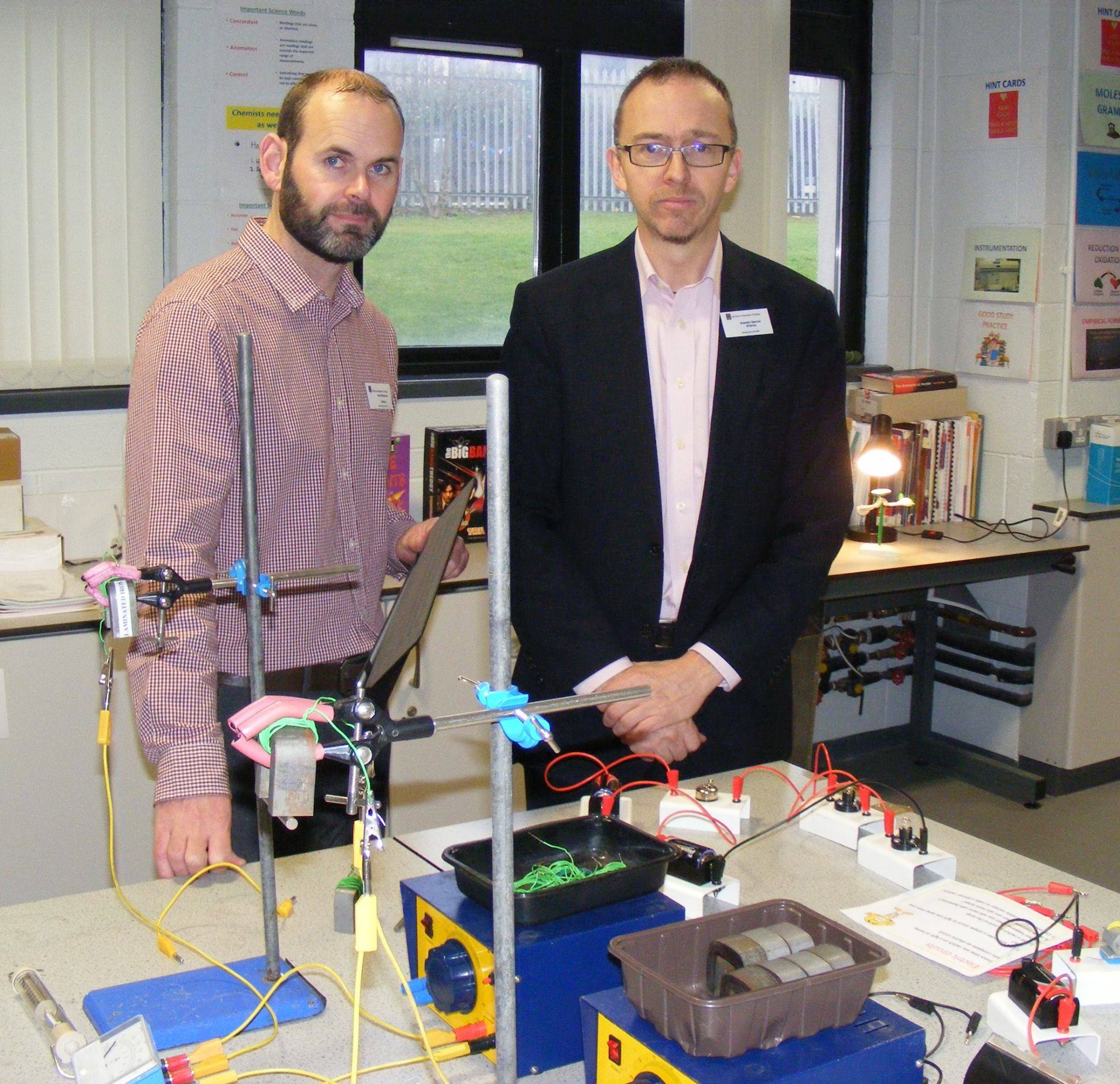
Her support was invaluable when advice was needed about updating and upscaling our resources. Seamus Carlin served the longest, another genius with the making and mending. A series of former students also served in the lab technician role over the years, Rebecca Cunningham, John Nellis, Hannah Edgar and Jamie Brannigan. Both Stephen Hanna and Juneve Nicolls, motivated by their own personal interest in science, also helped out during the summer months with restocking chemicals, servicing equipment etc.
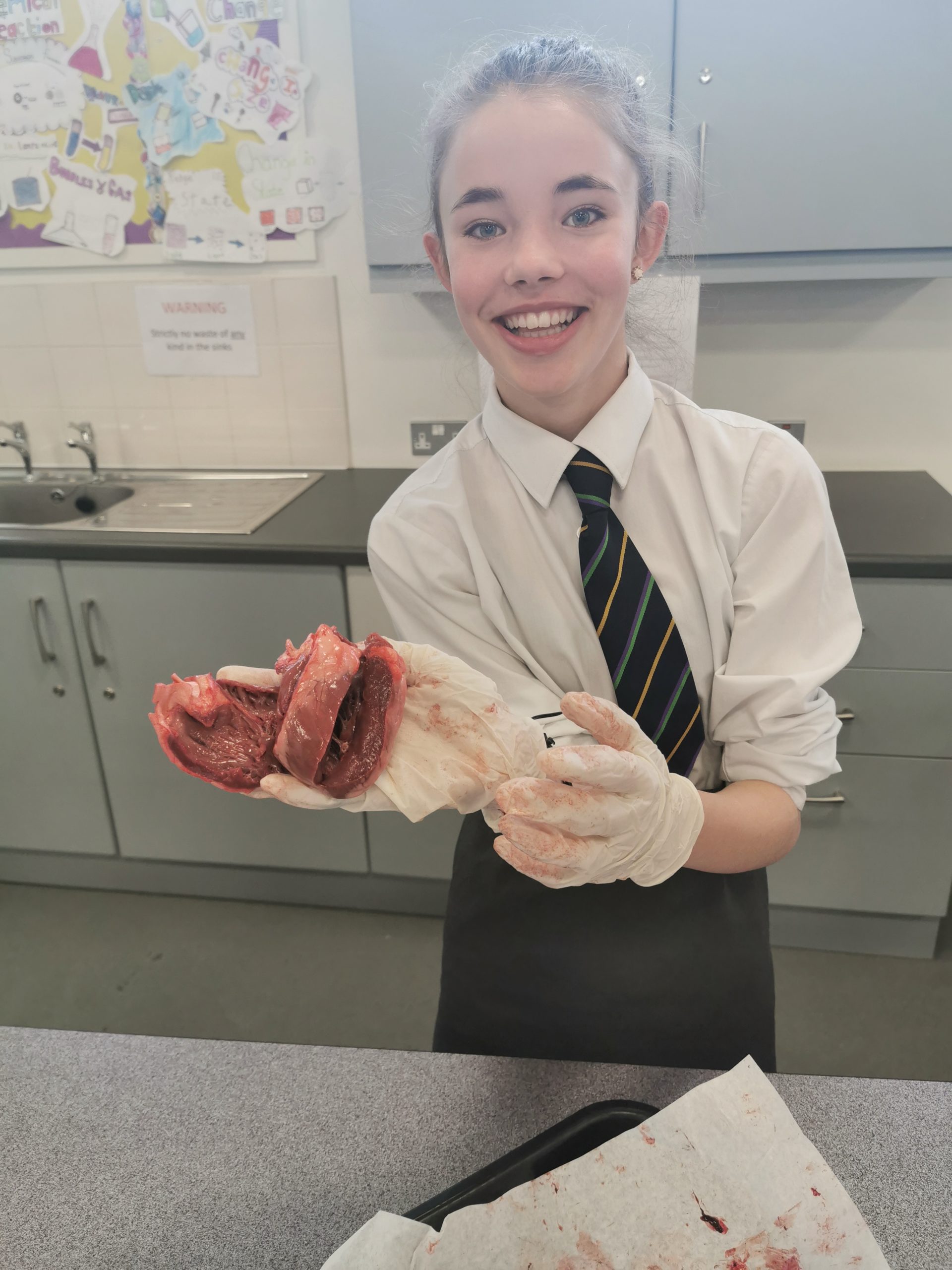
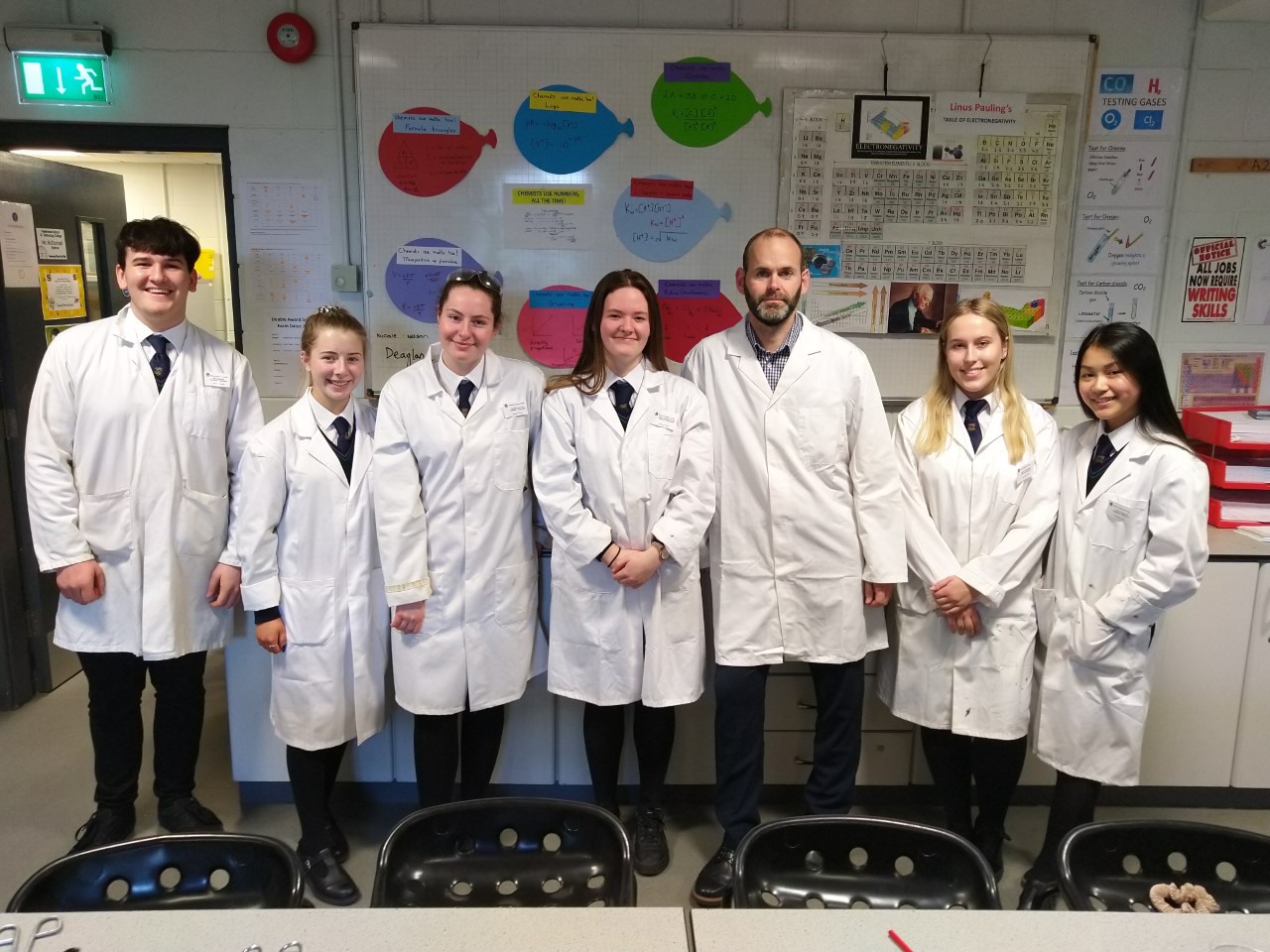
Our physicists have included Kevin Quinn and Alasdair Spence. Our biologists have included Derek Bailey, Joanne Poland, Tracey McCooey, Annabel Cleave, Ruairi Leckey, Sarah Bolton, Shauna Rowell. Chemists have included Shaun Robinson, Alan McDonell, Lorna Jess, Daniel Allen – both of the latter were Shimna OldScholars themselves.
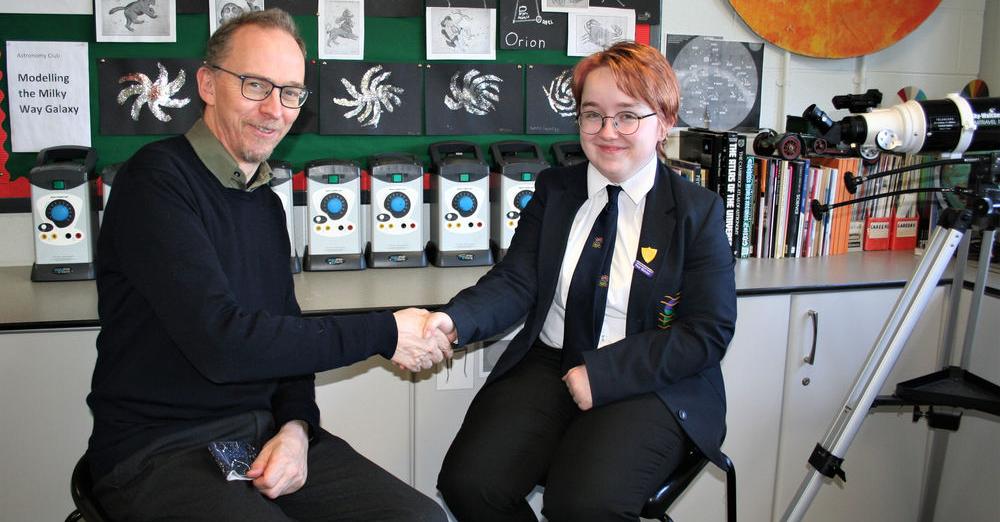
Shimna always had excellent support from SEELB advisers, Sean Maguire and Uel Doherty. The CASE programme helped our students develop scientific reasoning skills. Colin Press provided the science department with three Researchers in Residence, PhD students who involved our students in projects such as the science of bubbles, grass for butter, pollution, eucalyptus trees in Chile. Participation in these projects inspired students to seek out careers in scientific research.
A feature of Shimna’s science provision was that every student would study the three sciences to GCSE level. Derek’s commitment would always have been to Double Award science, with triple award as an additional option, open to all students. This meant that every student had the broadest science education, and at sixteen plus, all career options would be open to them.
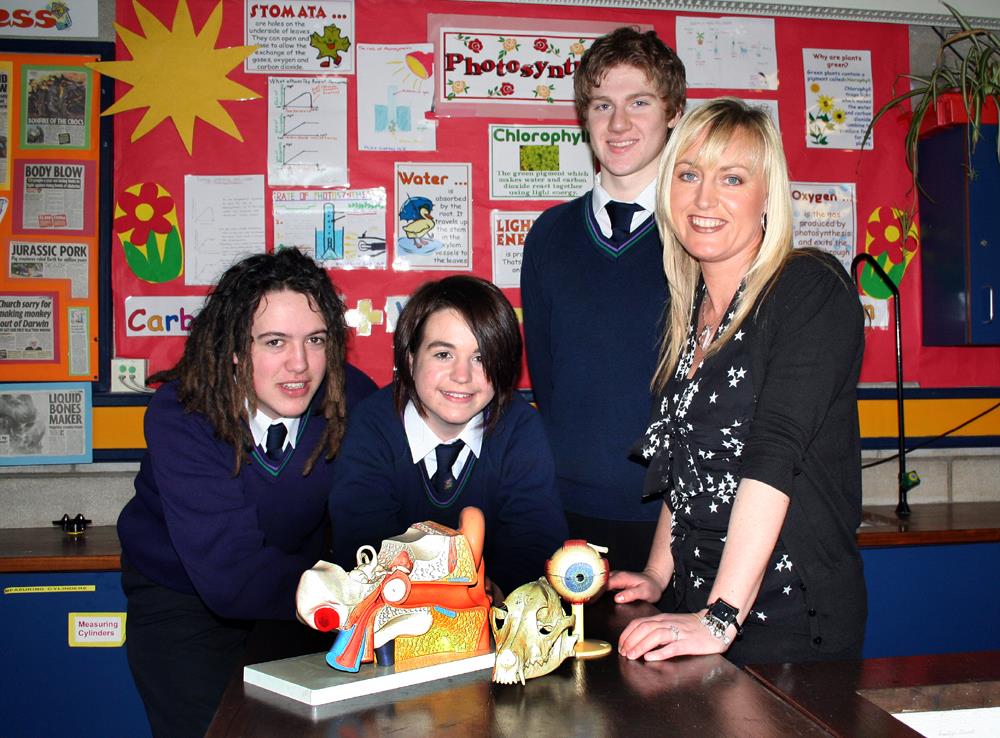
When attitudes to grading became more fixated on grade C, some students were considered for Single Award science and later BTEC applied science, still with access to all three sciences for every student. Modular, tiered assessment at GCSE meant that aspirational setting of classes meant high expectations for all students, and support to help everyone fulfil their potential.
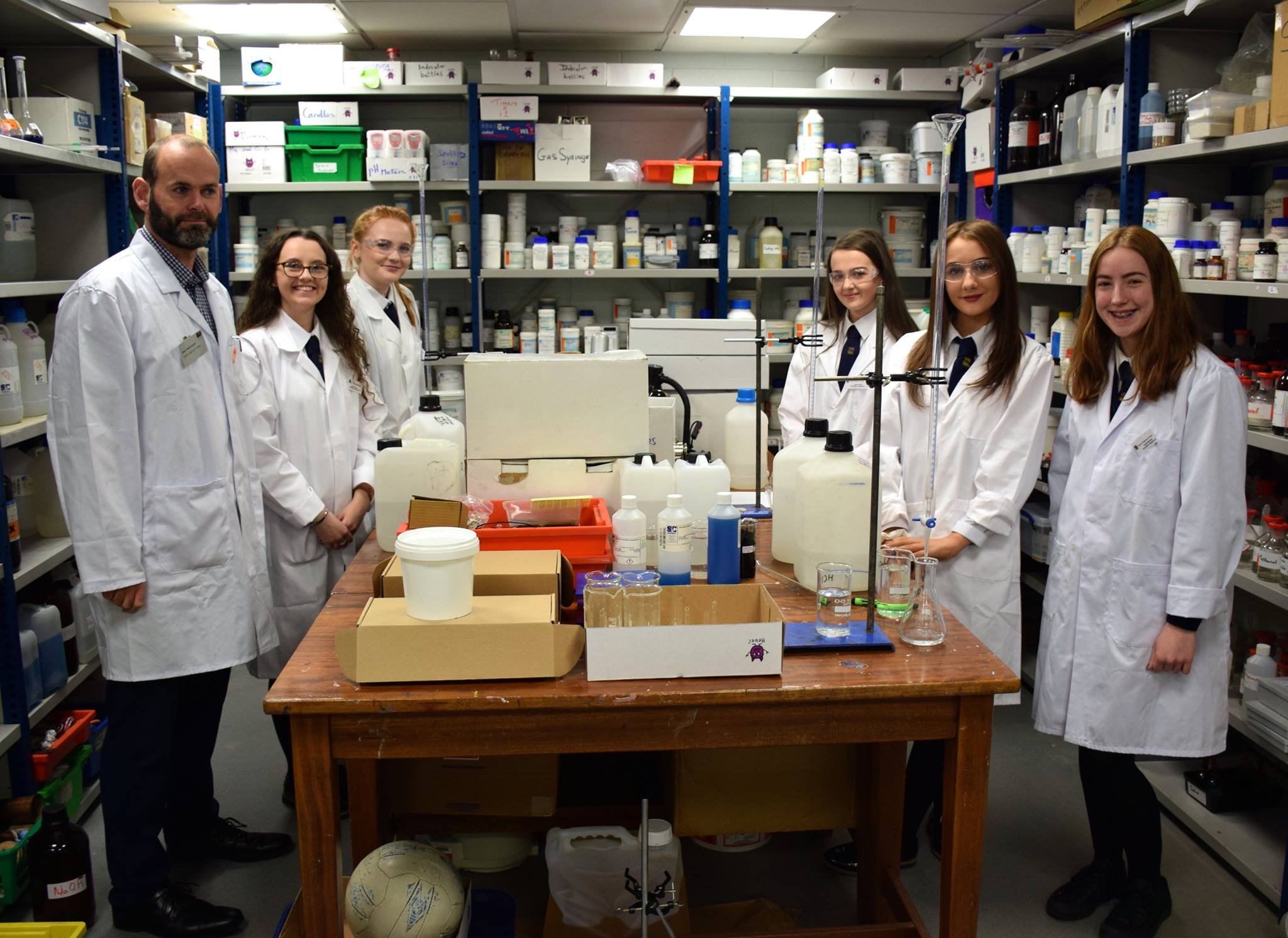
The department also made a strong contribution to horticulture, with Shauna and Sarah both teaching Occupational Studies in horticulture. Horticulture provided an additional route to practical, outdoor studies with real application in the local economy. The classes also made a great contribution to the life of the school, providing veg boxes for staff and supplying the canteen with salad vegetables.
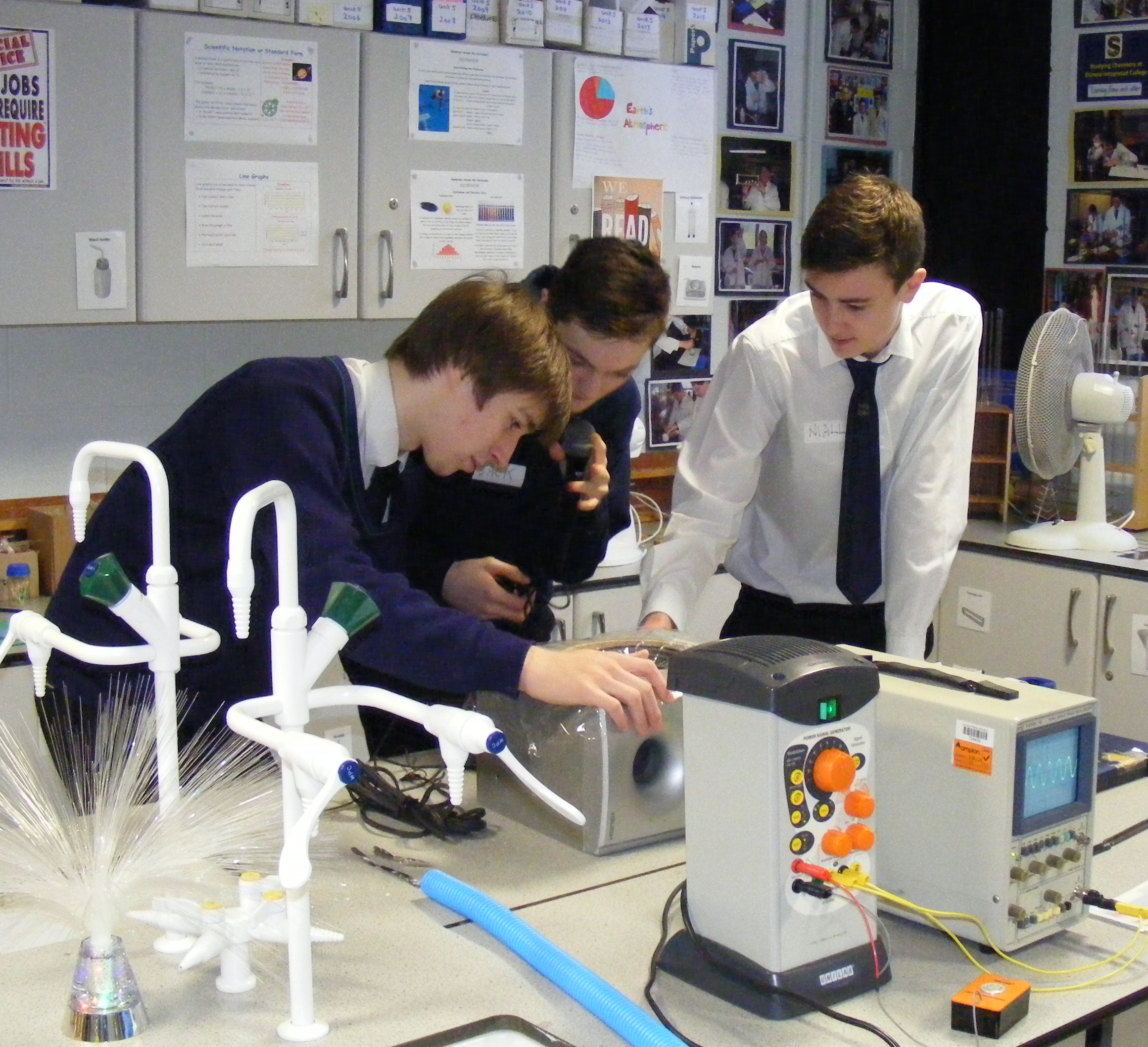
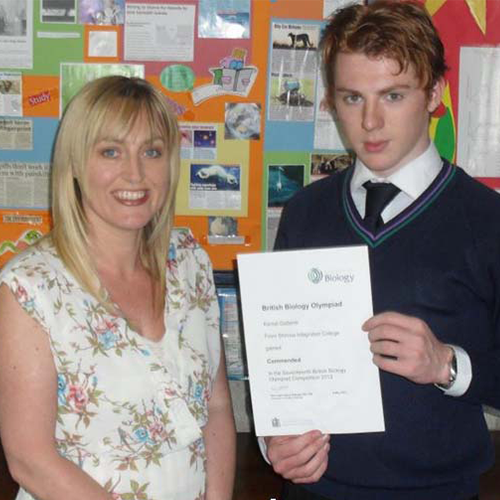
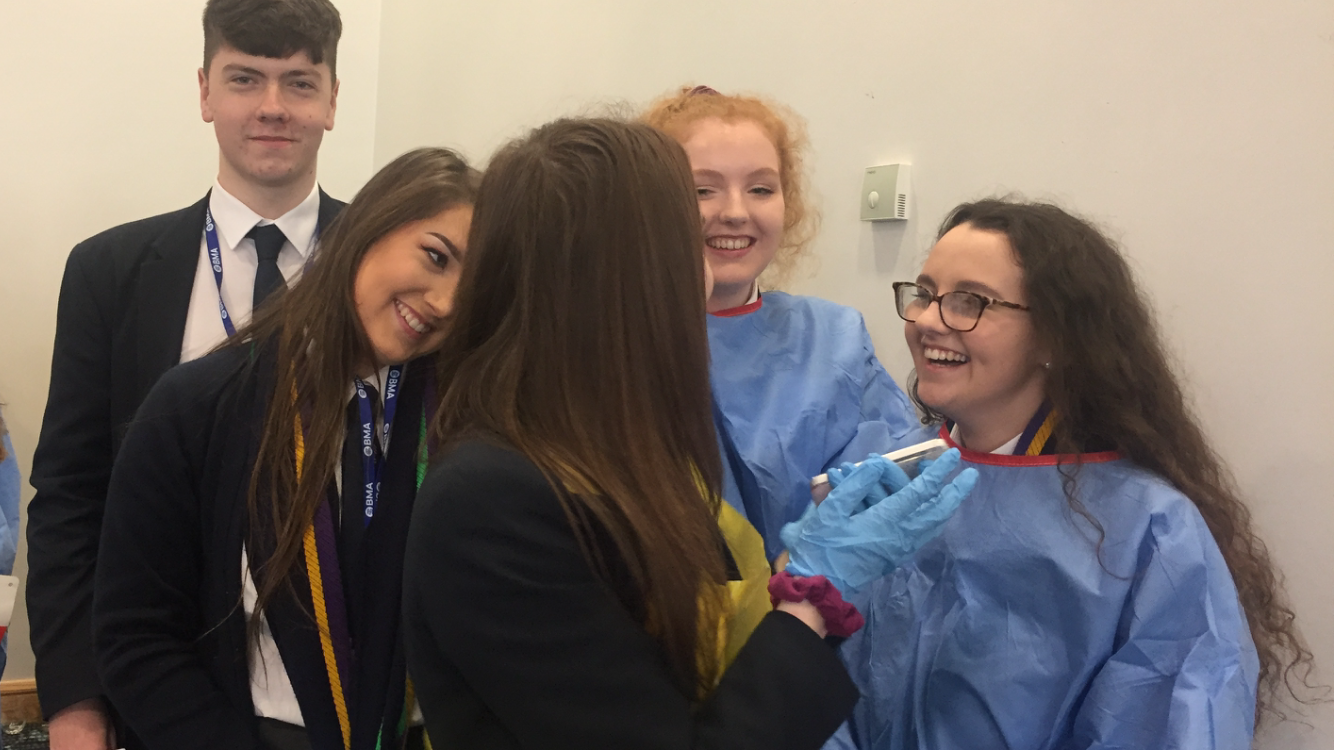
Numbers were strong in A level sciences and the commitment of the department to practical opportunities brought students success in biology and physics UK Olympiads, British Medical Association taster days, university summer schools in Cambridge, Nuffield Foundation internships, Queen’s Pathways Programme and work experience with BE Aerospace, Norbrook and Almac. Creative homework projects were a particular feature of science classes at Key Stage 3, for example building cell models, quiz boards and many others.
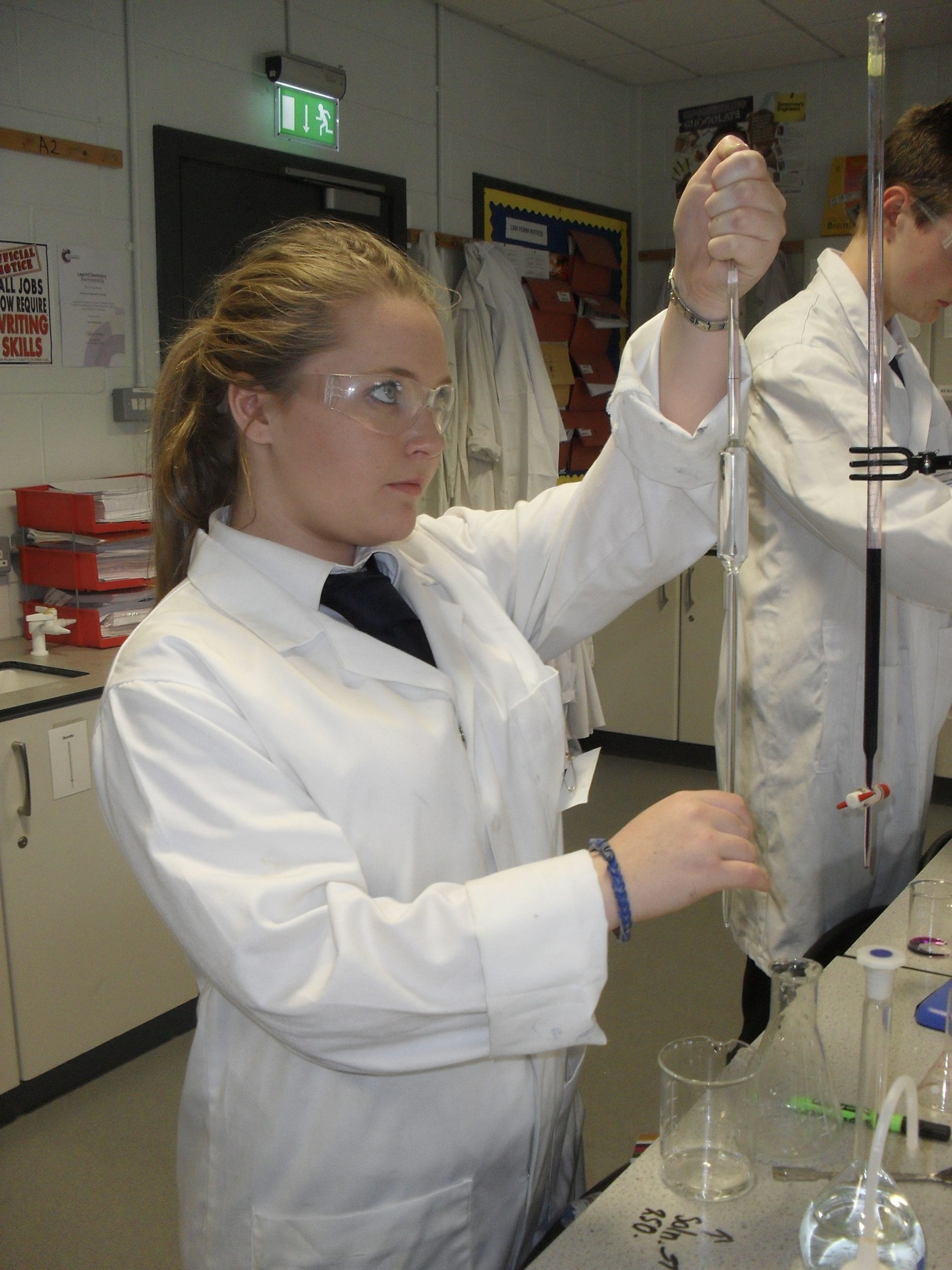
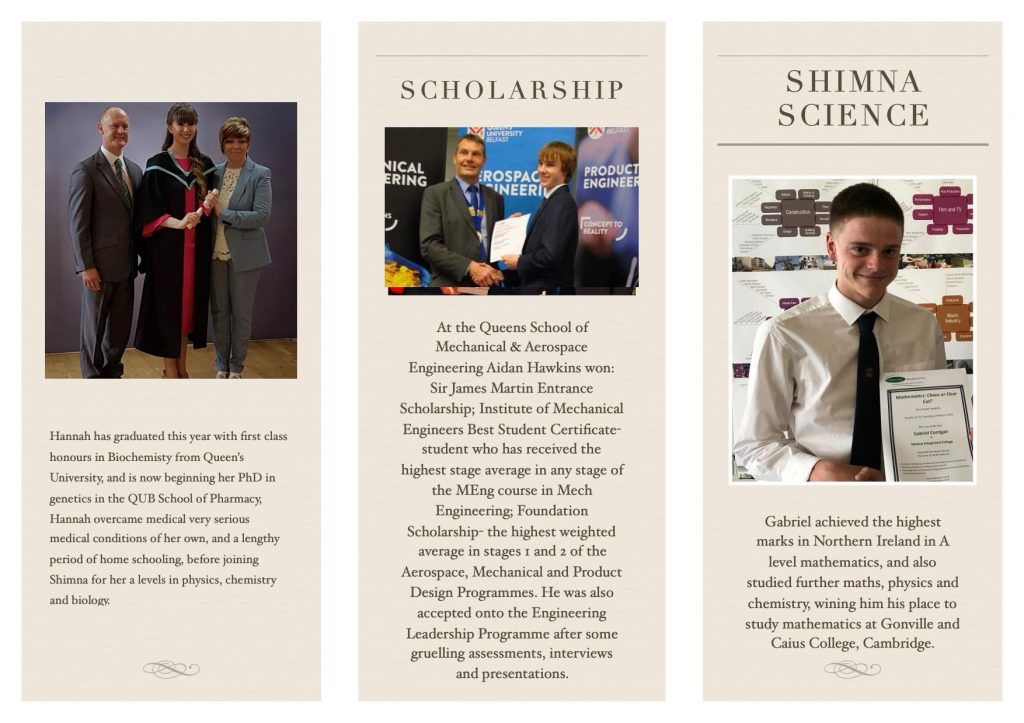
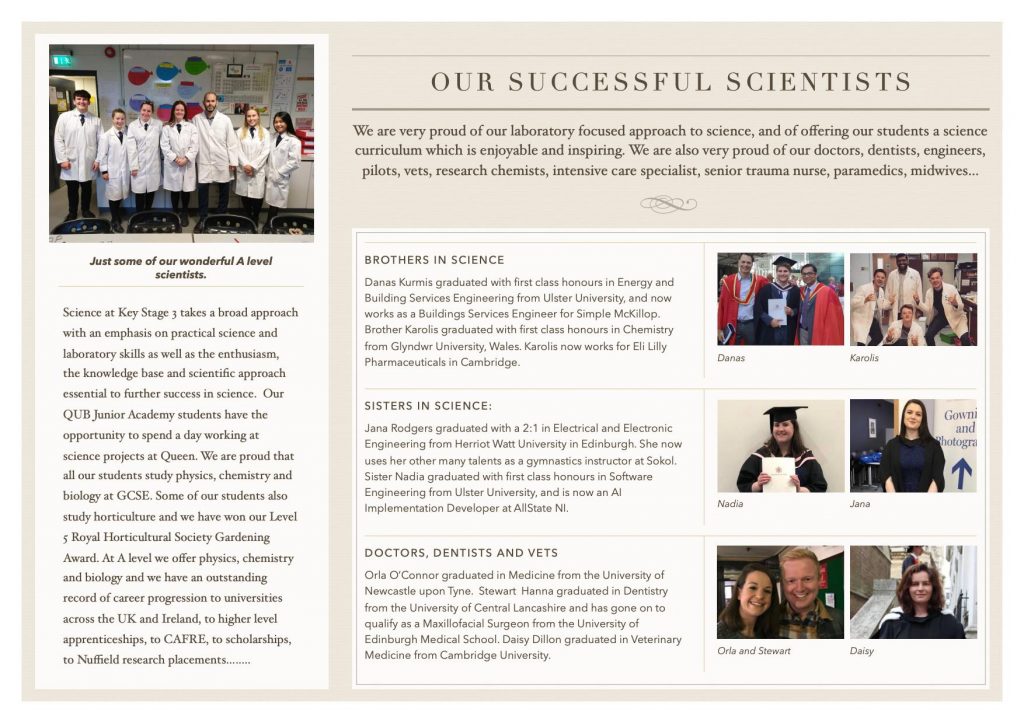
Examples of outstanding career success have included doctors, midwives, nurses, biomechanics, veterinary surgeons, veterinary nurses, dentists, pharmacists, mechanical engineers, aeronautical engineers, marine engineers, production engineers, electrical engineers, pilots, research pharmacists, research biomedics, research chemists, lab technicians…. The list is huge. The department has produced graduates, Masters degrees, PhDs and numerous prizewinners and winners of scholarships, including the All Ireland JP McManus Award to Aidan Hawkins.
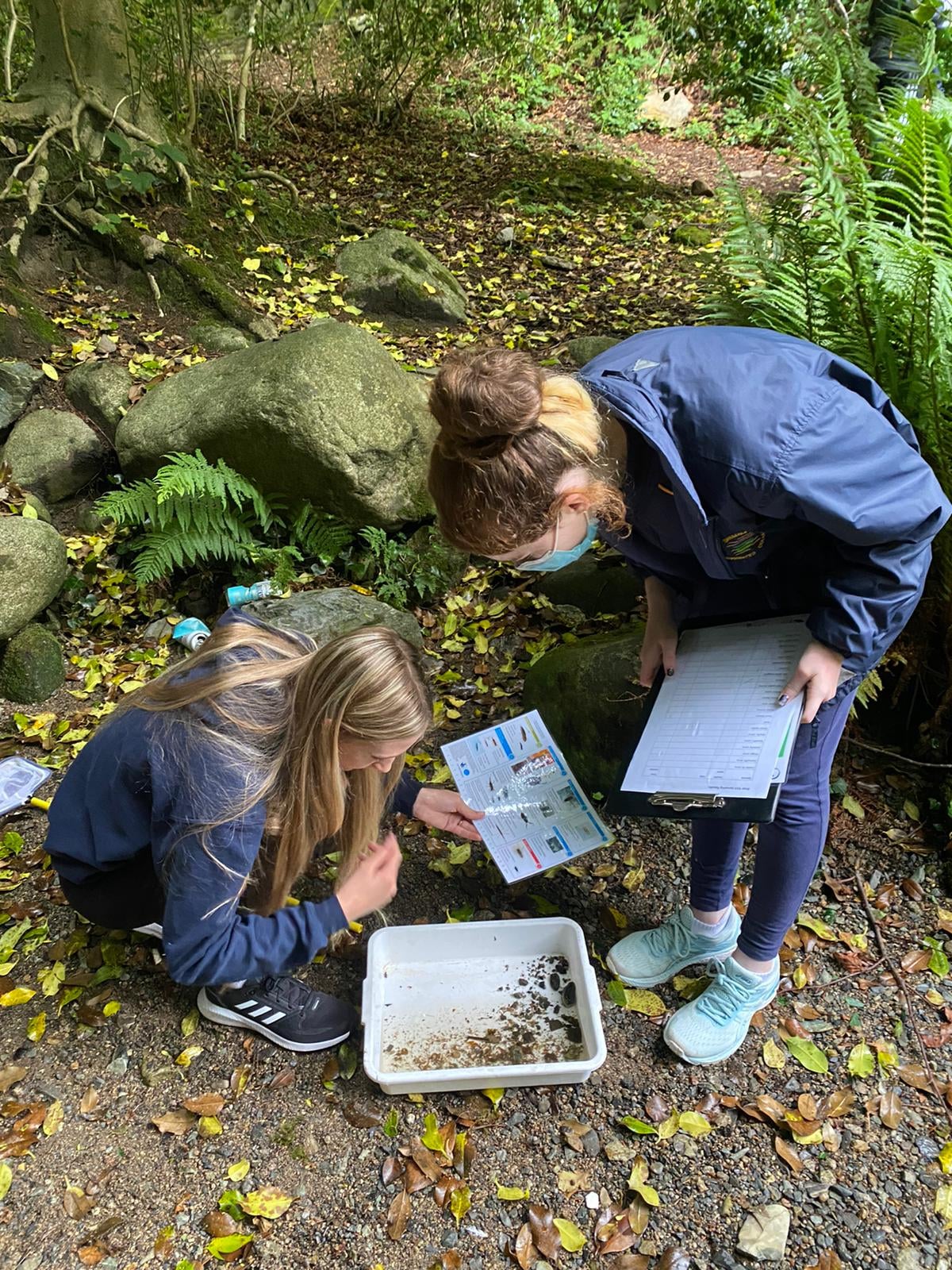
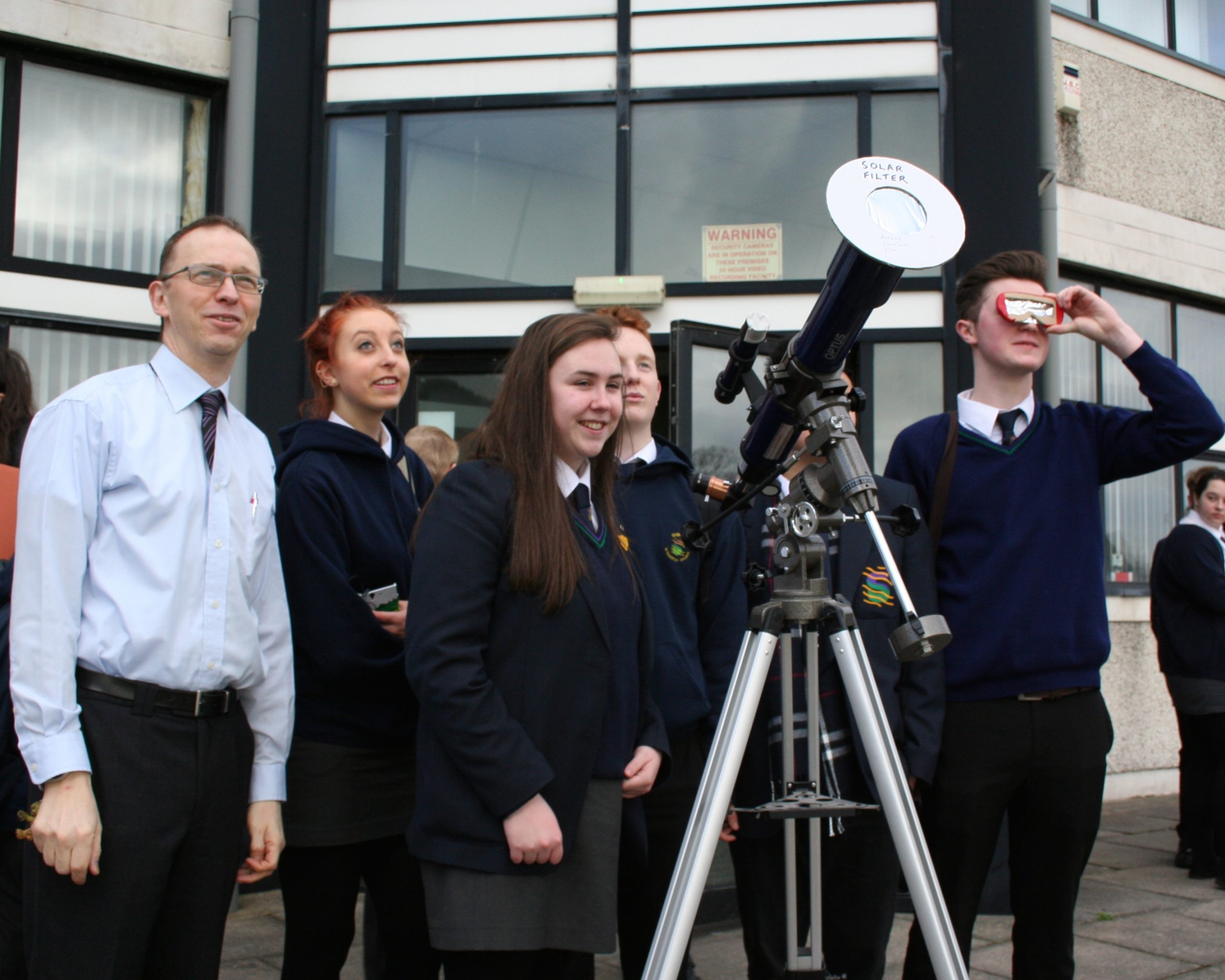
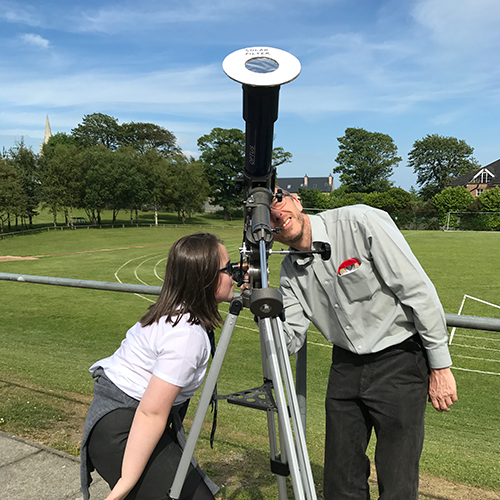
An important element of our science department’s success was staff commitment to professional development. For example, Derek undertook an internship with BE Aerospace, Joanne sat GCSE physics along with her class, achieving A*, Alan headed off to Switzerland to the Cern nuclear research centre and took a year out to teach in Poland, and later a year out working in Almac; Shauna played a particular role in developing primary science link projects as part of her Early Professional Development. The department was pro-active in seeking additional opportunities for students of all ages, ‘I’m a Scientist, Get me Out of Here’, visits from the Armagh Mobile Planetarium, all sorts of science roadshows, robotics workshops, visits to Queen’s and Ulster University science departments etc. OldScholars have always been enthusiastic visitors, enthusing the next generation. For example, Conor Poland returns regularly to promote interest in biomedical science, Orla and Stewart have offered interview practice to prospective medics, Hannah produced a personalised A level study guide based on her experience at Shimna.
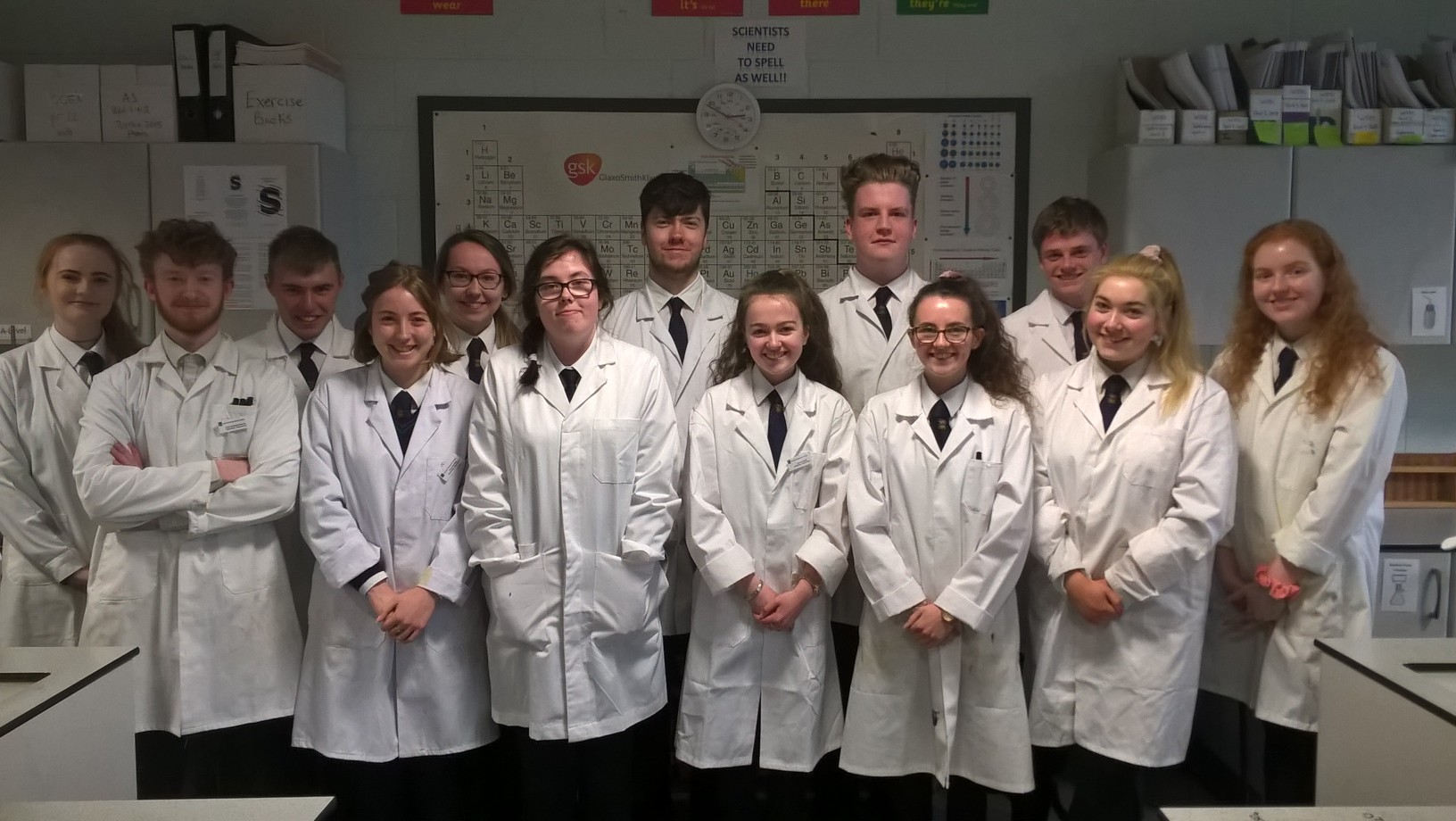
Shimna’s science department was pro-active in welcoming PGCE students, including Shauna who went on to teach in Shimna, Annabel Cleave who went on to Down High School, Ian Smyth to St Coleman’s GS, Rihanna Phillips to Assumption GS. Two Shimna Oldscholars, Daniel Allen and Lorna Jess graduated in chemistry and returned to Shimna as teachers. Lorna’s story is particularly inspirational, as she went from single award science to A level Chemistry to her degree in Chemistry from Queen’s, all through the support of Shimna’s exceptional science department and their clear vision of access to three sciences and high expectations for all.